
September 24, 2026
I. Introduction: Dwindling Abundances, Growing Extinctions
Life on Earth is intensively intertwined. Populations of all species live in complex ecosystems in which loss of any one species causes ripple effects throughout the ecosystem. This interdependence extends to humans, but human dominance of the planet is threatening many species without a widespread human understanding of the likely consequences.
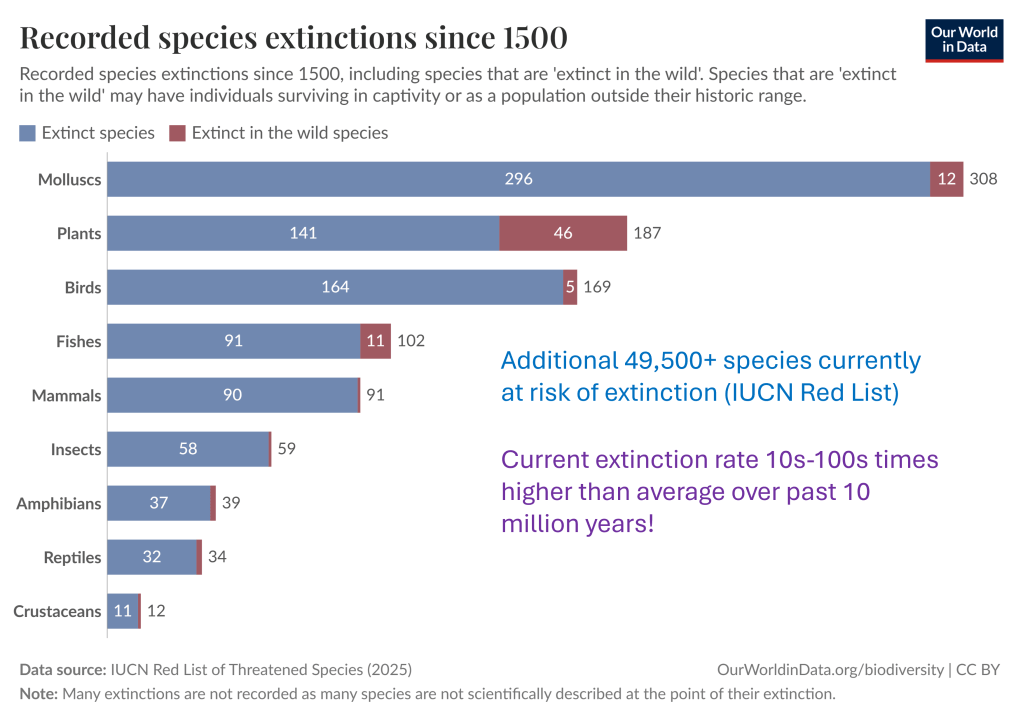
As human populations have grown, along with their land usage and environmental impacts, species extinction rates and population losses have also grown rapidly. Figure I.1 shows the number of animal species that have gone extinct since the year 1500. According to the International Union for Conservation of Nature (IUCN), at least an additional 49,500 species are today at risk of extinction. The current extinction rate is tens to thousands of times higher than the average rate recorded over the past ten million years.
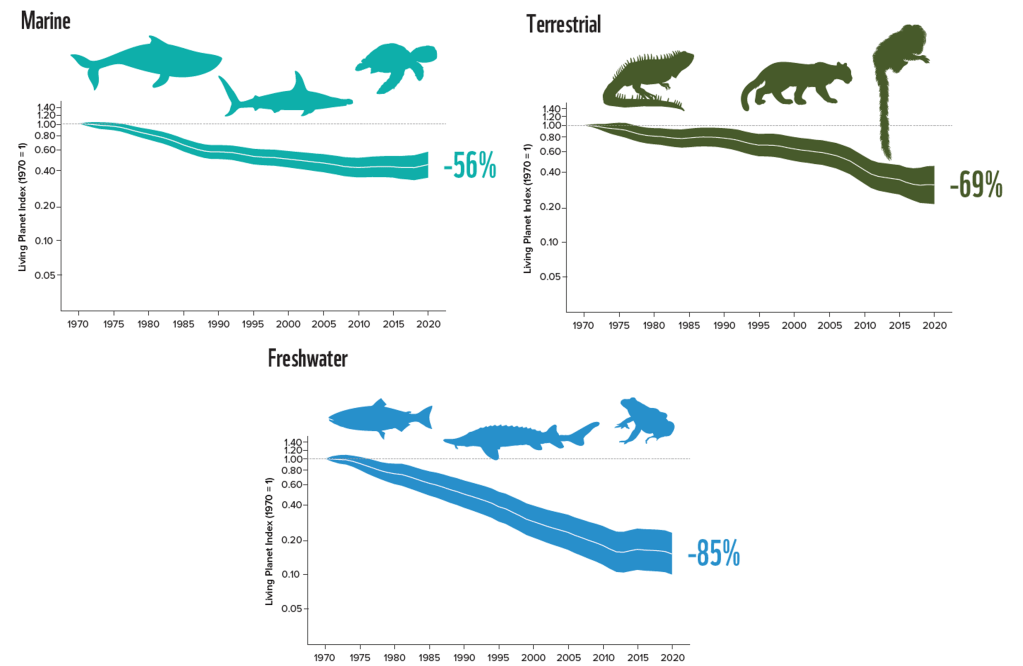
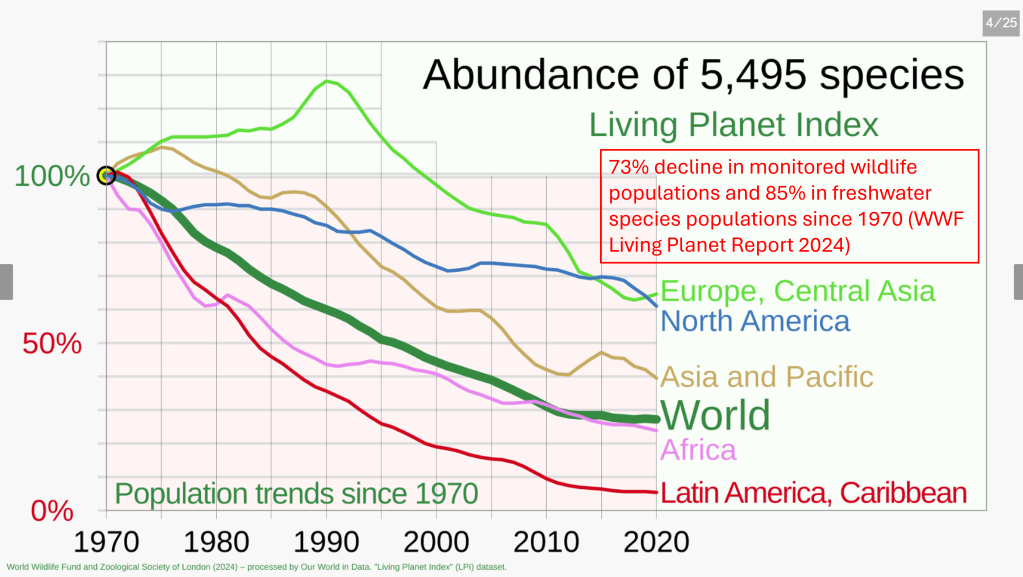
Animal populations have been dwindling especially rapidly since 1970, as recorded by the World Wildlife Fund’s (WWF) 2024 Living Planet Report. The losses are widespread, as documented in Fig. I.2: 56% of marine animals, 69% of terrestrial animals, and 85% of freshwater animals have disappeared over the 50 years from 1970 to 2020. As shown in Fig. I.3, the losses are not uniform across world regions. About 94% of monitored animals have been lost in Latin America and the Caribbean, about 75% in Africa, but only 35-40% in North America, Europe, and Central Asia. The worldwide average across all monitored animal species is 73% decline since 1970.
The IUCN Red List of threatened animal and plant species is based on such assessments of population losses. A summary of their assessments for various species groups is shown in Fig. I.4. Frame (A) of the figure shows the percentage of species in each group currently considered to be vulnerable, endangered, or critically endangered. The blue vertical lines represent the fraction of species in each group considered to be under threat for extinction, ranging from less than 10% for bony fishes to more than 40% for amphibians and more than 60% for cycads (palm-like woody plants).
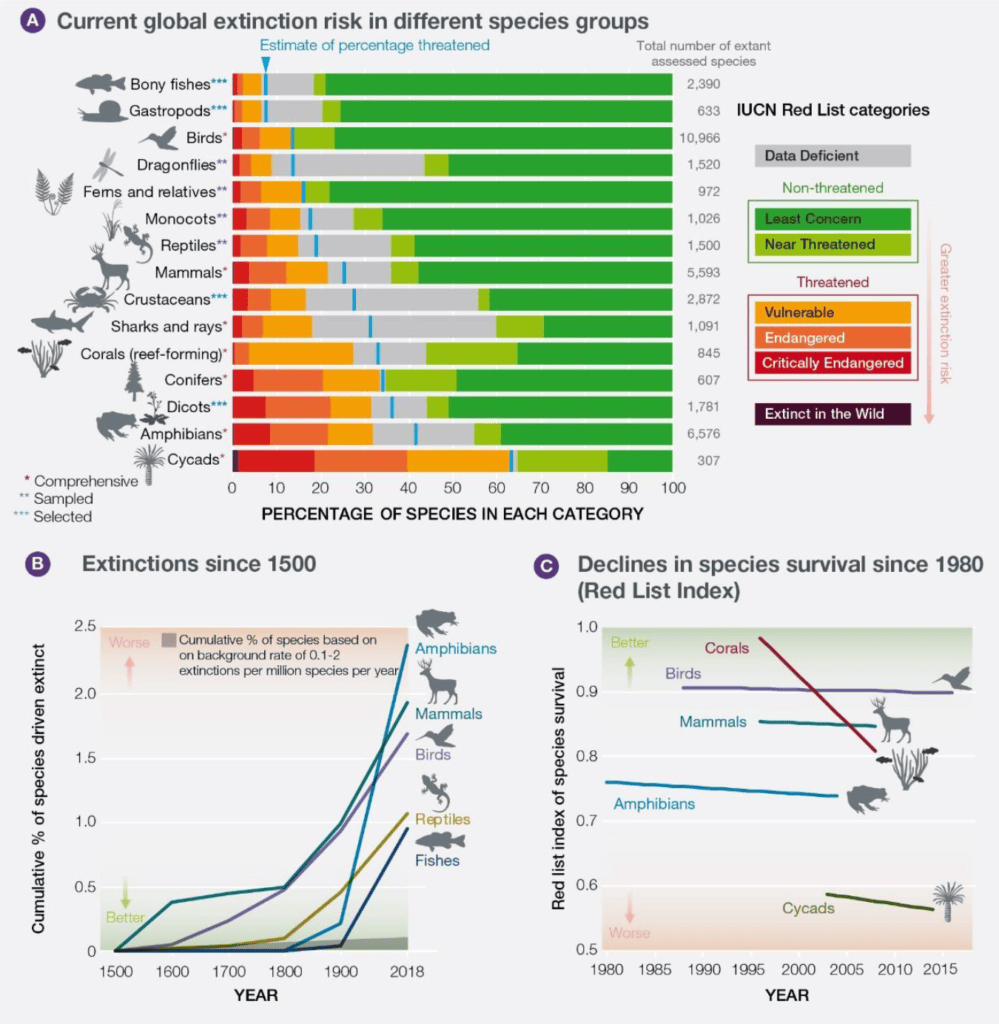
Frame (B) of Fig. I.4 shows that 1-2.5% of all assessed animal species have been driven to extinction since 1500. The rates may be underestimates because many species may be lost before they are even identified. At the background extinction rate gleaned from fossil records, one would expect no more than 0.1% species extinctions over a 500-year period. The highest current extinction rate is among amphibians, which have been around in some form or other on Earth for about 360 million years, much longer than mammals or reptiles. We discuss the threats to amphibians in more detail in Section IV. Frame (C) shows species survival rates for various groups just since 1980. Most dramatic is the loss of nearly 20% of coral species over a single decade. As we have discussed in a previous blog post on climate tipping points, worldwide coral reefs are under serious, immediate threat from ongoing, human-caused global warming, especially as amplified by strong El Niño events.
All of these indications point to an alarming loss of biodiversity. Biodiversity loss encompasses loss of genetic diversity (which threatens a species’ ability to adapt to changes in its environment), loss of populations, extinction of species, and loss of entire ecosystems in regions of the Earth. In the remainder of this post we will discuss how humans are likely to be affected by biodiversity loss (Section II), the primary drivers of the losses (Section III), case studies for a few classes of species at elevated risk (Section IV), whether we are in the early stages of a Sixth Mass Extinction in Earth’s history (Section V), and the recent history of global agreements to address biodiversity loss (Section VI). We will offer our conclusions in Section VII.
II. Why Biodiversity Should Matter to Humans
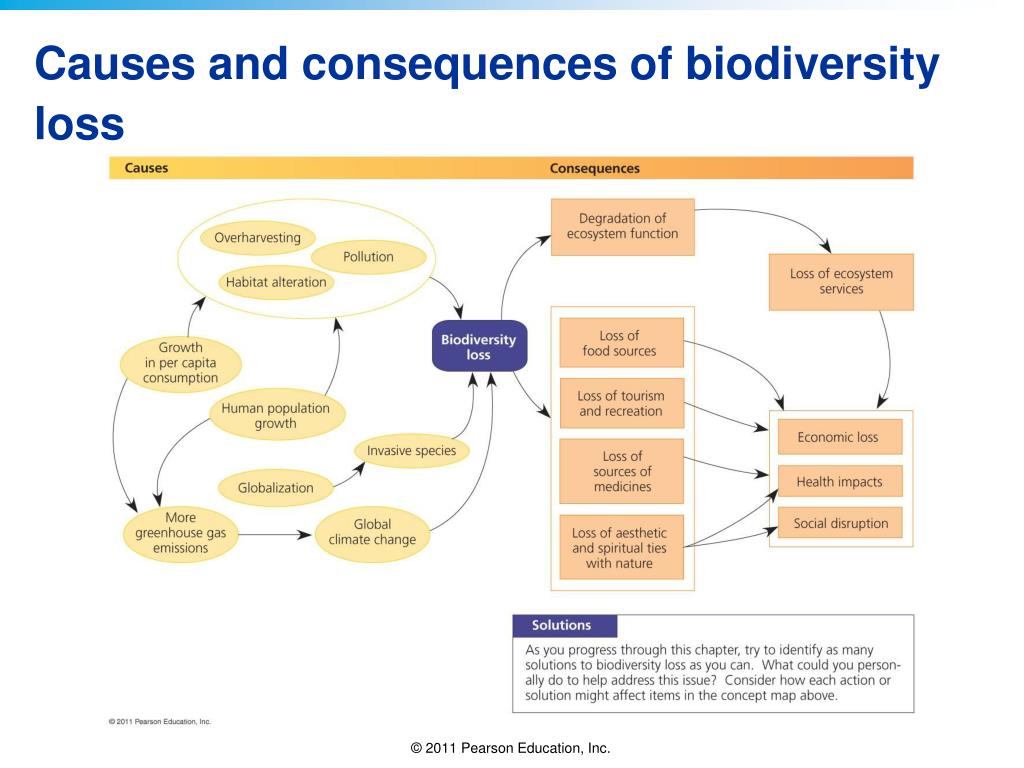
Biodiversity on Earth is suffering primarily from human dominance of Earth’s resources, via five main mechanisms we will discuss in the next section. Many humans enjoy this dominance and fail to see the importance of losing some exotic animal and plant species. But in fact, biodiversity is essential for human health, well-being, economic prosperity, and Earth’s planetary resilience. The causes and some of the impacts of biodiversity loss are summarized in Fig. II.1. So, even people who do not personally enjoy communing with diverse nature should be concerned out of self-interest.
The loss of a single species can disrupt entire ecosystems. Predators lose prey, plants lose pollinators, and ecosystems can become unstable as a result. But humans rely on healthy ecosystems to provide clean air and water, fertile soil, and healthy food production. Consider a few examples. Wetlands play a key role in water purification and the provision of freshwater resources. But wetlands and their species are currently disappearing at an alarming rate – 22% of global wetland area lost since 1970 — increasing waterborne diseases and reducing drinking water availability for billions of people.
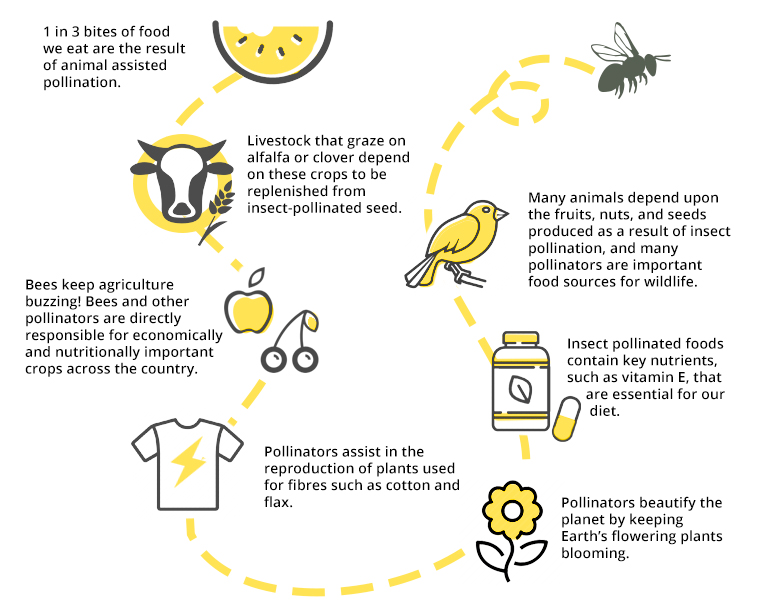
According to the World Health Organization (WHO), “more than 75% of global food crops rely on pollinators, contributing US $235-577 billion annually to global agricultural output.” But pollinator species are today under extensive threat – nearly a quarter of North American species are under elevated risk of extinction — in turn, threatening (Fig. II.2) global food security and nutrition. Crop productivity also relies on healthy soils. But soil health and nutrient cycling depend on the many microorganisms, fungi, worms, and insects that live underground. Human use of pesticides is threatening those soil ecosystems.
Worldwide coral reefs are under extreme threat from human-caused climate change, endangering the 25% of all marine species that depend on the reefs during part of their life cycle. The collapse of coral reef ecosystems will have enormous consequences for human food supply and fishing economies. Furthermore, the collapse would threaten coastal communities, for which the reefs often form a buffer zone damping the coastal impacts of high waves, flooding, and storms. We consider the threats to worldwide coral reefs in more detail in Section IV.
The world’s forests host a major fraction of Earth’s biodiversity and help to purify air for human and animal breathing, by capturing harmful air pollutants and producing oxygen through photosynthesis. In addition, they absorb approximately 2.6 billion metric tons of carbon dioxide annually, helping to mitigate global warming. But forest land cover is being rapidly depleted, and their ecosystems threatened, by human land use for agriculture and a growing frequency of severe wildfires attributable to human-caused climate change.
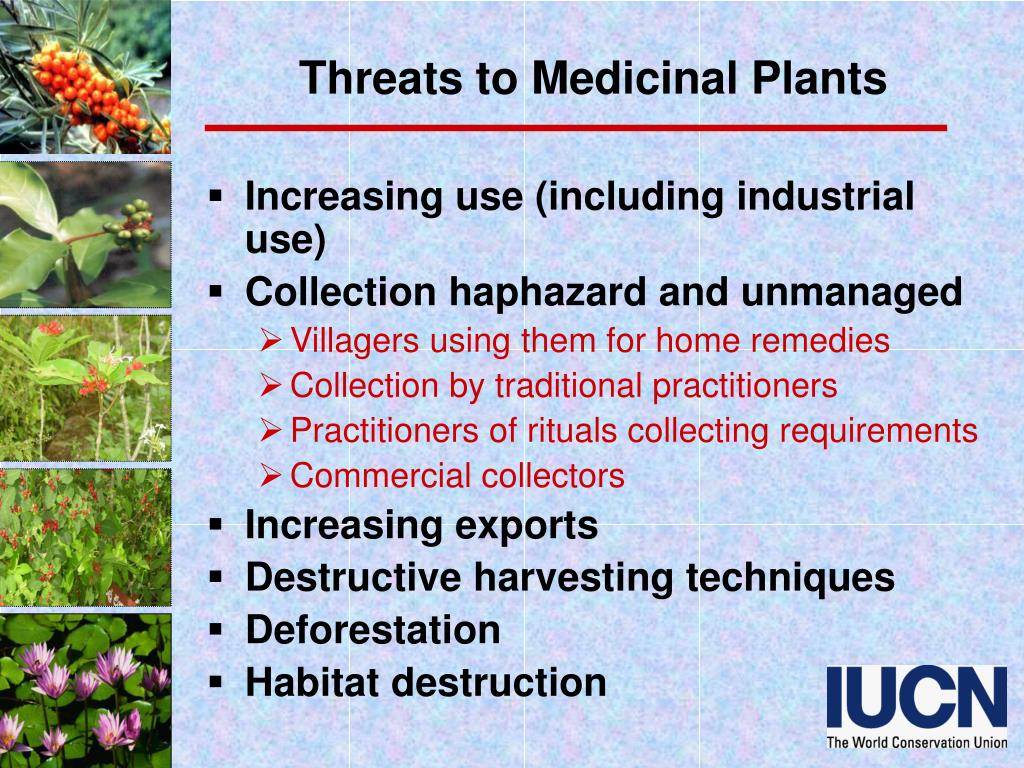
The loss of biodiversity also impacts human health. WHO estimates that “60% of the world’s population utilizes traditional medicines,” particularly medicinal plants. But also “[o]ver 50% of modern medicines are derived from natural sources, including antibiotics from fungi and painkillers from plant compounds.” Some of the threats to medicinal plants are summarized in Fig. II.3. Furthermore, there is still enormous untapped potential for new medicines; both terrestrial and marine flora and fauna contain vast reservoirs of bioactive compounds which may revolutionize pharmacology in the future. But as species are lost and ecosystems collapse, the resources for both current and future medicines disappear.
Humans are also subject to new disease threats as they take over animal habitats and force many species to shift their geographic ranges. WHO points out that “[r]ecent studies estimate that over 75% of emerging infectious diseases, such as Ebola or Nipah virus, are zoonotic [jumping from animals to humans] and often arise in areas where ecosystems and habitats have been disrupted by deforestation or land-use change.” Global warming is forcing a number of disease-bearing insects to shift their ranges to higher latitudes, where humans not previously exposed can become subject to infection with zika, dengue fever, West Nile virus, and other diseases that used to be thought of as tropical.
The potential economic consequences of biodiversity loss are profound, especially in agriculture, fisheries, and healthcare. WHO estimates “that the global economic impact of biodiversity loss amounts to US$10 trillion annually, including healthcare costs from increased disease transmission and agricultural losses from pollinator declines.” Additional costs will arise from losses of tourism and recreation opportunities as wild ecosystems are damaged.
The health of Earth’s ecosystems is stronger when they host diverse and balanced populations. Biodiversity, including genetic diversity of the species within, increases an ecosystem’s resilience and ability to adapt and rebound after changes to the environment, such as are being increasingly caused by the impacts of global climate change: severe storms, floods, droughts, wildfires, disease outbreaks. Human resilience is intricately tied to ecosystem resilience. Global biodiversity loss thus threatens human well-being.
III. The Primary Drivers of Biodiversity Loss
Humans were unaware of the possibility of species extinction until the turn of the 19th century. Only then did the French naturalist Georges Cuvier clear up confusion about various bone samples that had been found during the 18th century, which did not seem to fit with the anatomy of any known animals. Cuvier concluded in 1796 that the mysterious bones must have belonged to several “lost species,” including the American mastodon. By 1800 Cuvier had identified 23 extinct species from fossil finds and the list grew to 49 by 1812, when he published a four-volume description of his research. According to Cuvier, “All these facts, consistent among themselves, and not opposed by any report, seem to me to prove the existence of a world previous to ours. But what was this primitive earth? And what revolution was able to wipe it out?”
Later in the 19th century, as scientists began to accept Charles Darwin’s theory of natural selection, the gradual disappearance of extinct species seemed as natural as the gradual appearance of new species better adapted to their environment. A species once evolved to thrive in a then-current environment might die out if the environment changed or its food supply dwindled or it became exposed to diseases or a predator species against which it could not successfully fight. Darwin had been strongly influenced by the work of the British geologist Charles Lyell and he believed, with Lyell, that all such extinctions must occur gradually over very long time periods, just as the development of new species did.
The “uniformitarian” view pioneered by Lyell and Darwin dominated the field of paleontology up until 1991, when the large Chicxulub crater was discovered buried beneath Mexico’s Yucatan peninsula. The discovery finally convinced skeptical scientists of the validity of a novel idea that had been proposed – and widely dismissed by paleontologists — in 1980 by physicist Luis Alvarez and his son, geologist Walter Alvarez. On the basis of the sudden appearance of the normally rare element iridium in narrow rock strata at various locations around the globe, the Alvarezes had proposed that the dinosaurs had been wiped out rather suddenly by events triggered by the impact of a massive asteroid colliding with Earth 66 million years ago. That event and its aftermath triggered the abrupt end of the Cretaceous epoch and the last major extinction event before the present, when 76% of all species on Earth, including the non-avian dinosaurs, disappeared. The Alvarez hypothesis has clarified that mass extinction events can indeed occur over a relatively short (on a geologic time scale) time period.
What, then, are the causes of the unusually large rates of current extinctions revealed in Fig. I.4? When one examines the case histories of individual species, a common cause is not immediately apparent. In her book The Sixth Extinction, Elizabeth Kolbert points out that many frog species have recently been killed off by a fungus that attacks their skin and disrupts the frogs’ ability to take up critical electrolytes. Coral reefs have been dying around the world from warming oceans, increasing seawater acidity, and coastal runoff. Several species (e.g., the Christmas Island shrew and Australian bandicoots) have recently succumbed to invasive predators and destruction of their natural habitats. The penguin-like Great Auk and the passenger pigeon have been killed off by human hunters and collectors. The Northern white rhino is on the verge of extinction in the wild because their horns are viewed as medicinal and status symbols in several countries in the Far East.
But the common denominator in all of these stories and many others is the enormous impact humans are having on ecosystems around the world. Humans have managed inadvertently to transport the chytrid fungus deadly to many frog species around the globe. Human activities are responsible for the rapid ongoing global warming. Humans have encroached on animal habitats with little thought about the possible consequences and have introduced invasive species around the world. They have over-exploited many species for food or sport or status symbols. Humans are responsible for the lion’s share of the biodiversity losses we see around us.
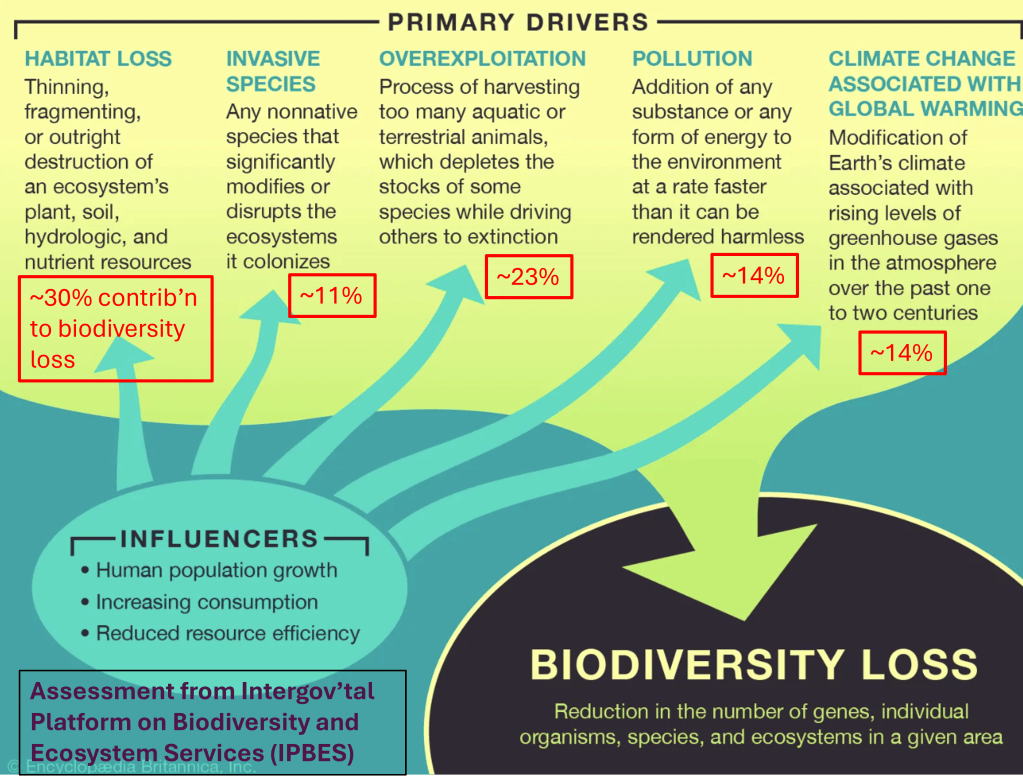
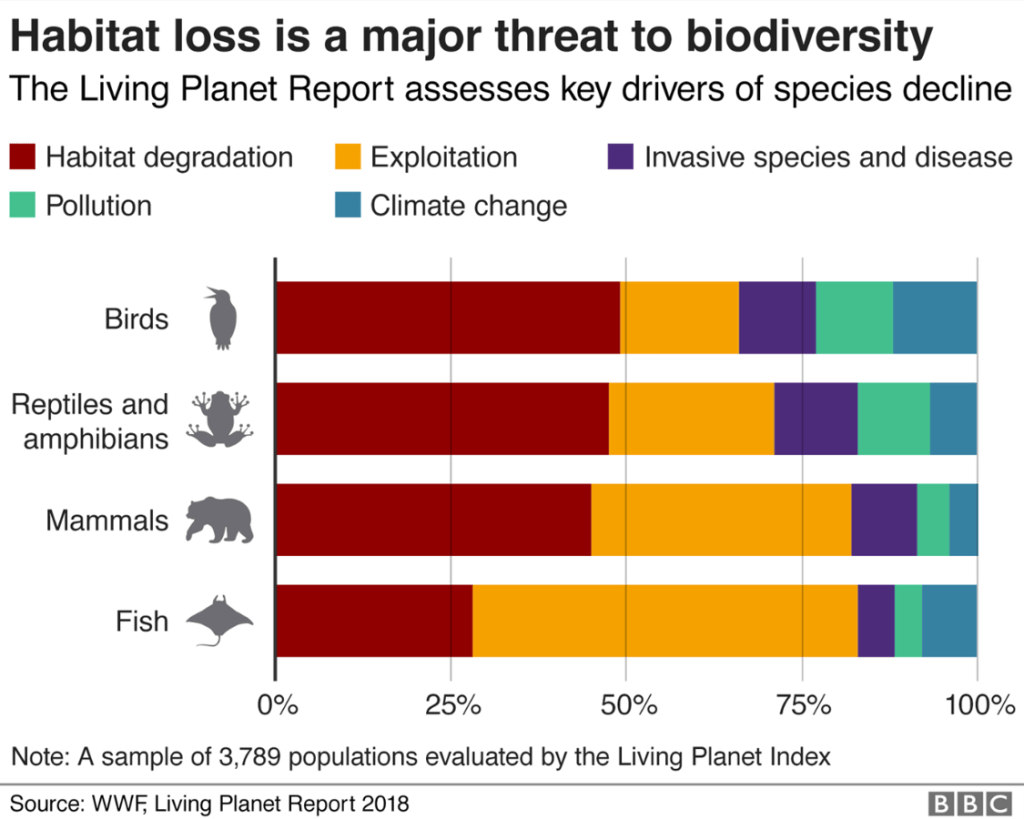
Figure III.1 summarizes the five primary drivers of ongoing biodiversity loss, all caused or at least exacerbated by human activities. In the assessment of the Intergovernmental Science-Policy Platform on Biodiversity and Ecosystem Services (IPBES), habitat loss contributes, on average, about 30% to global biodiversity losses; human over-exploitation of wild species contributes about 23%; the impacts of pollution and climate change each contribute about 14%; and invasive species are responsible for about 11% of biodiversity loss. However, the detailed contributions from each driver differ among the various animal groups suffering from these effects, as summarized in Fig. III.2. In the rest of this section we will consider the impacts of each driver in more detail.
Habitat loss:
Many species or at least local populations are genetically adapted to succeed in their local environment. When their habitat is transformed more rapidly than the species can evolve to adapt, or is fragmented or destroyed, members of the species are often forced to relocate to a new habitat for which they are no longer optimally adapted. They may be exposed in the new environment to new diseases, new threats, scarcer food supplies, different competitors, or new predators and succumb to population depletion or extinction. Often the new competitors and predators are humans.
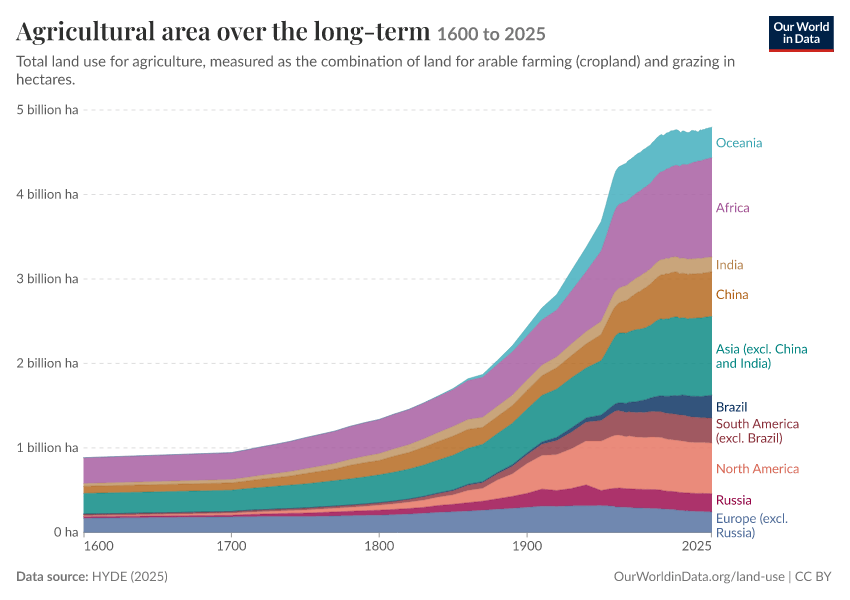
Human agricultural expansion has been the single largest source of animal habitat destruction. Figure III.3 shows the land claimed by humans for cropland and livestock grazing from 1600 to 2025. As human population exploded during the 20th century, so did agricultural land use. By now, agricultural expansion has claimed about 50% of Earth’s ice-free terrestrial surface. 10,000 years ago, at the dawn of human civilization, 71% of Earth’s land surface was covered by forests, shrubs, and wild grasslands. As illustrated in Fig. III.4, humans have now taken over one third of the world’s forests and almost two thirds of the wild grasslands and shrubs, displacing many animal species. The remaining forest land is also heavily fragmented: 70% of it lies within one kilometer of an edge, further threatening the species that attempt to survive within. Forest fragmentation is the reason we often have deer in our yards in an urban setting.
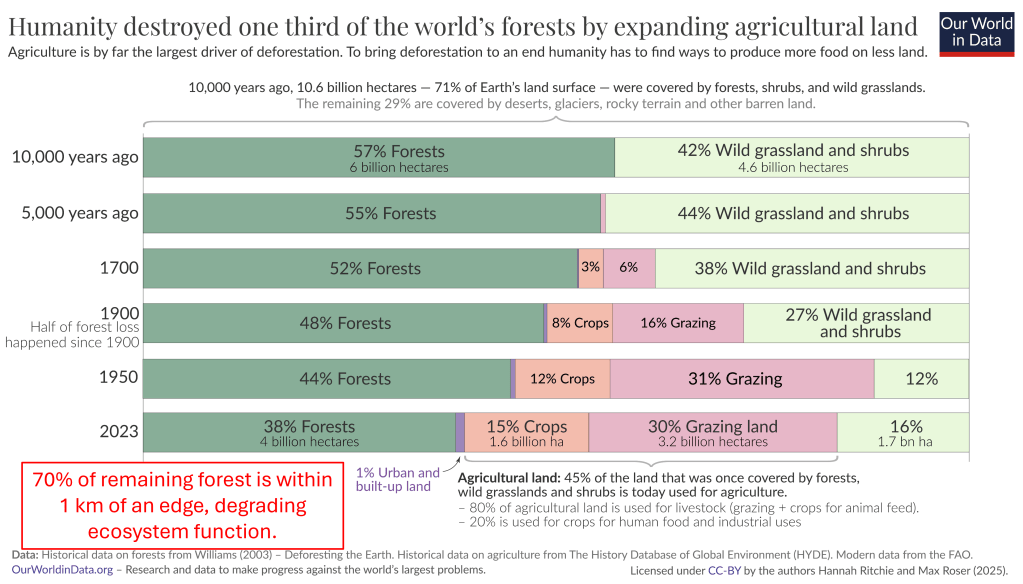
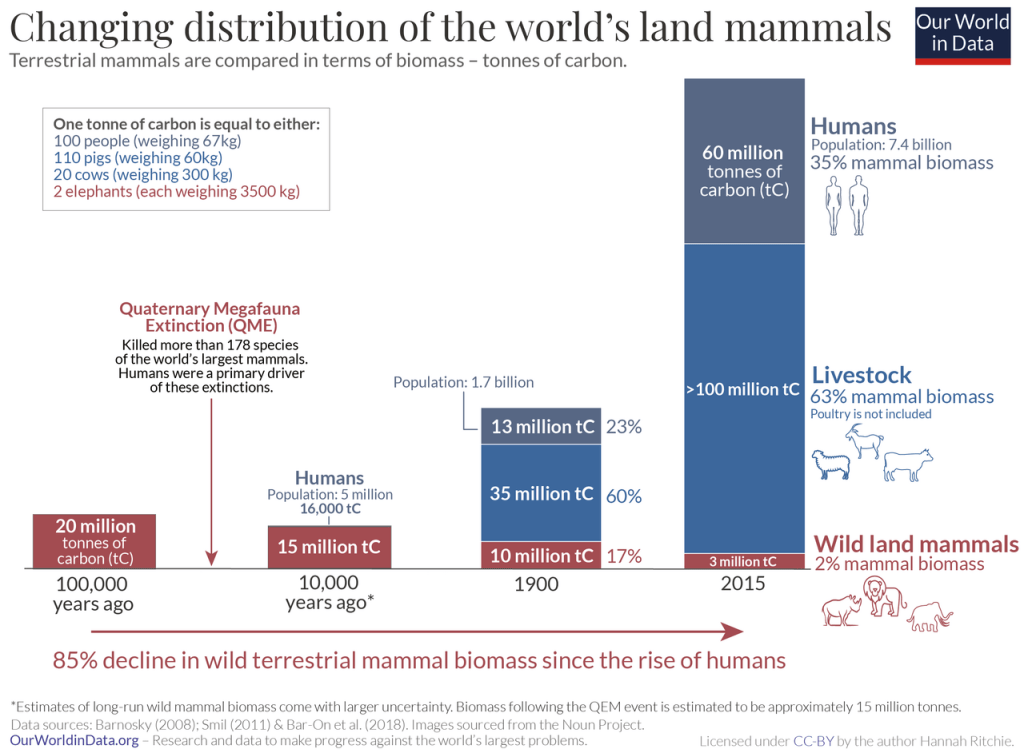
Only about 20% of all that human agricultural land is used for growing crops for human consumption and industrial uses. The other 80% is used for livestock grazing and animal feed growth. The habitat destruction has led to rapidly dwindling populations among wild animals and rapid growth in farm animals. This shift from wild to human-controlled populations is illustrated for land-based mammals (including humans) in Fig. III.5. Mammal species are compared in the figure by treating them all as biomass, i.e., metric tons of carbon, so that one cow is roughly equivalent to five humans and one elephant to fifty humans. In this accounting, the biomass of wild land mammals has decreased by 85% since the advent of humans. Some of this occurred during the last Ice Age, even before the beginning of human civilizations, when early human hunters contributed to the extinction of 178 large wild mammal species, including woolly mammoths, mastodons, and saber-toothed tigers. However, humans now account for three times as much and livestock mammals for five times as much biomass as all the wild land-based mammals that existed on Earth 100,000 years ago. Today humans and their livestock account for at least 98% of land-based mammal biomass on Earth.
While agriculture accounts for the main habitat destruction mechanism that has endangered animal species, there are specific stories about animals that have evolved to thrive in singular, localized habitats, which are then taken over for other human use. For example, in her book Resurrection Science, M.R. O’Connor relates the story of a tiny, yellow, pointy-nosed frog species Nectophrynoides asperginis which evolved to survive in the intense spray, wind, and noise created by a single powerful waterfall within a gorge deep inside the remote Udzungwa Mountains of Tanzania. When that waterfall was converted to a hydropower plant to provide needed electrical power to the Tanzanian people, this particular frog species became endangered.
Over-exploitation:
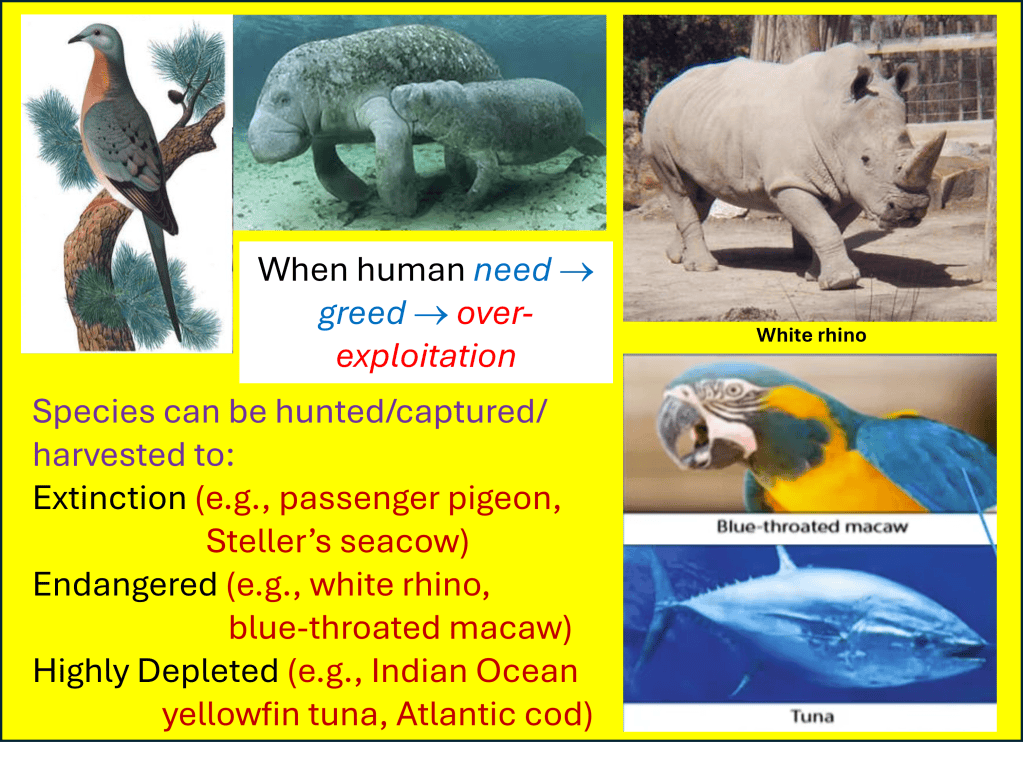
Figure III.6 illustrates several of the many species that have been driven to extinction or endangered status or highly depleted populations by human attempts to hunt, capture, or harvest the animals. Perhaps the most dramatic recent extinction caused by human hunting is that of the passenger pigeon, which numbered in the billions of individuals in the eastern and midwestern United States in the 19th century. Enormous flocks of passenger pigeons often blackened the skies on their seasonal migrations, as illustrated in Fig. III.7. Farmers often viewed the passenger pigeons as pests who destroyed some of their crops. M.R. O’Connor notes that “the largest nesting on record took place in 1871 in central Wisconsin where flocks congregated over 850 square miles…As many as 100,000 people traveled to Wisconsin to kill the birds for food and sport…By 1899, the last passenger pigeon in Wisconsin was shot. By 1914 there was only one known surviving bird of the species, and she died at the Cincinnati Zoo.”
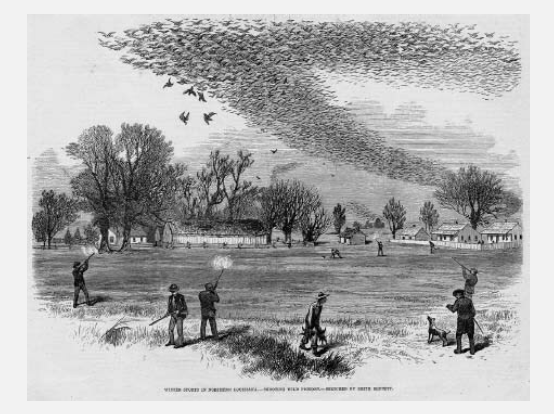
It is likely that humans did not kill every last passenger pigeon but rather enough to bring the species below a threshold abundance, where their numbers were no longer sufficient for protection against predators and for efficiency in finding mates and food. This is an illustration of something called the Allee effect, which argues that below a threshold density the individual fitness of members of some species deteriorates.
In the case of Steller’s sea cow, humans probably only supplied the finishing touches on the path to extinction. The sea cows were enormous cold-water mammals, with adults reaching lengths up to 9 meters and weights of 8-10 metric tons. Their identification by Georg Steller was made in 1741 while he was shipwrecked on an island in the Bering Sea. By that time the sea cows were found only around the Commander Islands in the Bering Sea off the coast of Russia’s Kamchatka Peninsula. Once humans were aware of the sea cows it took them only 27 years after the identification to hunt the slow and easily caught mammals to extinction to supply meat, fat, and hides. Later fossil finds reveal that the sea cows were far more abundant and more widely distributed throughout North Pacific coastal regions during the Pleistocene epoch that preceded human civilizations. But the population was presumably fragmented during the last Ice Age as sea levels and sea temperatures dropped precipitously. The population that survived around the Commander Islands likely had limited genetic diversity and was already on a path toward extinction before human hunting completed the task. Manatees belong to the same order as Steller’s sea cows and are themselves considered vulnerable to extinction in the wild today.
Other large land-based mammal species have been threatened in recent years by human hunting not motivated by a need for food or clothing. The northern white rhino is essentially extinct in the wild because so many have been killed by poachers who sell their horns for use in Asian countries where the horn material is believed, without scientific evidence, to have medicinal value. Elephant populations in both Africa and Asia are dwindling and different species are classified as endangered or critically endangered on the IUCN Red List. In the past the primary driver of elephant population loss was hunting to retrieve their ivory tusks, but today loss of habitat is a significant exacerbating cause, although poaching remains widespread in Africa.
The blue-throated macaw pictured in Fig. III.6 is found today only in Bolivia. Its extensive population loss has arisen in part from avian predators, but has been exacerbated by human hunting and capture, in part for use of the colorful feathers in headdresses of the indigenous people in Bolivia and in part for the worldwide pet trade. Although the species is protected by Bolivian law since 2014, it is believed that there are only a few hundred adults left in the wild. The species is listed as critically endangered on the IUCN Red List.
Many populations of fish species are in serious decline from overfishing. More than a billion people on Earth rely on fish as their primary source of protein. With the advent of industrial-scale commercial fishing, many species are being caught faster than they can reproduce. Even though many countries have agreed on quotas and marine conservation zones, illegal, unreported, and unregulated fishing creates a continuing threat. Roughly one third of global fish stocks are currently overfished and the fraction has grown steadily over the past half-century. Figure III.8 shows the global biomass of fish in various groups from 1970 to 2018.
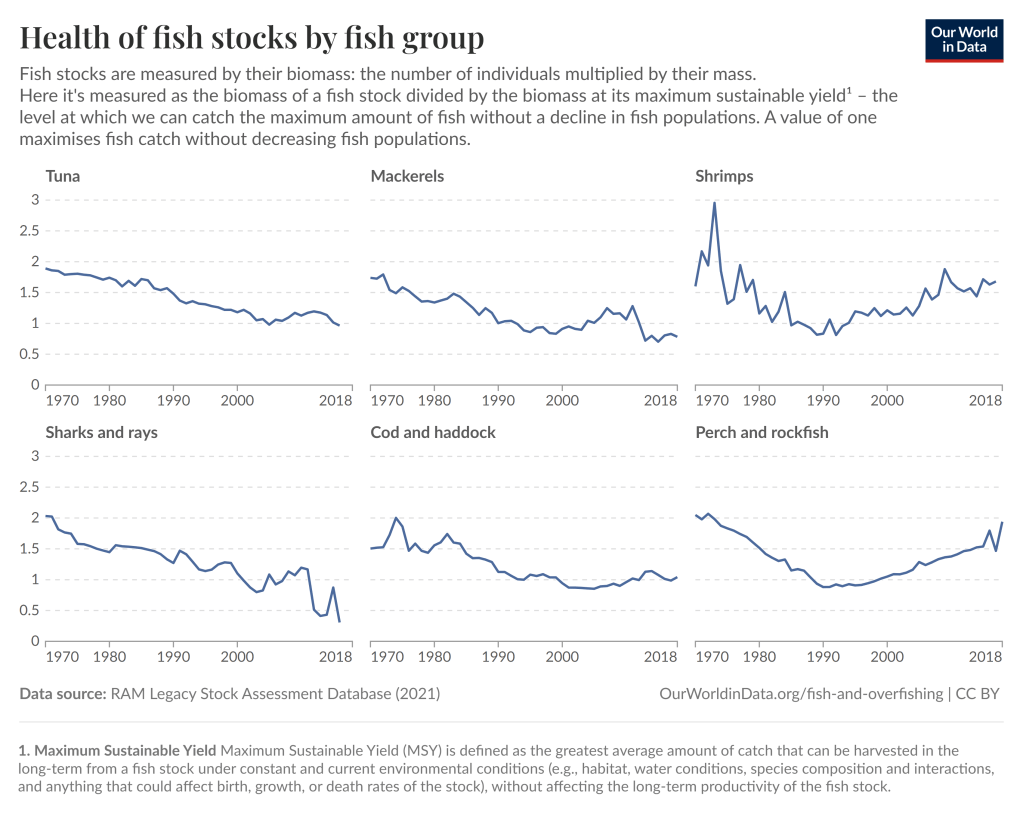
Of all the fish species evaluated by the IUCN, 4.2% are now listed as endangered. Among the species endangered or critically endangered from overfishing are Atlantic bluefin tuna, European eels, orange roughy, many species of sharks and rays, and some species of groupers. As sharks are usually apex predators in their ecosystems, their endangerment threatens the balance in entire marine ecosystems. Furthermore, many other marine species populations are dwindling when they are caught as byproducts in large industrial fishing nets. For example, many species of dolphins and whales are currently listed as either endangered or depleted. Six of seven sea turtle species are presently endangered or critically endangered. We will discuss other human contributions to depletion of marine species populations below.
Global warming:
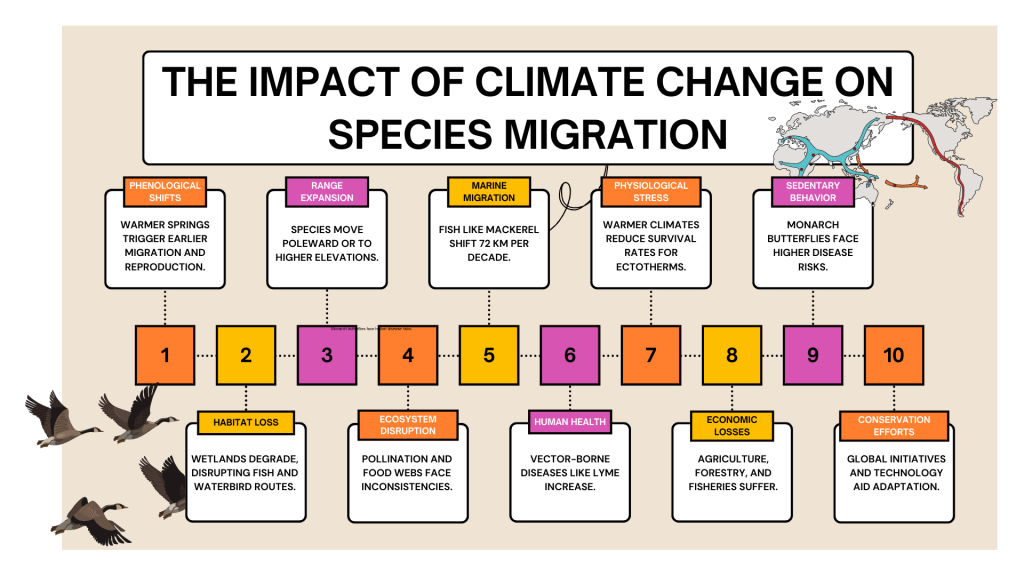
The many aspects of climate change driven by human-caused global warming threaten humans, but they threaten animals much more because they have less ability to adapt. Some of the impacts on animal populations are illustrated in Fig. III.9.
Steadily rising global temperatures are contributing to habitat loss for many species. Because the warming is greatest near polar regions we are seeing significant loss of Arctic sea ice and accelerated melting of the Greenland and West Antarctic ice sheets. These losses are narrowing the ranges on which various polar species can survive. The most vulnerable species today is the polar bear, which relies on sea ice to hunt seals. The IUCN projects a greater than 30% loss in polar bear population over the next 35-40 years if human burning of fossil fuels continues at the current rate. Other polar species, including Arctic foxes, walruses, narwhals, Emperor and Adélie penguins, are also vulnerable.
As the oceans warm and their increasing concentration of carbon dioxide leads to increasing ocean acidification, worldwide coral reefs are endangered. Thermal stresses, enhanced during El Niño episodes, are causing global bleaching episodes, the most recent one of which in 2023-4 caused bleaching of 84% of global reefs. As of now (Sept. 2026), it appears that the 2026 El Niño may well be the strongest ever recorded. If this is true, ocean temperatures are likely to reach unprecedented highs, which will vastly increase the amount of dead or highly stressed coral reefs. Increased ocean acidification reduces the structural integrity of reef species and their rate of growth. Increased sedimentation from coastal runoff and stronger storms pose additional threats to the reefs.
At a mean global temperature increase of 1.5°C over preindustrial values – a level we have essentially reached today – 70-90% of reef-building corals are expected to die as bleaching episodes become more frequent. At 2.0°C warming, the toll is likely to reach 99%. The coral reefs have been home to almost 25% of all marine species. If they die, many fish populations, crustaceans, mollusks, and other reef-dwellers will lose their habitat. The increasing ocean acidification also is directly affecting shellfish populations, because it leads to a reduction in available carbonate ions that are needed to produce calcium carbonate essential for shell formation.
Global warming is also leading to changing precipitation patterns around the globe. Increasingly frequent droughts, forest fires, and floods will further fragment the remaining forest and wild grassland areas on Earth, forcing more animal populations out of their habitats. For example, the World Wildlife Fund has noted that the severe 2019-2020 Australian bush fires burned about 19 million hectares, and in the process killed some 1.25 billion animals and displaced another 1.5 billion. Kangaroo, wallaby, koala, and wombat populations lost their habitat.
Many other species are being forced to shift their ranges to reach cooler temperatures. Alpine species are migrating to higher altitudes and marine species to higher latitudes. A 2011 meta-analysis found that species are shifting to higher elevations at a mean rate of 11 meters/decade, while marine and terrestrial species are migrating to higher latitudes at roughly 72 kilometers/decade and 17 kilometers/decade, respectively. Elizabeth Kolbert, in her book The Sixth Extinction, notes that among the enormously diverse tree species adapted to narrow bands in altitude in Peru’s Manú National Park, one genus of trees is relocating uphill at an astonishing rate of nearly one hundred feet per year! As one extreme example of marine species shifts, Iceland’s annual mackerel catch increased from 1,700 tonnes in 2006 to 120,000 tonnes in 2010 as the mackerel migrated northward. Migrating species that bear diseases, such as mosquitoes carrying zika, dengue fever, or West Nile virus, and ticks that carry Lyme disease or alpha-gal syndrome, carry those diseases to new locations as they shift their ranges, exposing new populations of humans and animals.
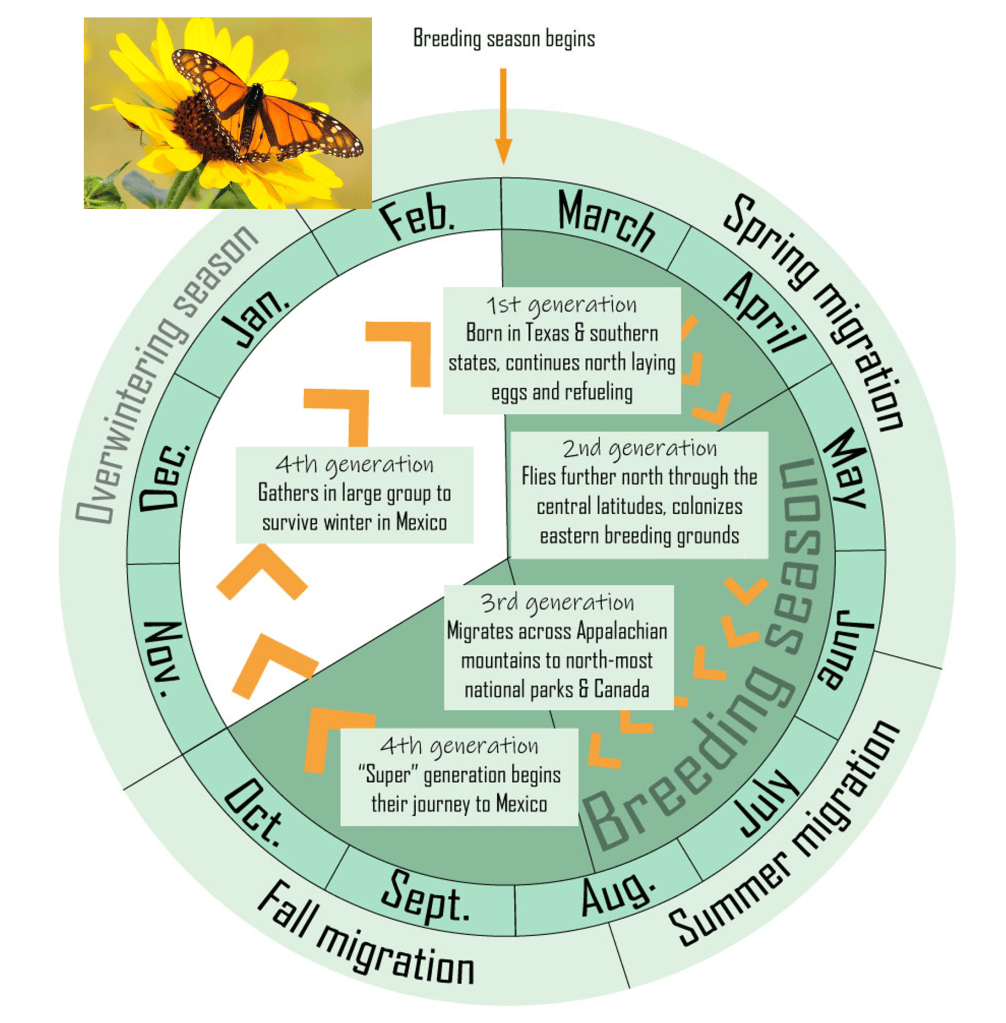
Meanwhile, shifts in the start of spring and fall seasons, caused by global warming, are disrupting normal seasonal migration and reproduction habits among many species. Monarch butterflies are particularly affected by the seasonal shifts because they have a complex, multi-generation migration circuit (Fig. III.10) that covers thousands of miles from central Mexico to southern Canada. Earlier springs are causing Monarchs to begin breeding too early, exposing the larvae to late frosts and mismatched milkweed availability. Extreme summer heat is damaging egg and larval survival. And warmer fall temperatures are delaying the signals to begin southward migration, with the effects that the butterflies experience more storms, more predators, and less nectar along their route. All of these effects, along with habitat loss and pesticide use, have led to a striking depletion of Monarch populations and their characterization as endangered by IUCN in 2022.
The seasonal shifts are also affecting wild bee populations. Warmer winters and earlier springs are causing bees to emerge too early, before many of the flowering plants they rely on for nectar are ready to be pollinated. Early season starvation is reducing bees’ survival and reproductive success. As bee populations decline, many plant species suffer from reduced pollination and entire ecosystems are threatened. A recent survey finds that 22.6% of all North American pollinator species have elevated risk of extinction.
Wetlands are being degraded by various effects of climate change. Rising sea levels are threatening coastal wetlands, particularly mangroves and salt marshes. Changing precipitation patterns, increasing evaporation of warmer waters, and more frequent and intense drought periods are all upsetting the water balance that wetlands rely on for their health. The Global Wetland Outlook 2025 estimates that approximately 22% of global wetland area has been lost since 1970, and about 25% of the remaining wetlands are in poor ecological condition. As a result, fish and waterbirds that rely on wetland stopping points during their migrations are suffering.
Pollution:
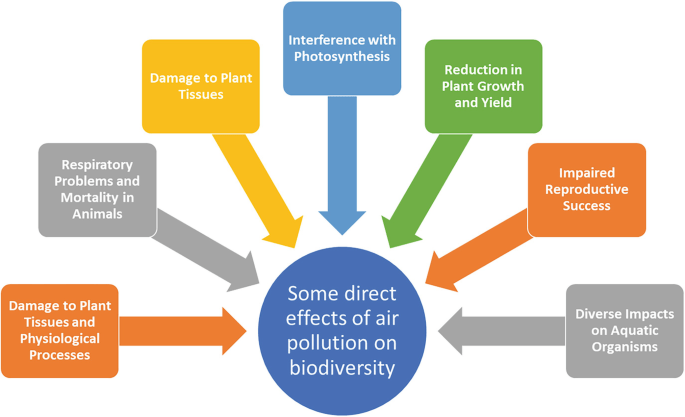
Air pollution, water pollution, soil pollution, chemical pollution, plastics pollution caused by human activities all contribute to biodiversity loss. Figure III.11 summarizes some of the impacts of air pollution. Substances such as sulfur dioxide, nitrogen oxides, ozone, and fine particulate matter emitted primarily from industrial activities, transportation, and agricultural practices harm many animal and plant species. For example: “Acid rain, formed when pollutants like sulfur dioxide and nitrogen oxides react with atmospheric moisture, acidifies soils and water bodies, harming sensitive plant and animal life. Ozone pollution, another major concern, damages plant tissues, reducing their ability to photosynthesize and making them more susceptible to disease and pests. Furthermore, airborne particulate matter can accumulate on plant surfaces, blocking sunlight and hindering growth.”
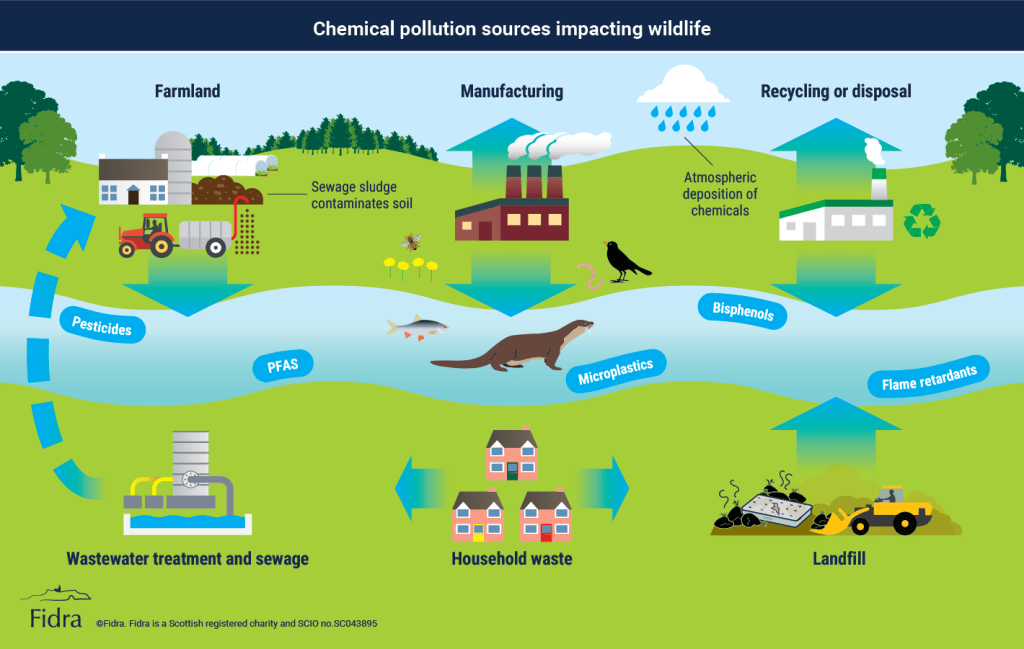
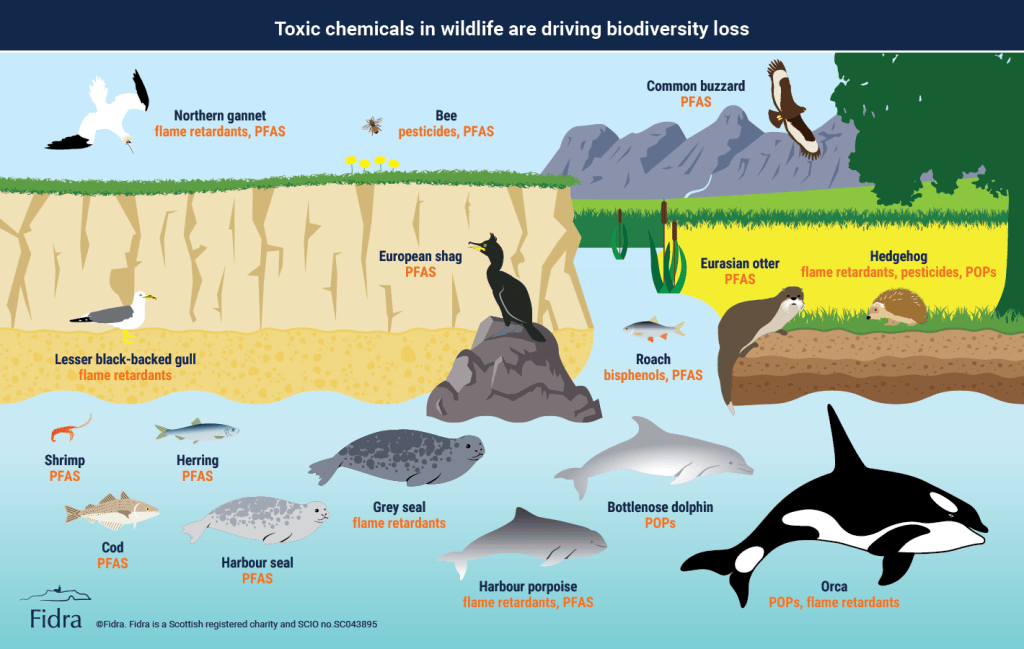
Chemical pollution entering the soil and waterways from a variety of human activities (see Fig. III.12) is threatening many species, as suggested in Fig. III.13. Runoff from industrial waste, agricultural fertilization, and sewage is jeopardizing many aquatic species. The excessive nutrients originating from fertilizers produce algal blooms that block sunlight and deplete oxygen levels in waterways, creating “dead zones” where aquatic species cannot survive and reducing coral reef growth rates. “Forever chemicals” (PFAS), heavy metals, pesticides, and improperly discarded pharmaceuticals are entering soils, where they can poison soil organisms critical for nutrient cycling and soil health, stunting plant growth and agricultural productivity. When those chemicals leach into waterways, they are ingested by fish and work their way up the food chain, ultimately impacting fish-eating birds and marine mammals. The pesticides are also contributing to serious population losses among bees, with potentially devastating impact on flowering plant pollination.
Marine species are furthermore being threatened by microplastics. Discarded plastic items entering the oceans are broken up into tiny fragments by waves, wind, and sunlight. Current estimates are that “[r]oughly 170 trillion plastic particles, weighing 2.3 million metric tons, now circulate the ocean’s surface waters alone. Scientists estimate an additional 11 million metric tons of plastic has been deposited on the seafloor, shedding an unknown amount of microplastic that mixes with ocean waters and sediments.” Consumption of the microplastics has been linked to mortality in “corals, fish, marine mammals, sea birds, sea turtles, zooplankton, and other ocean creatures.” The microplastics have infiltrated the entire ocean ecosystem, disrupting critical ecological processes that regulate the health of the oceans themselves.
Invasive species:
Humans have often been responsible, sometimes intentionally and sometimes inadvertently, for introducing invasive species into habitats where they did not previously exist. Some of the species migrating to new regions as a result of human-caused climate change may themselves become invasive species in their new range. The invasive species can threaten the survival of species natural to that habitat by the mechanisms outlined in Fig. III.14. The invasive species can become new and vigorous competitors in seeking out resources. For example, some invasive plants (e.g., the bamboo in our backyards) can come to dominate landscape areas, outcompeting native vegetation for access to sunlight, nutrients, and space.
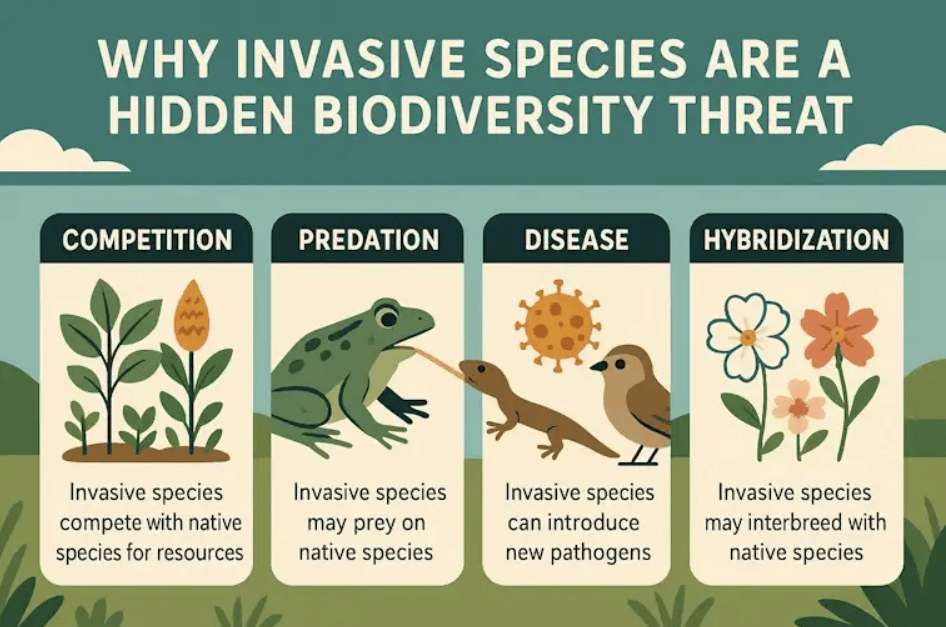
Sometimes invasive species serve as predators to whom the native species are not genetically adapted. For example, the introduction of the brown tree snake in Guam caused the near extinction of several bird species that were defenseless against the snakes. The introduction of lionfish in the Atlantic Ocean and Caribbean Sea has caused yet another threat to coral reefs because the lionfish eat plant-eating fish that otherwise control the growth of algae that block sunlight to the reefs. And cats have been introduced into island systems, where they wiped out many species that had evolved in areas with no native mammals or terrestrial predators. The native animals had no defense against ruthless predators introduced into fragile environments.
Invasive species can sometimes introduce new diseases or toxins that prove deadly to native populations. This is the case for the worldwide spread by humans of the chytrid fungus that is driving many frog species to extinction. A classic example has resulted from the 1935 introduction of 102 cane toads in Australia, where it was hoped they could control native cane beetles that were threatening sugarcane crops. The cane toads have thrived in Australia and multiplied rapidly. By 2011 they were estimated to number over 200 million and had spread across much of the country. They have outcompeted a number of native species, driving them toward extinction. But the dominant threat has been to larger animals, including pets and some humans, who prey on the cane toads and are poisoned by them because the predators have no pre-existing immunity to the cane toad toxin. There is, however, no evidence that the cane toads “have affected the number of cane beetles which they were introduced to prey upon.“ The best laid plans of mice and men…
Invasive species may also occasionally interbreed with native species, changing the genetic makeup in sometimes negative, sometimes positive ways. The resulting hybrids may be genetically poorly adapted to the local environment, leading to the endangerment of the native species. In some cases, however, the hybrids may outcompete the native species, again leading to their endangerment while launching the evolution of a better adapted new species.
— Continued in Part II —

