
November 11, 2026
IV. Major Nuclear Reactor Accidents
Reactor accidents are classified by the International Atomic Energy Agency (IAEA). That body has established an International Radiological Events Scale. It rates releases of radiation and effects on humans and the environment on a scale of 0 to 7 (highest). The final score is judged relative to three pillars of impact. The highest rating in one of those pillars determines the overall rating of the incident. Those pillars are:
- Impact on people and the environment. This is based on the amount of radioactive material that was released in the area surrounding the reactor. The highest rating of 7 for this category corresponds to a major release of radioactive material. That would be equivalent to greater than 10,000 Terabecquerels (TBq) of Iodine – 131, where 1 Terabecquerel is equivalent to one trillion (1012) nuclear disintegrations per second. A level 7 impact would require immediate implementing of extended local countermeasures, such as mass evacuations, severe food restrictions, and exclusion zones where people are forbidden to enter. A level 7 release of radioactive material will produce widespread long-term health and environmental effects.
- Impact on Radiological Barriers and Control. This pillar measures the physical damage suffered by a facility’s containment boundaries. The highest level 7 for this pillar corresponds to a total breach or catastrophic destruction, such as a meltdown or explosion of the reactor core. Lower ratings on this pillar correspond to high-intensity radiation which is completely confined within the facility.
- Impact on Defense-in-Depth: This pillar assesses whether the backup systems of the facility operated properly, such as independent coolant loops, backup generators, and automatic shutdown protocols. These safety features may work as designed, or they may produce a chain of cascading failures.
Figure IV.1 shows the International Nuclear Event Scale (INES). The Nuclear Event Scale has seven levels, defined as: 0 = Deviation; 1 = Anomaly; 2 = Incident; 3 = Serious Incident; 4 = Accident with Local Consequences; 5 = Accident with Wider Consequences; 6 = Serious Accident; 7 = Major Accident. For the five nuclear accidents that we review below, the Chernobyl and Fukushima accidents were rated as level 7; they are the only level 7 accidents that have yet been recorded. The Kyshtym explosion in Russia is rated as level 6; and the Windscale and Three Mile Island disasters are rated as level 5. A detailed description with examples of what constitute incidents or accidents at each level is provided on the Website of the International Atomic Energy Agency.
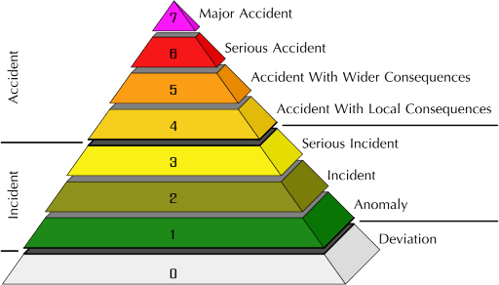
Here is a table of the highest-level events as determined by the INES, with a list of the criteria for that level accident, and the five examples that we include in this Section.
Table IV.1. Criteria and examples of the three most serious INES categories.
| INES Level | Criteria for this Rating | Examples |
| Level 7 (Major Accident) | Major release of radiation; widespread health/environment damage; massive emergency countermeasures. | Chernobyl (1986); Fukushima Daiichi (2011) |
| Level 6 (Serious Accident) | Significant release of radioactive material; requires planned local countermeasures. | Kyshtym, Russia (1957) |
| Level 5 (Accident w/Wider Consequences) | Limited atmospheric release; partial core damage; local countermeasures required or multiple radiation deaths. | Windscale Fire (1957); Three Mile Island (1979) |
The next table summarizes the causes and estimated total and partial radiation releases (in PetaBecquerels, PBq, where 1 PBq = 1,000 TBq =1015 nuclear disintegrations per second) from the five most serious accidents, which we describe in detail below.
Table IV.2. Characteristics and radiation releases from the five reactor accidents treated here.
| Reactor Accident | Date and Location | Cause of Accident | Total Radia-tion Release (PBq) | Iodine-131 Release (PBq) | Cesium-137 Release (PBq) | Strontium-90 Release (PBq) |
| Kyshtym | Sep. 29, 1957 Chelyabinsk, Russia | A coolant failure in a radioactive storage tank caused overheating, leading to a chemical explosion | 740, total stored in exploded tank; 74 emitted in atmos-pheric plume* | Not reported | 0.027 | 4 |
| Windscale | Oct. 10, 1957 Cumbria, England | A failed annealing process led to over-heating and ignition of uranium cartridges | 18.6 | 1.8 | 0.18 | 0.075 |
| Three Mile Island | Mar. 28, 1979 PennsylvaniaUSA | Equipment malfunction and human errors | 93 | 74 | Not reported | Not reported |
| Chernobyl | Apr. 26, 1986 Pripyat, Ukraine | Reactor design flaws and human errors | 5300 | 1760 | 85 | 10 |
| Fukushima Daiichi | Mar. 11, 2011 Fukushima, Japan | A 9.1 magnitude earthquake and tsunami flooded the plant, disabling cooling systems, leading to core meltdowns | 520 | 120 | 8.8 | Not reported |
- These releases disagree with the report in Caparic, et al., but are based on 2020 reports.
- Windscale (1957)
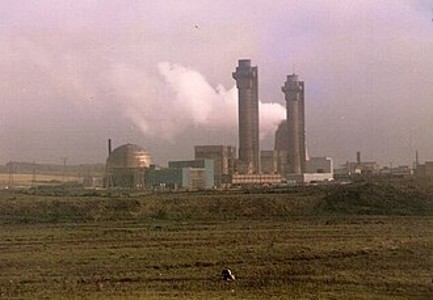
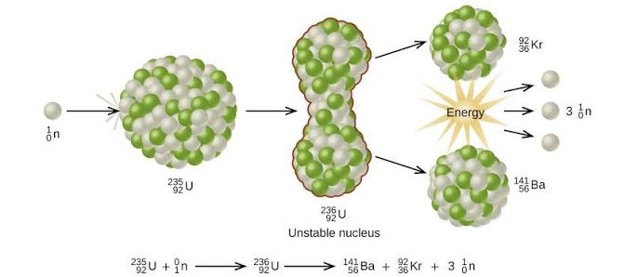
Following World War II, the British government began an atomic bomb project. They constructed two graphite-moderated nuclear reactors, known then as “atomic piles,” on the Windscale site in Cumbria, on the northwest coast of England. Figure IV.2 shows the two Windscale piles (the tall towers) in 1985. Initially, the plan was a military operation to produce plutonium, which would be used to build an atomic bomb. For that purpose, reactors were designed with a graphite core with horizontal channels drilled into the core, that would hold rods containing Uranium-235. When a slow neutron is absorbed by U-235, it causes the atomic nucleus to fission, or to split into two smaller nuclei. In this process, a massive amount of heat energy is released, and the process also typically releases a few neutrons. Those neutrons lose energy when traversing through the graphite; so the resulting low-energy neutrons can then be absorbed by another U-235 nucleus. In this way a chain reaction can be produced. The fission process is shown schematically in Fig. IV.3. Here, a U-235 nucleus absorbs a slow neutron, producing the nucleus U-236 which is unstable. That nucleus spontaneously breaks into two smaller nuclei (here Krypton-92 and Barium-141), accompanied by a massive release of energy. The decay process also produces three fast neutrons. Those neutrons are slowed down when passing through the graphite block and can initiate fission in another U-235 nucleus.
When the fission processes are carefully regulated, they can produce a sustained chain reaction with large releases of energy. However, if the chain reaction proceeds too fast, it can produce a massive atomic explosion. Figure IV.4 is a schematic picture of the Windscale atomic pile. Horizontal holes are drilled into a large block of graphite. Cylindrical fuel rods containing U-235 are inserted into the holes in the block. Fission reactions occur in the fuel rods. The Windscale facility was designed to produce small amounts of plutonium, which was collected by chemical processing of spent fuel rods and used to produce an atomic bomb. This plutonium bomb design is similar to the bomb dropped by the U.S. on Nagasaki in August, 1945. When the U-235 in the fuel rods becomes depleted, a new rod is inserted from the right and the spent fuel rod then falls into a water-filled channel. The water cools the fuel rod until it can undergo chemical processing, removing the plutonium, and the depleted fuel rods are subsequently stored as radioactive waste. Large fans at right blow onto the core, to cool it and prevent overheating. A filter at top left is designed to capture any reaction products and prevent them from escaping into the atmosphere.
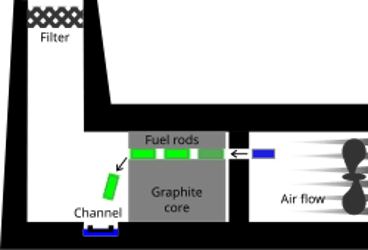
In hindsight, the design of the Windscale facility had many serious shortcomings. For example, when a new fuel rod was inserted and an old one expelled, it often missed falling into the water channel. Workers often had to push spent fuel rods into the channel, exposing them to large doses of radiation. The design of the Windscale reactor was similar to the Hanford site B reactor in Washington state. But the Hanford reactor was cooled by massive amounts of water that were pumped through channels in the graphite block. The British were unable to utilize this method as it required extremely pure water, to avoid corroding the graphite. As this method was too expensive for the British, they used large fans to cool the reactor. The fuel rods were fitted with fins, which enabled them to cool more efficiently with the air from the fans.
As it turned out, many of the expelled fuel rods did not fall into the water channels, which generated a great deal of excess heat. Even more serious was the fact that occasionally a fuel rod would burst when in the reactor core. The modification that eventually produced a nuclear accident occurred after the British decided to build a thermonuclear bomb. This would require producing a fission bomb whose release of energy would cause very large amounts of deuterium and tritium to fuse, and the fusion process would release amounts of energy much greater than a fission bomb (see the description of fusion conditions in a previous post). Production of a hydrogen bomb would require huge quantities of tritium. So the Windscale reactors were modified to add large quantities of lithium-magnesium (Li-Mg). When bombarded with neutrons from the reactor, the Li-Mg would produce tritium.
The bomb-makers faced tight deadlines to produce sufficient amounts of plutonium and tritium to manufacture a hydrogen bomb. So, they added more uranium to the fuel rods and reduced the size of the cooling fins on the rods. This produced additional heat and increased the production of tritium. However, these modifications increased the core temperatures to dangerously high levels; Christopher Hinton, the Windscale director at the time, resigned because he considered the risks to the project were too high. On October 7, 1957, a procedure was carried out to release excess heat from the reactor. However, monitoring equipment showed that the temperature was not dropping as expected. So the cooling fans were run at higher speed. Unfortunately, it turned out that some of the fuel rods had caught fire, and the fans only increased the spread of the fire.
When the staff inspected the graphite core in pile 1, they realized that some of the rods had been on fire for two days. A further clue was that smoke began escaping from the top of the reactor. The staff tried to quell the fire using carbon dioxide and then water, but neither method stopped the fuel rods from burning. Eventually the fire stopped when the staff prevented air from flowing into the reactor. However, by that time a significant amount of radioactive material had been released from the reactor. The reactor tank, containing about 15 tons of uranium fuel, has been sealed since the accident and is not scheduled for final decommissioning until 2037.
The British government had to decide how to deal with the incident. Initially, they commissioned a report that determined the cause of the accident, the amount of radiation released, and the radiation absorbed by the reactor staff. However Prime Minister Harold Macmillan ordered that the report be heavily censored and information about the incident be kept secret. His reasoning was that the British atomic bomb program required close collaboration with the Americans. Macmillan worried that the U.S. might cease sharing nuclear secrets with the British, if they knew that a serious accident had taken place at Windscale. The full report on the Windscale disaster was not released until 1988.
Clouds of radioactive dust escaped from the chimney of Pile 1 and spread across the UK and Europe. The amounts of radioactivity that escaped were much smaller than what was released at either Chernobyl or Fukushima Daiichi, the two level 7 incidents. The IAEA has designated the Windscale disaster as a level 5 incident. The filters installed at the top of the chimneys in the reactors (see Fig. IV.4) prevented most of the radioactive dust from escaping. The amount of radioactivity released is the smallest among the five accidents considered here, but still significant. The largest and most dangerous isotopes released were 1.8 PetaBecquerel (PBq) of Iodine-131; Cesium-137 (0.18 PBq); Xenon-133 (12PBq); and Polonium-210 (0.042 PBq). The release of Iodine-131 (I-131), with a decay half-life of 8 days, was considered most serious, since it is preferentially absorbed in the body in the thyroid, where it can produce thyroid cancer. It is particularly dangerous for children as their thyroids are not yet fully developed.
Following the Windscale release, tests were carried out on samples of milk locally; the milk was found to contain dangerous levels of I-131. Thus, for a month after the release of radioactivity, all milk from an area of 500 km2 around Windscale was confiscated, diluted, and dumped into the Irish Sea. However, no civilians were evacuated from the region surrounding Windscale. What were the effects on human health resulting from the Windscale disaster? One measure of health effects is obtained from numerical estimates of fatalities that resulted from this radioactivity over the next 40-50 years. A 1988 UK government report estimated that roughly 100 fatalities resulted from fatal cancers produced by this radiation exposure. The same report estimated that 90 non-fatal cancers resulted from this incident, and 10 hereditary defects. These were predicted to have occurred from increased rates of either thyroid cancer or lung cancer.
There have also been studies of cancer rates in the county of Cumbria, to see if any statistically significant cancer rate enhancements could be found in this region. The only significant increase in cancer was found in Seascale, a town 2 km from Windscale. Children born in Seascale between 1950 and 1966 had significantly higher rates of leukemia and non-Hodgkin lymphoma compared to the national average. However, children born during this same time period in the rest of Cumbria had rates of these two cancers that were much lower than the national average; this suggests that the increased rates in Seascale were not a result of exposure to radiation from the Windscale disaster. In 2010, a study was conducted of workers involved in the Windscale cleanup; they would have received the highest exposure to radiation. No long-term health effects were found in this group.
The Windscale disaster shows the potential dangers arising from the accidental release of large amounts of radioactive materials from a nuclear reactor. The Windscale project had a number of serious flaws in both the design and operation of the facility. Many of these flaws were known to the staff of the reactor; however, the British were determined to produce an atomic bomb at the earliest opportunity and thus operated the reactor in ways that produced this incident. The American Manhattan Project (which had several British participants) was motivated by the belief that the Germans, who had discovered fission reactions, were probably working on building a bomb, and the Allies would have to mount a bomb project immediately. Since the British atomic bomb project was begun following World War II, there was no analogous time pressure on the UK project. However, the British were convinced that failure to join the “atomic club” would jeopardize their status as a major power. As a result, their efforts were rushed and resulted in the reactor fire and release of radioactivity. The Windscale disaster also demonstrates the many ways in which nuclear reactor projects can go awry. The other nuclear disasters reviewed in this Section will show other ways that reactors can fail, with some disastrous consequences for human health and damage to the environment.
- B. The Kyshtym Accident
Following World War II, Josef Stalin directed Russian scientists to mount a crash program to develop Soviet atomic weapons. Work progressed in secret at several military sites, and one of these was Mayak, in the closed city of Chelyabinsk – 40, located in the eastern Ural Mountains. Mayak was built between 1945 and 1948. Workers were under great pressure to make rapid progress in developing nuclear weapons. They were on a crash program to accumulate sufficient amounts of uranium and plutonium to produce nuclear weapons. Safety measures were rather primitive, due partly to the haste attached to the program, and partly because the understanding of the hazards of radioactive materials was at an early stage.
Initially, radioactive waste from the Mayak plant was simply dumped into nearby bodies of water. The Techa River received 2.75 PetaBecquerel (PBq) of radioactive material, while 4,400 PBq of radioactive waste was dumped into Lake Karachay, which would later be called “the most polluted place on Earth.” But by 1953 it was decided to store liquid radioactive waste in large steel tanks, which were located inside a large concrete canyon. The steel tanks stored large amounts of radioactive material. The decays of that material generated large amounts of heat. Each tank, which contained about 70-80 tons of liquid radioactive waste, was surrounded by a water cooling system that would carry away the heat that was generated in the tank.
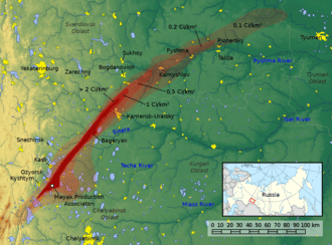
Regulation of the tank cooling systems was rather primitive. As a result, it was not noticed that the cooling system for one of the storage tanks had stopped working. Over a two-month period, the temperature in the tank rose steadily. Over time and with increased temperature, the liquid in the tank became solid. On Sept. 23, 1957 at 4:22 PM local time, the temperature in the uncooled tank reached 350o C. At that point, a massive chemical explosion completely destroyed one of the tanks. The tank had a concrete cap weighing 160 tons and it was blown off by the explosion, which was estimated to create a force comparable to 70 tons of TNT. The explosion resulted in a column of smoke and dust that rose to a height of 1 km. The blast is estimated to have released 740 PBq of radioactive material. Roughly 90% of that material settled on the ground surrounding the Mayak plant and added to the contamination of the Techa River; however, about 74 PBq of radioactive material was contained in a plume that spread out over hundreds of kilometers downwind (Northeast) of the plant. Figure IV.5 shows the extent of the plume. It originated in the lower left corner of the figure and spread over a distance of 300 – 350 km (the large area colored in red). The darker red sections in Fig. IV.5 show the areas that received the largest amounts of radioactive material. The two isotopes that were considered the most dangerous to human health were Strontium-90 (Sr-90) and Cesium-137 (Cs-137). Sr-90 is absorbed in bones and bone marrow and can cause bone cancer and leukemia. Cs-137 is absorbed in soft tissues in the body. It has been associated with diseases of the thyroid, adrenal glands, and the pancreas.
Here is a YouTube video describing the 1957 Kyshtym accident.
The area shown in red in Figure IV.5 is now called the East Urals Radioactive Trace (EURT). The EURT covers an area of 15,000 square kilometers. The population living in the EURT area was about 270,000. The incident is called the Kyshtym disaster, as Kyshtym was the nearest town to the Mayak facility. The initial Soviet response was to cover up the explosion. One week after the explosion, around 10,000 people in the most seriously affected area were evacuated, although they were never told the reason that they were moved. After they were evacuated, officials bulldozed their houses to prevent the people from moving back. In the region immediately surrounding the Mayak facility, contaminated soil was excavated and was stored in fenced enclosures. Over the next decades, Soviet scientists performed detailed studies of the soil, the vegetation, and the health of the citizens who had lived in the EURT. In order to allay suspicion by the population, the EURT was named a “restricted nature reserve.” It was hoped that this would give a rationale for removing people from this area.
In 1976, Soviet dissident Zhores Medvedev published a lengthy account of the Kyshtym disaster in the New Scientist. It described in some detail the chemical explosion at the Mayak facility. It was interesting that many Western critics felt that Medvedev had exaggerated the magnitude of the accident, due to his dislike of the Soviet authorities. However, in 1989 the Soviet science advisor Yevgeni Velikhov released the details of the Kyshtym disaster. The Soviets estimated that people who had been evacuated from the EURT region received between 23 and 520 milliSievert of radiation, and that some individual organs may have received 1500 milliSievert of radiation. For comparison, the U.S. Department of Energy recommends an annual upper limit for radiation workers of 20 milliSievert (see Fig. III.4). The Kyshtym event is estimated to have caused at least 200 deaths from radiation sickness and long-term health impacts including genetic disorders, cancers, leukemia, and birth defects.
Kyshtym released 740 PBq of radioactive material, compared to 5300 PBq released in the Chernobyl disaster. For this reason, despite the fact that the Mayak accident was a chemical explosion rather than a nuclear reactor accident, the INES has rated the explosion at the Mayak facility as 6 on their rating scale of nuclear incidents. This would make this disaster behind only the nuclear reactor failures at Chernobyl and Fukushima Daiichi in its disastrous impact
- C. Three Mile Island
We published a blog post on the future of nuclear power. One section of that post was devoted to a review of some major accidents at nuclear reactors. There, we reviewed the accidents at Three Mile Island, Chernobyl and Fukushima Daiichi. Interested readers can go to our blog for more detailed discussions of those reactor accidents.
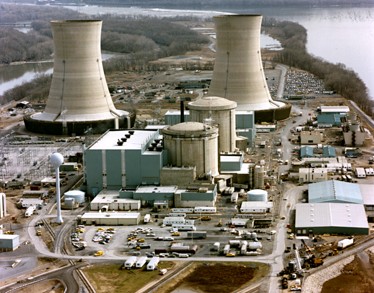
Three Mile Island (TMI) was a nuclear power plant located by the Susquehanna River south of Harrisburg, Pennsylvania. The plant had two separate units, which were operated by different companies. Figure IV.6 shows a photo of the Three Mile Island complex as of 1979.
Figure IV.7 shows the schematic diagram of the nuclear reactors at Three Mile Island. The containment building houses the water-cooled reactor, showing the fuel bundles and control rods. The pressurized water, heated by the ongoing fission, is pumped into steam generators, where it transfers heat to a secondary water reservoir that produces steam. The steam then leaves the containment building, where it spins a turbine that in turn powers a generator. The used steam is then sent through a condenser where some of the resulting water is returned to the reactor.
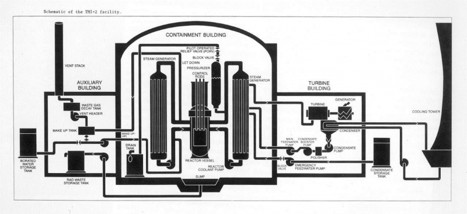
On the evening of Mar. 28, 1979, plant operators were attempting to remove a blockage of resin in a set of filters that cleaned the water in the secondary loop (shown schematically in Fig. IV.7). A blockage in an instrument air line caused a set of pumps to turn off around 4 am on March 29. This meant that feedwater was no longer flowing into the steam generators, which caused the reactor coolant system (RCS) to overheat. The reactor coolant at Three Mile Island was pressurized water. Eventually the increased heat and pressure activated an automated reactor safety procedure. The control rods dropped all the way into the reactor and shut off the fission process by absorbing the neutrons that initiate the fission. When the RCS pressure reached a certain point, a pilot-operated relief valve (PORV) automatically opened up. Although there was no longer heat generated by the fission process, the radioactive fuel rods continued to generate heat by the decay of the radioactive isotopes within them, even after the fission process stopped.
Once the feedwater pumps turned off, three emergency feedwater pumps were automatically activated. However, blocking valves were closed in each of the emergency feedwater lines. Thus, none of the emergency feedwater entered the reactor vessel. The closed blocking valves constituted a major failure of the TMI reactor system, which was supposed to be shut down whenever the auxiliary pumps were closed off.
Secondary steam valves opened up and both the temperature and pressure of the RCS decreased. But the PORV was stuck open, so coolant water continued to be released from the reactor. Reactor operators did not realize that the PORV was stuck open, and coolant escaped from the reactor vessel through the open PORV. This constituted a loss of coolant accident (LOCA), one of the most serious emergencies for a nuclear reactor. Unfortunately, operators did not realize they were experiencing a LOCA.
Because of operator and instrument failures, the temperature and pressure of the steam continued to increase, converting much of the reactor cooling water to steam. At 6 am on March 29, this caused the top of the reactor core to be exposed. When this happened, the zircalloy nuclear fuel rod cladding underwent a reaction that produced zirconium dioxide, hydrogen, and additional heat. This melted the fuel rod cladding and damaged the fuel pellets, releasing radioactive isotopes into the reactor coolant.
Roughly 120,000 liters of radioactive coolant was pumped out of the containment building. But operators did not realize that the containment building was seriously contaminated with radiation. At 6:56 am, Metropolitan Edison and state officials began issuing statements about the incident; unfortunately, the statements were both confusing and contradictory. The Nuclear Regulatory Commission (NRC) was also notified and sent a team to the facility. But the plant operators did not realize that when the NRC was first alerted by the Three Mile Island staff, nearly half of the uranium in the TMI-2 reactor had melted.
Officials found that a large bubble of hydrogen had formed as a result of the reaction of the zircalloy fuel rod coating with steam in the top of the reactor. If oxygen was present in the core, the hydrogen could have exploded and possibly released radioactive material from the containment building. To prevent a hydrogen explosion, the operators removed steam and hydrogen from the reactor; however, some of these gases, containing radioactive elements, were vented straight into the atmosphere.
Within a day of the incident, a team from the Environmental Protection Agency (EPA) began monitoring the area surrounding the Three Mile Island plant for increased levels of radioactivity. They determined that the vast majority of radioactive material released involved the noble gases Xenon and Krypton. The EPA estimated that a person living in the vicinity of Three Mile Island received an average dose of 0.014 milliSievert of radiation. This can be compared to the 0.032 milliSievert that a patient receives from a chest X-ray, or the 3.5 milliSievert average yearly dose of radiation from natural sources. In addition, cow’s milk and goat’s milk were tested and researchers found no elevated levels of the radioactive isotopes Iodine-131 or Cesium-137. The EPA later claimed that the release of radioactive materials in the TMI incident did not increase the dose of radiation enough to cause even one additional cancer death in the population. They also measured no contamination in samples of soil, water, sediment or plants in the area.
On advice from the NRC, Pennsylvania governor Dick Thornburgh urged that pregnant women and pre-school children living within five miles of the TMI facility be temporarily evacuated. That distance was subsequently extended to a radius of 20 miles from the nuclear plant. Within a few days, over 140,000 people had temporarily left that area; within three weeks, 98% of the evacuees had returned to their homes.
In April 1979, Jimmy Carter created the Presidential Commission on the Accident at Three Mile Island. The commission was chaired by John Kemeny, the president of Dartmouth College. The Kemeny Commission reviewed the data following the TMI incident. They concluded that the reactor vessel had contained the vast majority of the uranium that melted. The commission report criticized Babcock & Wilcox, the company that built the Three Mile Island reactors. They also criticized “Met Ed, GPU [the General Public Utilities Nuclear Corporation], and the NRC for lapses in quality assurance and maintenance, inadequate training, lack of communication of important safety information, poor management and complacency.“
The Kemeny Report placed much of the blame for the accident on Babcock and Wilcox. They noted that the pilot-operated relief valve (PORV) had previously been stuck in the open position on 11 different occasions, allowing coolant to escape. Furthermore, they noted that another Babcock & Wilcox facility, the Davis-Besse Nuclear Power Station in Toledo, OH, had experienced a similar set of failures 18 months before the TMI incident. Babcock and Wilcox had not alerted staff at their other facilities of this problem after it surfaced in Toledo.
Another serious failure was that the emergency feedwater pumps were closed by blocking valves. Operating procedures stated that the reactor should never have been operated when those valves were closed. The combination of the open PORV valve and the blocking valves closing off the emergency feedwater led to this serious accident. Operators failed to realize that temperatures and pressures in the reactor had reached dangerous levels. When the morning operators arrived at 6 am, they immediately recognized there was an emergency and took steps to close down the reactor.
The Three Mile Island incident was the result of poor reactor design (operators did not realize that various valves were open or shut), lack of attention to reactor maintenance (running the reactor when the emergency feedwater lines were blocked), poor training of the reactor operators, and complacency. A significant amount of radioactive material, in the form of gases, escaped from the containment building. Also, coolant containing radioactive material left the containment building; however, almost all this material remained on site. Many tons of the enriched uranium fuel melted and fell to the bottom of the reactor vessel.
In 1985, a television camera took photos of the damaged reactor vessel. In 1986, samples were taken of the materials inside the reactor. It was found that some 20 tons of uranium had melted and fallen to the bottom of the reactor vessel. At the extremely high temperatures that had occurred in the reactor vessel, some of the fuel rods had melted. The fuel, zircalloy cladding of the rods, and various parts of the reactor vessel had formed a liquid substance called corium (the scientific term for this mixture of reactor fuel, cladding and other elements). At TMI-2, the corium flowed down to the bottom of the reactor vessel and formed a lava-like solid with a thickness of 5 to 45 centimeters. This confirmed the conclusions of researchers that the top of the fuel rods had been uncovered and had reacted to high-pressure steam in the vessel. But it was reassuring that despite the extreme conditions existing in the reactor after this incident, nearly all of the molten reactor products were contained within the reactor vessel.
Nuclear power advocates such as Edward Teller claimed that the Three Mile Island incident was a great success for the nuclear power industry. Teller pointed to the fact that the reactor vessel had contained the molten uranium, and that the EPA estimated that the radioactive gases released from the plant did not cause one additional case of cancer in the surrounding community. Teller stated that this incident should cause the public to have even more confidence in the safety of nuclear power.
Few people agreed with Teller. The public had been assured that the many levels of safety built into a nuclear reactor meant that an accident of this magnitude should never have occurred. They worried that a more dangerous accident was likely to take place in the future, and they were skeptical of assurances that the release of radioactive gas was relatively harmless. Immediately after the TMI incident, the public had been subjected to a number of conflicting and confusing statements from plant officials, civil servants, and representatives of the Nuclear Regulatory Commission. Adding further to the confusion was the fact that the statements changed from day to day, as more information about the incident came to light.
The cleanup at Three Mile Island took 12 years to complete, at a cost of about $973 million. In August 1979, low-level radioactive waste was transported to Richland, Washington. Beginning in October 1985, about 100 tons of damaged fuel in the reactor vessel was lifted into fuel canisters and transported to the Idaho National Laboratory for long-term storage. The process was completed in April 1990. Also, 2.8 million gallons of contaminated water remained from the reactor and the cleanup. The water was processed and stored and eventually evaporated. The evaporation was carried out from January 1991 to August 1993. Because of the seriousness of the partial core meltdown and the radioactive gases released from TMI-2, the INES rated the Three Mile Island accident as level 5, the same level as the 1957 Windscale fire in the UK.
- D. Chernobyl
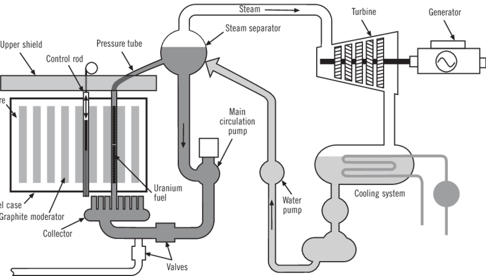
The Chernobyl facility was a nuclear reactor complex built by the Russians in Ukraine, about 20 km south of the Ukraine-Belarus border. Construction began in August 1972 and the reactor was commissioned in September 1977. The Chernobyl reactors were of the RBMK-1000 design; a schematic of the RBMK reactors is shown in Fig. IV.8. The fuel in the Chernobyl reactors was slightly enriched (2% U-235) uranium, which was packed into bundles surrounded by zirconium alloy cladding. The fuel bundles were surrounded by graphite moderators, which slowed down neutrons arising from fission of U-236. Water was pumped into the bottom of the reactor; as it moved up past the fuel bundles, it heated and turned into steam. The steam powered turbines that generate electricity. The steam was then sent through a condenser and pumped back into the bottom of the reactor.
On April 25, 1986, reactor 4 at Chernobyl was to be shut down for routine maintenance. The operators of the reactor prepared it for a test; they wanted to see how long turbines would spin and power would continue to be generated if the main electrical power supply was turned off. The issue was whether the slowing turbines would be able to provide sufficient electrical power to operate the core cooling water circulation pumps, until the emergency power supply became activated. Unfortunately, there was insufficient communication between the team preparing the test and the personnel operating the reactor. Furthermore, the test was carried out by night shift operators, who were less skilled in operating the reactor and understanding its requirements.
At the start of the test the reactor should have been stabilized to about 700 Megawatts thermal (MWt, a measure of thermal power in an engine). However, the power fell to about 30 MWt. It is not understood why the power fell so dramatically. The team running the test had shut off the reactor’s emergency core cooling system. In order to increase the reactor power to 700 MWt, the operators withdrew most of the control rods from the reactor. Operating instructions stated that there should never be less than 15 control rods inserted in the reactor; however, because the reactor power was so much less than desired, the operators left only 8 control rods in the reactor.
It is believed that “Xenon-135 poisoning” was the primary cause for the inability of the operators to raise the reactor power to the desired level of 700 MWt. Xe-135 is produced by the decay of Iodine-135. Under normal operating conditions, the amount of Xe-135 in the reactor is stable (it is produced at the same rate that it decays). However, since I-135 has a half-life of 6.7 hours (half the atoms of a sample of I-135 will decay every 6.7 hours), after the reactor power was turned off, Xe-135 continued to increase. Xe-135 is a very strong absorber of neutrons. Thus, the difficulty of restoring the reactor power was likely due to the strong absorption of neutrons by the Xe-135 present in the reactor.
At 1:03 am on April 26, the reactor power stabilized at about 200 MWt and the shutdown test was begun at this power level. Unknown to the reactor operators, the RBMK reactors had a fatal flaw. The water coolant in the reactor had the function of cooling the fuel bundles; the water also slowed down and absorbed some neutrons from fission reactions. As the water rose past the fuel bundles, it turned to steam. But the reactor possessed a “positive void coefficient.” As water turned into steam, the increase in steam bubbles (called “voids”) increased the speed of the fission reaction. This was because the steam was much less dense than water, so the steam was less effective in absorbing neutrons.
The larger number of neutrons increased the rate of fission. This increased the temperature in the reactor, which increased the amount of steam. This, in turn, increased the rate of fission reactions, and hence the temperature. Under the right conditions, this could produce a runaway fission reaction, where the rate of uranium fissions, the temperature inside the reactor, and the fraction of cooling water that turned to steam, all increased together. The rapid increase in steam also produced an “overpressure” inside the reactor. A well-designed reactor would ensure that the “void coefficient” was always negative; that is, safety mechanisms would automatically kick in if the temperature and fission rate began to accelerate, preventing a dangerous and uncontrolled rise in the rate of fission.
As the temperature inside the reactor and the rate of fissions increased drastically, the control rods were programmed to be fully inserted among the fuel rods. This condition occurred at 1:23 am on April 26. In principle, inserting the control rods should have stopped the fission reaction and safely shut down the reactor. However, the RMBK reactors had even more design flaws, which would prove deadly. First, the control rods were designed in such a way that they caused a dramatic surge in power and pressure as they were first inserted into the reactor. The increased pressure caused the cover plate of the reactor to become detached. This ruptured some of the fuel assemblies, which subsequently jammed the control rods when they were only halfway down the reactor. So, the control rods failed and the fission, temperature and pressure continued to rise out of control. Yet another design flaw meant that significant damage to even three or four of the fuel bundles could result in destruction of the reactor.
The tremendous increase in temperature and pressure ruptured the emergency cooling circuits, which caused the reactor to be inundated with even more water, which turned to steam and increased the pressure. The reactor output jumped to around 30,000 MWt, some 10 times the normal power output of the reactor. This was the last recorded output from the reactor; later reactor simulations suggest that the power spike may have been at least 10 times the maximum recorded level. The massive amount of steam under high pressure caused an explosion of the steam. The explosion blew a hole in the top of the reactor, blasting off the upper biological shield. The first explosion ejected materials from the fuel, 25% of the graphite moderator and materials from the reactor structure. It also released massive amounts of gases containing radioactive isotopes.
Two or three seconds later, an even more powerful explosion occurred. The exact nature of the second explosion is not certain (conclusions about the reactor explosions are based on later computer simulations of the reactor behavior). The most widely accepted idea is that chemical reactions of the zirconium cladding of the fuel bundles with the high-pressure steam produced a large amount of hydrogen. When the reactor vessel ruptured, the hydrogen combined with oxygen in the atmosphere and exploded. An alternative hypothesis was that the second blast was also a steam explosion. An even more speculative idea was that the out-of-control fission reactions produced a nuclear explosion, similar in magnitude to an atomic bomb test that “fizzled,” i.e., which led to an explosion but did not produce the gigantic blast from a full-fledged nuclear bomb.
Regardless of the nature of the explosions, one operator died immediately and a second worker died a few hours later from his injuries. The plume of material ejected from Chernobyl reactor 4 reached a height of 1 km. The heavier material landed near the site of the explosion; however, gases and particles that contained fission products and radioactive isotopes were blown from the plant on the prevailing northwesterly winds. Figure IV.9 shows an aerial view of the Chernobyl reactor following the explosion. The large circular crater shows where reactor 4 exploded.
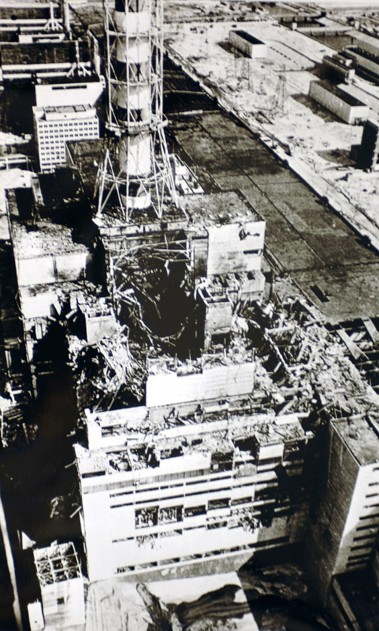
The first contingent of 14 firemen from the reactor complex arrived at 1:28 am. More than 100 firefighters from the site and from the nearby town of Pripyat were brought in to control the fires on site. Water and foam were used to put out the fires produced by the burning ejecta from the reactor. Many of the first cadre of firefighters received massive doses of radiation. In addition to the two staff who died on the first day, by the end of July 1986 six firemen and 22 reactor staff died from acute radiation poisoning. On April 28 a massive accident management and cleanup was begun. As many as 1,800 helicopter flights were made over the reactor complex. The helicopters dumped neutron-absorbing materials and fire-control material into the crater formed by the reactor explosion. Initially, the helicopters hovered over the reactor while dumping their loads; however, it was soon realized that the pilots were receiving massive doses of radiation, so on subsequent flights the materials were dropped while the copters flew over the reactor. Unfortunately, the materials landed over a wide area and caused damage to other parts of the reactor complex, which likely resulted in the release of more radioactive material. Also, some of the fire-control material may have acted as thermal insulators for the damaged reactor. This may have increased the temperature of the remaining core elements and increased the quantity of radioactive materials subsequently released from the Chernobyl site.
The radioactive isotopes that were most damaging to people living in the vicinity of the Chernobyl plant were Iodine-131, cesium-137 and strontium-90. As seen in Table IV.2, the releases of all three of these radioisotopes were the largest of any nuclear reactor accident. Iodine-131 has a half-life of 8 days (in 8 days, half of the atoms of I-131 will have decayed; in 24 days only 1/8 of an original sample of I-131 will not have decayed). When humans are exposed to Iodine-131 it tends to collect in the thyroid. Children who are exposed to I-131 tend to have a greater risk of developing thyroid cancer. If correctly diagnosed, thyroid cancer is slow-growing and rather easily treated. The most common treatment is to provide iodine tablets to people who might be exposed to I-131. The tablets saturate the thyroid with normal iodine, so that the radioactive iodine is not absorbed into the system. Over 6,000 thyroid cancer cases were reported by inhabitants exposed to the fallout from the Chernobyl blast.
Cesium-137 has a half-life of 30 years. People who are exposed to Cs-137 may suffer from exposure to high-energy gamma radiation from its decay products. The most dangerous of these decay products is barium-137. It emits gamma radiation, which spreads through the body and can cause damage to DNA in tissues throughout the body. If people are exposed to significant amounts of Cs-137, the resulting gamma rays can cause skin burns. The National Radiological Protection Board of Great Britain estimates that over the next 70 years, people exposed to Cs-137 from the Chernobyl accident will likely develop 1,000 additional cases of cancer.
Strontium-90 has a half-life of 28.8 years. It was likely expelled from the Chernobyl reactor in the cloud of radioactive gases and particles. It can be dangerous if inhaled, but the greatest concern for health is if it gets ingested in food or water. In the body, Sr-90 acts like calcium and is absorbed in teeth and bones. There, it can produce cancers of the bone and bone marrow, and soft tissues surrounding the bones.
The Soviet government, which was in charge of the Chernobyl reactor, embarked on a shameful attempt to keep the Chernobyl accident a secret. About 120,000 people lived within 30 km of the nuclear plant. Although the town of Pripyat was immediately evacuated on April 27, Ukrainian government officials were told that a fire had broken out at the Chernobyl plant, but that it had been extinguished and that “everything was fine.” The citizens of Pripyat were told that their evacuation would last just three days. However, the following day the evacuation area was expanded to a 10-km zone surrounding the blast. And ten days after the accident the evacuation zone was further expanded to 30 km.
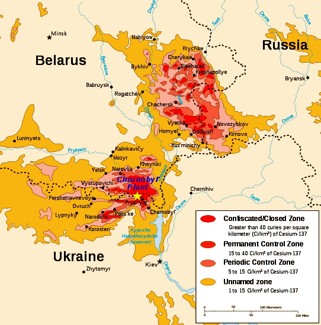
The area surrounding the Chernobyl blast is now the Chernobyl Nuclear Power Plant Zone of Alienation. Although the current Exclusion Zone has been modified somewhat from the original 30-km area around the blast, the borders have been changed slightly to include more of Ukraine. The Exclusion Zone includes those areas that still have the highest contamination from radioactive materials. The Exclusion Zone today has one of the most highly contaminated areas from radioactive debris. The area initially held a population of roughly 120,000 people. Figure IV.10 contains a map that shows the levels of radiation at various points within the Exclusion Zone. The units are Curies/km2 of Cs-137, where one Curie of radioactive material experiences radioactive decays of 37 billion nuclei per second.
When will settlers once again be allowed to inhabit the Exclusion Zone? Vastly different estimates have been reported for this. In 2011, Ukraine government authorities estimated that resettlement could take place in 320 years. On the other hand, the Christian Science Monitor quoted sources that estimated 3,000 years before resettlement; and Greenpeace claimed that the area could not be inhabited for tens of thousands of years. We have not been able to find evidence for these last two claims. Nonetheless, during the ongoing Russian invasion of Ukraine, a significant number of Russian soldiers were encamped within the Exclusion Zone for more than a month in March and April 2022.
The Soviets did not alert their European neighbors that a dangerous and deadly accident had occurred at Chernobyl. The first indication from outside the Soviet Union occurred on April 28 when radiation monitors at the Forsmark, Sweden nuclear power plant observed clouds containing radioactive particles. The Swedes contacted the Russians, who denied that any radioactivity was coming from the Soviet Union. Only when the Swedes announced their intention to notify the International Atomic Energy Agency did the Soviets admit that the radioactive materials originated from an accident at Chernobyl.
Eventually, Soviet officials installed a thick layer of concrete under the reactor in an attempt to prevent radioactive materials from burning down and contaminating the groundwater. A concrete and steel “sarcophagus” was also constructed and installed over the top of the reactor facility, in order to prevent the release of further radioactive material into the atmosphere. Initially, robots were deployed to work around the intensely high levels of radiation in the former reactor; however, the radiation damaged the robots and destroyed their batteries. As a result, many workers were deployed for this work. They were equipped with bio-hazard suits but apparently the levels of radiation were much higher than the protection levels provided by their suits. It was decided that the workers should spend only a single shift working on the reactor, but many of them reported working five or six shifts. The workers were also poorly informed about the health dangers they faced.
The International Atomic Energy Agency authorized two investigations of the Chernobyl disaster by the International Nuclear Safety Advisory Group (INSAG). The first report, issued in 1986, blamed the accident almost entirely on operator error. This had been the Soviets’ claim regarding the accident. However, a second report, INSAG-7, issued in 1992, was based on much more information and more sophisticated computer models of the Chernobyl reactor. That report concluded: “The Accident is now seen to have been the result of concurrence of the following major factors: specific physical characteristics of the reactor; specific design features of the reactor control elements, and the fact that the reactor was brought to a state not specified by procedures or investigated by an independent safety body. Most importantly, the physical characteristics of the reactor made possible its unstable behavior.” The investigation concluded that the operators had turned off various safety systems and their actions showed that they ignored regulations to expedite the reactor test, and communication between the safety officers and officials conducting the test was poor. However, the accident also occurred because of poor design of the reactor that led to an instability that caused the reactor failure.
The four design elements that contributed to the disaster were: 1) Use of a graphite moderator in a water-cooled reactor, which allowed the reactor to go critical when a loss of coolant accident occurred (when water also serves as the moderator, its loss would increase the fission rate); 2) A positive steam void coefficient that allowed the reactor to undergo a destructive power surge; 3) The control rods required 18-20 seconds to be fully inserted, and the rods possessed graphite tips that increased reactivity when first inserted; 4) No reinforced containment building surrounded the reactor.
These faulty design elements, combined with a culture that disregarded safety guidelines, and with an atmosphere where communications between the plant’s reactor operators and its safety officers were poor, led to the catastrophic set of circumstances that produced this deadly accident.
What are the long-term threats to the health of people who lived near the reactor, and to people who were “downwind” of the Chernobyl plant, and who might have been exposed to radioactive gases and dust particles? Here, the answer is problematic; various groups have produced radically different estimates of the number of cases of cancer due to the radioactivity. Two scientists, Anders Moller and Timothy Mousseau, have published articles claiming that the mutation rate of animals in the Exclusion Zone is many times higher than normal. However, Moller had previously been reprimanded for publishing fraudulent articles; this may cast some doubt on his estimates.
One definite consequence of the Chernobyl disaster was the increased number of elective abortions by pregnant women in the Ukraine, Belarus and Russia, but also in countries in western Europe over which the radioactive cloud had passed. Although the exact numbers are not known, there were at least 150,000 additional abortions because of fears of fetal deformities from the radiation; some have claimed that there were as many as one million elective abortions following the Chernobyl disaster. However, scientists maintain that no fetus should have received a threshold dose of radiation. This is partly because all the front-line Chernobyl staff and fire fighters, who received the highest doses of radiation, were male. However, no statistically significant increase in developmental abnormalities has been observed in the children of those front-line workers who received and survived massive doses of radiation.
The U.N. Scientific Committee on the Effects of Atomic Radiation has estimated that the Chernobyl disaster exposed the average citizen on Earth to an additional 21 days of radiation compared to natural background radiation. However, the “Chernobyl Liquidators,” reactor lab staff and firefighters who received the largest doses of radiation, averaged an increased radiation dose equivalent to 50 years of normal background exposure. The U.N. Committee estimated that the Chernobyl fallout will lead to 4,000 additional deaths above the norm for the roughly 600,000 people who lived in the Exclusion Zone area.
The Union of Concerned Scientists (UCS) estimated that worldwide, one should expect an additional 50,000 cancer cases and 25,000 deaths from the Chernobyl disaster. However, the UCS scientists calculated this using the collective dose, while the International Commission on Radiological Protection states that using the collective dose “is inappropriate to use in risk projections.” The UCS estimate can be compared to the World Health Organization’s estimate of 4,000 future cancer deaths in countries bordering Ukraine. Greenpeace, which carried out its own study, claimed that the Chernobyl accident could lead to 10,000 – 200,000 additional cancer deaths in Ukraine, Belarus and Russia between 1990 and 2004. The largely discredited book Chernobyl: Consequences of the Catastrophe for People and the Environment, concluded that there were 985,000 premature deaths around the world resulting from the radiation released from Chernobyl. That number is almost certainly orders of magnitude too large. However, it is difficult to obtain accurate information following the collapse of the Soviet Union and the low level of current public health resources in former Soviet-bloc countries.
It is also difficult to obtain accurate figures for the cost of the Chernobyl cleanup. Former Soviet Union president Mikhail Gorbachev has claimed that the initial costs to the Soviet Union of containment and decontamination were about 18 billion rubles, or about $11.1 billion in 2019 dollars. The claim was that this nearly bankrupted the Soviet Union. In April 2006 Gorbachev stated “The nuclear meltdown at Chernobyl 20 years ago this month, even more than my launch of perestroika, was perhaps the real cause of the collapse of the Soviet Union.” It is estimated that over a 30-year period the cost to Belarus was $235 billion. Even today, it is claimed that Ukraine spends between 5% and 7% of its budget on Chernobyl-related activities. At present, the bulk of the costs from Chernobyl come from the continued social benefits paid to 7 million inhabitants living in Russia, Ukraine and Belarus.
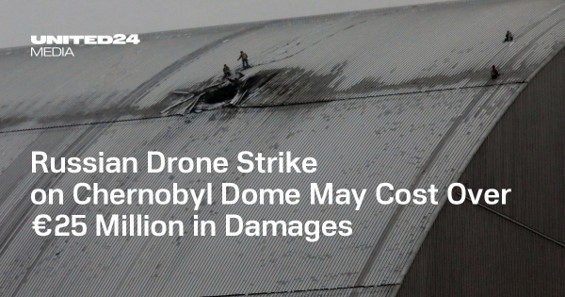
During the course of Russia’s war on Ukraine, the Russians have caused considerable damage to both the Chernobyl reactor site and the Exclusion Zone surrounding the reactor. In 2022, during the first weeks of the Russian invasion, Russian troops occupied the plant and surrounding area. They dug trenches in the heavily contaminated Red Forest, which caused a localized spike in background radiation before they retreated. The reactor had been covered with a concrete and steel sarcophagus, the New Safe Containment arch. But in February 2025, a Russian drone launched a high-explosive warhead that struck the arch. The warhead set off a 17-day fire that compromised the safety and confinement functions of the arch. Figure IV.11 shows damage to the containment arch caused by the Russian drone strike. The radiation levels outside the structure have remained unchanged since the drone strike. However, it is estimated that repairs to the arch will cost hundreds of millions of dollars, and the structure is now vulnerable to a further strike that might hit the Chernobyl reactor. If this happens it could cause a further catastrophic release of radioactive material.
Here is an ABC News report on the 40th anniversary of the Chernobyl disaster, as Russia continues attacks on the Restricted Area around the reactor site.
- E. Fukushima Daiichi
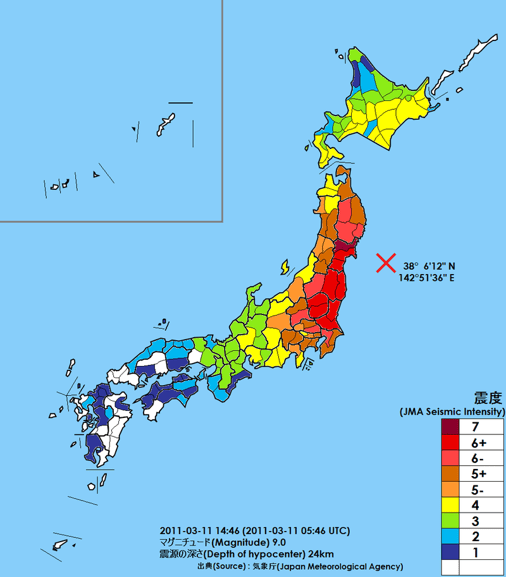
The Fukushima Reactor disaster occurred on March 11, 2011 and affected the Fukushima Daiichi Nuclear Power Plant in Okama, Fukushima prefecture, Japan. The proximate cause was the Tohoku earthquake that took place off the coast of Honshu Island in Japan (see Fig. IV.12). This was a quake of magnitude 9.1 on the Richter Scale, making it one of the largest earthquakes in recent memory. The epicenter of the quake was 72 km east of the Oshika Peninsula of Tohoku, Japan and it took place just 32 km below the surface. In this region, the Pacific Plate is subducting beneath the plate of northern Honshu. The quake was sufficiently powerful that it moved the island of Honshu 2.4 meters to the East. The earthquake generated some enormous tsunami waves. The highest crests of the tsunamis were estimated at 40.5 meters, at the town of Miyako (see Fig. IV.13). The tsunami traveled at 700 km/hour and traveled as far as 10 km inland.
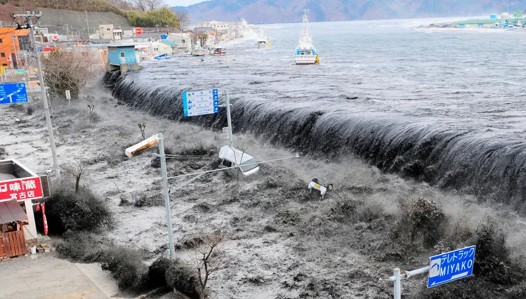
The latest official figures for damage from the earthquake and tsunami are 19,747 deaths, 6,242 injured and 2,556 people missing. The Fukushima Daiichi reactor complex also experienced two tsunamis, with the larger having a height of 14 m. Since the area is the site of regular earthquakes, a seawall had been built off the coast of the Fukushima reactor complex. It was sufficient to contain a tsunami of height 5.7 m. As the maximum height of the tsunami was roughly 14 meters, it swept over the seawall and inundated the reactors. This is shown in Fig. IV.14. The sizes of the earthquake and tsunami were a surprise to geologists, as it was predicted that earthquakes in this region were unlikely to exceed 8.1 on the Richter scale, an order of magnitude less powerful than the actual Tohoku earthquake.
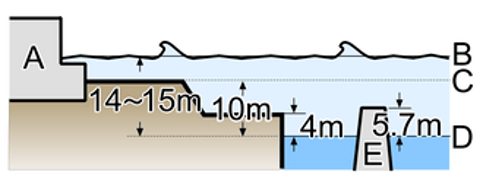
Unfortunately, the administration at TEPCO (the Tokyo Electric Power Company) ignored several earlier recommendations that they change the protection of Fukushima Daiichi from large tsunamis. In 1991 the U.S. Nuclear Regulatory Commission warned that the Fukushima complex might be in danger of losing emergency power; TEPCO took no action on this recommendation. In 2000, an in-house TEPCO study recommended that the reactor complex be modified to account for the possibility of a 15-m tsunami, rather than the 5.7 m seawall protecting the plant. TEPCO did not make any of the suggested changes and did not publicize this request, saying later that “Announcing information about uncertain risks would create anxiety” among the population. And the Active Fault and Earthquake Research Center (AFERC) urged TEPCO to revise upwards their estimates of possible tsunami heights. AFERC used the example of a massive tsunami in 869 at Sanriku; once again, TEPCO took no action.
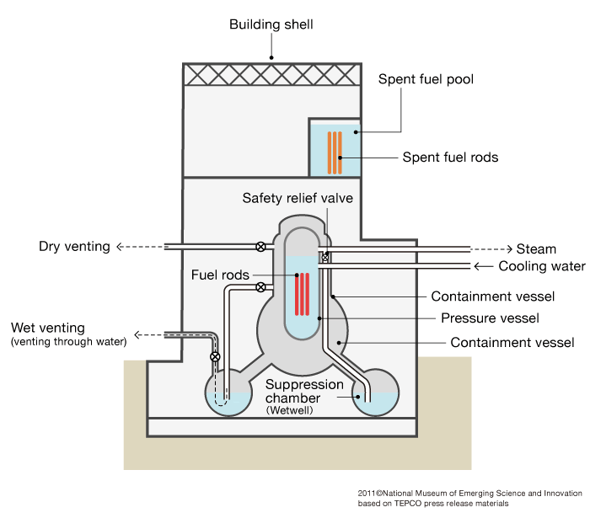
“The Fukushima Daiichi Nuclear Power Plant consisted of six General Electric light water boiling water reactors (BWRs) with a combined power of 4.7 gigawatts.” This made it one of the 25 largest nuclear power stations in the world. Figure IV.15 shows a schematic of one of these reactors. In a boiling-water reactor, the water that removes heat from the core (the coolant) turns into steam already in the reactor core, and that steam goes directly to the turbines that drive the generators. In the Fukushima reactors the control rods are introduced from the bottom of the reactor vessel; those rods can vary the rate of fission reactions that occur in the reactor vessel. When the control rods are fully inserted, the fission reactions stop altogether. The safety systems include safety measures for the steam and water systems, the reactor vessel which is constructed of steel, and a thick concrete containment building with a watertight steel lining that surrounds the reactor vessel and the spent fuel pool.
The reactor buildings were constructed to withstand a relatively large earthquake. Because an earthquake shakes the ground, it causes structures to accelerate. During an earthquake, scientists measure the maximum or peak acceleration of structures. These are expressed in terms of the acceleration due to gravity at the Earth’s surface, g = 9.8 m/s2. After the 1978 Miyagi earthquake (which produced a peak acceleration of 0.125 g), the Fukushima buildings sustained no damage. The reactor buildings were designed to withstand accelerations of between 0.42 g and 0.46 g.
The Fukushima reactors were initially constructed with emergency diesel generators and DC batteries, vital safety backup systems for the reactor, located in the basement of the reactor building. However, staff at GE lobbied TEPCO to change this, as the generators and batteries would be subject to flooding. So TEPCO moved the diesel generators and batteries to buildings located on the hillside behind the reactor complex. The diesel generators supplied all six Fukushima reactors with emergency power. However, the switching stations that would transfer power to the generators for reactors 1 through 5 were located in the turbine buildings, and those were poorly protected from flooding. This turned out to be a fatal error by TEPCO. Another nearby nuclear reactor complex, the Fukushima Daini Nuclear Power Plant, had moved their generators and backup batteries into the watertight reactor building. The Fukushima Daini complex emerged from the earthquake and tsunami with far less damage than was experienced by Fukushima Daiichi.
Another issue was the temporary storage of used fuel rods. Over time, the amount of fissionable material in the fuel rods decreases. During the operation of the reactor, the rods accumulate radioactive isotopes of many elements, which result from decay processes of the heavy elements produced in nuclear fission. The used fuel rods are highly radioactive. Over time, many of the radioactive elements will have decayed; but for a period of 18 months, the fuel rods were too hot and radioactive to be placed in long-term dry cask storage. As a temporary measure, used fuel rods were placed in pools of water on the top of the reactors. This is standard procedure at nuclear reactors for dealing with the extremely hot and radioactive spent fuel rods. After 18 months to two years, when the rods had cooled sufficiently, they were transferred to dry cask storage.
On the day that the Tohoku earthquake hit, reactors 5 and 6 at the Fukushima Daiichi plant were shut down for scheduled maintenance, and the core in reactor 4 was unloaded. No power was required to run those reactors; however, they still needed power to provide cooling for the used fuel rods in the storage pools atop the reactors. When the Tohoku earthquake occurred, seismic sensors at the reactor site inserted the control rods fully, shutting down the fission reactions in the operating reactors 1, 2 and 3. Although the fission stopped, the reactors continued to generate heat from the spontaneous decay of radioactive elements in the fuel rods. As power was lost in the reactors, the emergency generators came on and provided electricity to run the backup cooling systems. The Fukushima reactors did not sustain any significant damage from the earthquake itself.
However, when two tsunamis arrived one hour later (eight minutes apart), they flooded the switching stations that provided power to the emergency generators. The DC backup batteries in reactors 1 and 2 were flooded and failed, leaving these units with no instrumentation and producing a station blackout. The batteries in unit 3 continued to function for another 30 hours. With no backup power, the temperature in reactors 1, 2 and 3 rose, until the cooling water in the reactors boiled and the steam pressure increased. Eventually, the fuel rods became uncovered while the temperature continued to rise. In unit 1, the water level dropped to the top of the fuel approximately 3 hours after the control rods had shut down the fission reactions. Another 90 minutes later, the water no longer covered any of the fuel. When the temperature in the rods exceeded 2,800°C, the fuel rods melted. The uranium fuel, the zircalloy coating of the rods and various reactor vessel materials melted and mixed together to form a substance called corium (this was discussed in the Three Mile Island section). While the corium at Three Mile Island had been contained within the reactor vessel, at Fukushima the material pierced the reactor vessel and fell to the bottom of the containment building.
At sufficiently high temperatures, the zirconium alloy that serves as the cladding for the fuel rods interacts with the steam. This reaction releases hydrogen gas. If the hydrogen mixes with oxygen, it will cause an explosion. The containment buildings contained a mixture of nitrogen and other gases; as long as the hydrogen remained inside the containment building and no oxygen entered the buildings, an explosion would not occur. However, eventually the pressure inside the reactor caused various lines in the reactor to rupture.
At this point, hydrogen explosions occurred (these are chemical explosions, not nuclear). Those occurred on March 12 in reactor 1, March 14 in reactor 3 and March 15 in reactor 4. The hydrogen explosion in reactor 4 occurred because it was connected to reactor 3 by an adjoining pipe, so hydrogen from reactor 3 was piped to reactor 4 where it led to a hydrogen explosion. On March 14, the containment unit failed in unit 2. Although it appears there was no hydrogen explosion in unit 2, nevertheless the leaking system released large amounts of radioactive material both into the air and into the seawater.
The Fukushima reactors had various backup safety systems. The steel reactor vessel itself, called the dry well, was designed to withstand a great deal of pressure. Should the reactor vessel be breached, it was connected to wet well suppression pools (shown at the bottom of the containment building in Fig. IV.15). The wet well was connected to the reactor vessel through a series of vents. If a LOCA occurred, steam at high pressure would be released from the reactor vessel through a series of pipes and relief valves. The steam would then condense in the suppression pools.
The ‘spent’ fuel rods being stored in pools above the reactors released radioactive elements after the power failed and the system was no longer able to cool the pools. When those fuel rods became exposed, they released radioactive gases. Because the spent fuel rods were not inside the reactor vessel, radiation released from the spent fuel pool was more likely to be released into the atmosphere or the groundwater. Since Iodine-131 has a half-life of 8 days, most of the I-131 in the spent fuel rods would have already decayed. The most dangerous element released by the spent fuel pools was likely Cesium-137, which has a half-life of about 30 years.
Aftermath of the Fukushima Disaster:
There were three types of releases of radioactive material from the Fukushima Daiichi complex. One source was deliberate discharge of radioactive coolant water into the sea. This was done in April 2011 and May 2011, in order to free up storage space in the complex for water that was even more contaminated than was released. As of March 2021, the Fukushima complex had accumulated 1.25 million tonnes (1 metric tonne is the weight of 1000 kilograms) of waste water that was held in 1,061 tanks in the reactor complex. A second source of radioactive liquids came from accidental discharge of liquids from leaks or ruptures in the containment vessels. Between March and April 2011, 270,000 to 540,000 Curies of Iodine-131 had been released from the complex, along with 80,000 to 160,000 Curies of Cesium-137. The vast majority of that material was released into the ocean. Furthermore, there have been continuing releases of radioactive liquids from leaks in the reactor water tanks. TEPCO denied the existence of such leaks until July 2013.
There was also significant radioactivity released through the venting of gases into the atmosphere. Much of this was done deliberately, in an attempt to reduce gas pressure in the reactors. However, there were also accidental releases of gases through leaks and explosions. The total release of Iodine-131 gases is estimated at 2.7 million to 13.5 million Curies (or equivalently, 100—500 PBq), along with 160,000 to 540,000 Curies (6 – 20 PBq) of Cesium-137. One potential source of contamination is from coastal sediment that becomes contaminated with these products and is subsequently ingested by fish and shellfish. In 2011, 41% of marine life caught off the Fukushima coast had Cs-137 levels above the legal limit, while in 2015 0.05% of marine life had Cs-137 levels above the limit. This decrease reflects the dispersal of radioactive elements in the ocean. In Sept. 2011, TEPCO measured the radioactivity released by the Fukushima reactors, and announced that it was 4 million times lower than was measured in March 2011, immediately following the reactor disaster.
Given the magnitude of releases of radioactive substances into the air and water, together with the large evacuation zone around the reactor complex, the Fukushima Daiichi accident was rated at level 7 on the International Nuclear Event Scale (INES). The Fukushima and Chernobyl disasters are the only ones ever to receive a level 7 rating on the INES. The Japanese government has a plan by which radioactive water will be pumped into the ocean over a 30-year period. The water is treated to remove Cs-137 before being discharged. One of the radioactive isotopes in this water is tritium, which has a half-life of 12.3 years. The Japanese government claims that, even if all the water was discharged in a single year, the dose received by local citizens would be 0.81 microSieverts; it was claimed that this was negligible compared to the dose from natural causes of 2,100 microSieverts/year.
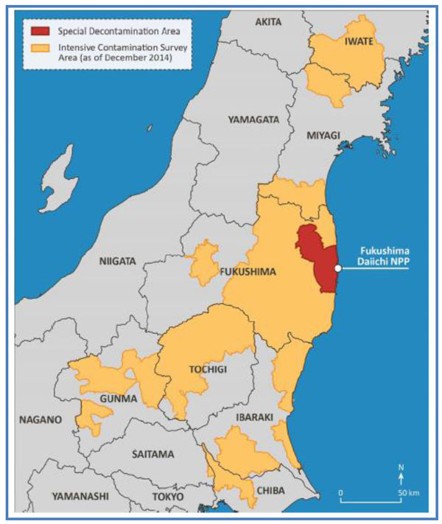
Immediately following the inundation of the Fukushima reactor complex, the Japanese government evacuated citizens from the immediate area. Eventually, 160,000 people were temporarily relocated from the area. Figure IV.16 shows the relocation areas around the Fukushima plant. The red area is the “Special Decontamination Area (SDA);” it is estimated that individuals in this area could receive 10 mSv (milliSieverts) of radiation per year. For calibration, that level corresponds to 20% of the maximum annual whole-body radiation dose the U.S. Nuclear Regulatory Commission allows for radiation workers (but half the maximum dose allowed by the Department of Energy). A second area (shown in yellow) is the “Intensive Contamination Survey Area (ICSA);” in the ICSA area, individuals could receive 1 mSv of radiation. In the ICSA area, municipalities are responsible for determining their own disposition of contaminated areas, with support and advice from the federal government.
By the end of 2015, decontamination was considered complete in six municipalities. Former residents were told that they could return to their villages. However, one year later only 9% of the evacuees had returned to their homes. And as of 2021, 37,000 of the 160,000 evacuees had not returned to their homes. Some have passed away while the remainder have opted not to return.
The Fukushima reactor disaster was reviewed by a Japanese committee, the Investigation Committee of the Accident at the Fukushima Nuclear Power Stations of Tokyo Electric Power Company. The report determined that the authorities “had grossly underestimated tsunami risks” that followed the Tohoku earthquake; in fact, the 14-m tsunami that struck the Fukushima plant was twice the height of the highest waves predicted by the officials. Furthermore, the report said that plant officials had assumed that backup power would continue to function following the tsunami. “Plant workers had no clear instructions on how to respond to such a disaster, causing miscommunication.”
A 2012 report in The Economist concluded, “The operating company was poorly regulated and did not know what was going on. The operators made mistakes. The representatives of the safety inspectorate fled. Some of the equipment failed. The establishment repeatedly played down the risks and suppressed information about the movement of the radioactive plume, so some people were evacuated from more lightly to more heavily contaminated places.”
What about the short-term and long-term effects on human health for those living close to the Fukushima reactor complex? During the evacuation of the population, there were about 1,600 deaths, although virtually none of these were due to radiation exposure. In 2014, the radioactive water plume reached the western U.S. Scientists from the National Oceanic and Atmospheric Administration measured the levels of Cs-137 radioactivity and announced that the detected levels posed no threat to the health of Americans. A research group from Woods Hole Oceanographic Institution found that levels of radioactivity in this plume were far lower than EPA guidelines. Dr. Jay Cullen, who established a Web site where radioactivity levels were published and who stated that levels measured on the West Coast of the U.S. and Canada posed no threat to human health, received hate mail and death threats from people who believed that radioactive isotopes from the Fukushima disaster would cause a wave of cancer deaths across America.
The World Health Organization issued a report estimating that girls in the area around Fukushima would likely experience a 70% increase in thyroid cancer, due mainly to Iodine-131 exposure as infants. The 167 Fukushima plant workers who participated in cleanup operations and received high doses of radiation are expected to have an increased risk of developing cancer. However, the risk may be sufficiently small that it cannot be detected by studying those workers. Researchers who used a Linear No-Threshold (LNT) model for the dose-response relationship estimated that the Fukushima disaster would lead to 15 – 1,100 additional cancer deaths. However, it has been noted that the LNT model grossly overestimated cancer deaths from Hiroshima and Nagasaki.
In 2013 the Fukushima Medical University compared cases of thyroid cancer from the Fukushima prefecture before and after the nuclear accident and concluded that “it is unlikely that these cancers were caused by the exposure from the nuclear power plant accident in March 2011.” However, there are very real mental-health issues from the population close to the Fukushima plant. As was the case for Chernobyl survivors, there were dramatic increases in the rate of psychological disorders such as “depression, anxiety, post-traumatic stress disorder (PTSD), medically unexplained somatic symptoms, and suicide.” This is unsurprising since these individuals were evacuated from their homes, may have lost friends and family from the tsunami, and underwent a life-threatening experience from the quake and tsunami. These individuals were also less likely to trust their government or the administrators of the Fukushima reactor complex, and they also worried about potential long-term health hazards from radiation exposure.
Mothers who were pregnant during the Fukushima disaster were particularly prone to anxiety and depression, worried about potential health hazards to their children. There was a sharp rate of increase of suicides by people who had lived in Fukushima prefecture, relative to people in areas more distant from the reactor disaster. Researchers believe that one factor in the rate of suicides is the Japanese cultural stigma against people with mental health disorders; this may prevent people who experience suicidal ideations from seeking the professional help they need.
In Dec. 2011, the Japanese government imposed more stringent limits on allowable amounts of Cs-137 in food products. For rice, meat, vegetables and fish the limit was decreased from 500 Becquerel (Bq) per kilogram to 100 Bq/kg; for milk, milk powder and infant food, the limit was decreased from 200 Bq/kg to 50 Bq/kg; and for drinking water the limit was decreased from 200 Bq/kg to 10 Bq/kg. (For calibration, 100 Bq is equivalent to 0.27% of a microCurie.) The new limits arose from several instances where “hot spots” were discovered – areas, plants or animals that were found to have anomalously high levels of Cesium. Cesium-137 can cause severe health issues if it is absorbed into the body.
In 2016, it was estimated that the bill for cleaning up the Fukushima disaster had increased to 22.6 trillion yen, equivalent to $201 billion. The costs included compensation to those evacuated from the disaster area and those who lost their jobs as a result of the disaster. The cost also included decontamination of radiation and decommissioning of the Fukushima Daiichi Nuclear Reactor complex. The estimated cost of decommissioning the Fukushima plant had increased by a factor of four from earlier estimates. The overall cost had doubled since an earlier estimate in 2013. There is an exhaustive Wikipedia article on all the efforts taken to clean up the Fukushima plant and to prevent further releases of contaminated water into the ocean adjacent to the Fukushima reactor complex.
The Fukushima disaster had an enormous impact on Japan’s nuclear power industry, as well as considerable impacts in other countries. Nuclear energy had been a strategic priority in Japan since the 1960s and was supplying nearly a third of the country’s electricity before 2011. In the wake of the accident Japanese authorities suspended operations at 46 of the country’s 50 operating nuclear power plants, and only nine of those have resumed operations in the years since. In 2019, fission reactors were supplying only 7.5% of Japan’s electricity. In the wake of Fukushima, Germany and Belgium decided to phase out nuclear power completely by the mid-2020s, while other European countries shelved plans to build new nuclear reactors. According to the International Atomic Energy Agency, “Between 2011 and 2020, some 48 GWe of nuclear capacity was lost globally as a total of 65 reactors were either shut down or did not have their operational lifetimes extended.”
However, the increasing effects of global climate change made Japan rethink its policy to cut back on nuclear power, since nuclear power plants do not emit greenhouse gases. In February 2025 Japan approved the 7th Strategic Energy Plan, which included the expansion and construction of civilian nuclear power.
Today there is a concerted giobal push to get new nuclear plants online, as well as efforts to upgrade existing nuclear reactors and even to restart nuclear reactors that had previously been shut down. Nuclear reactors are desirable because they do not emit greenhouse gases; in addition, it is claimed that more reactors are needed to power huge data centers that are used in artificial intelligence models. In the U.S., there are also pressures to cut down on regulations that are claimed to slow down bringing new nuclear reactors online. And there will also be pressure to minimize the regulations governing the operation of nuclear reactors. The accidents and disasters recounted in this Section should remind us that both the design and operation of nuclear reactors need to be carefully regulated in order to avoid similar nuclear disasters in the future. While safety features of modern nuclear reactor designs, including those of small modular reactors, are more advanced than those involved in the reactor accidents we have covered, it remains true that maintaining control of fission chain reactions and preventing thermal runaway of highly radioactive fuel rods require numerous complex systems to work flawlessly in concert.
V. Summary
When the U.S. dropped atomic bombs on Hiroshima and Nagasaki in August 1945, the immediate impacts were profound and horrific, leading to Japan’s surrender in World War II and to the death of more than 210,000 Japanese citizens by the end of 1945. But the long-term impacts have been equally profound and horrific. Many thousands of survivors of the bombs received large doses from radioactive fallout, which led to genetic mutations and thousands of excess deaths over the years from leukemia, thyroid cancer, multiple other solid cancers, and circulatory, respiratory, and digestive diseases. Those exposed to the fallout in utero, especially during the gestation periods critical for fetal brain development, often suffered from intellectual disabilities, poor IQ and academic performance, in addition to impaired physical development and later increased likelihood of cancers.
The atomic bombs also ushered in a new era of nuclear weaponry. Numerous other countries felt it necessary to develop their own atomic, and later much more powerful hydrogen, bombs in order to stave off American dominance. None of the many resulting nuclear weapons has yet been used in a war but countries felt the need to test their warheads. Eight nations carried out more than 2,000 nuclear weapons tests from 1952 through 1996, with more than a quarter of these involving atmospheric tests done in remote areas of the world, often populated by indigenous peoples. Inhabitants were not always forewarned of the tests and when they were, evacuations often occurred too late and over too limited an area to avoid extensive exposures to radioactive fallout transported by wind and sea. The fallout led to some short-term deaths from acute radiation syndrome and to longer-term excess deaths from a variety of cancers and other diseases, as well as to “alarmingly high rates of stillbirths, miscarriages, birth defects, and reproductive problems in their communities.” Many indigenous communities were forced into permanent relocation, with their homelands poisoned by long-lived radioactivity and environmental damage, and they suffered extensive psychological and cultural damage. Elevated levels of strontium-90 in baby teeth and carbon-14 in the atmosphere were found worldwide in the wake of the atmospheric weapons tests.
The U.S. and the Soviet Union amassed the largest stockpiles of nuclear weapons and entered into an era of Mutual Assured Destruction. The two of us who co-author these blogs grew up in an era when the fear of nuclear war was palpable. As school children we were instructed in drills, by teachers and school administrators clueless about the dangers of nuclear radiation, that bending down beneath our desks could “protect” us in case of a nuclear attack. Cooler government heads prevailed for a while and beginning in the 1970s the U.S. and Russia negotiated a series of agreements placing limits on their nuclear stockpiles. However, the last of these agreements, the New START treaty, was effectively terminated in 2023 and we now have leaders of both countries who speak openly about the possibility of not only new waves of nuclear weapon tests, but also the use of nuclear weapons in ongoing wars.
Meanwhile, attempts to impose international treaties banning nuclear weapons tests and usage have largely been blocked by the nuclear-armed states. The Comprehensive Test Ban Treaty signed in 1996 has never gone into effect because a number of nuclear-armed states have failed to ratify it. The 2017 Treaty for the Prohibition of Nuclear Weapons has not been signed by any nuclear-armed state. The early nuclear-armed countries did impose a Non-Proliferation Treaty on countries that had not yet developed their own nuclear weapons, but that treaty has not prevented other countries from joining the club. At least part of Donald Trump’s motivation for attacking Iran in 2025 and 2026 was to prevent that country from joining the nuclear club, although his attacks may only motivate Iran more strongly to develop nuclear weapons to deter other countries from launching such future attacks.
Radioisotopes have found wonderful applications in a variety of medical imaging technologies. And nuclear fission has made important positive contributions to humanity via nuclear power plants, which currently provide about 10% of worldwide electricity demand. However, keeping fission chain reactions under control in nuclear reactors requires multiple engineered systems and trained operators to work reliably in concert to prevent thermal runaway, chemical explosions, nuclear meltdowns, and the public release of large quantities of radioisotopes. During the 70 years of nuclear power there have been five serious reactor or radiation storage accidents, reviewed in this post, in which various safety systems and procedures have failed to prevent such releases. The worst of these have been accidents in Kyshtym, Russia in 1957, Chernobyl, Ukraine in 1986, and Fukushima Daiichi, Japan in 2011.
The Soviet Union tried for many years to hide the details of the Kyshtym accident, which involved the explosion of a storage tank holding radioactive waste resulting from plutonium production for use in bombs. Full details of the accident were not released until 1989. Over 270,000 people, spread over an area of 15,000 square kilometers, were exposed to the resulting radioactive fallout, resulting in more than 200 deaths from acute radiation syndrome and many long-term genetic disorders and cases of leukemia, cancers, and birth defects.
The explosions at the Chernobyl reactor were caused by the combination of design flaws and operator errors, resulting in the largest release of nuclear radiation of any reactor accident. 134 workers at the site suffered acute radiation sickness, resulting in 28 deaths in the short term. The emission of large quantities of iodine-131 and cesium-137 have led to some 6,000 excess thyroid cancer cases among those exposed and to the establishment of an extensive Exclusion Zone covering parts of Ukraine, Belarus, and Russia, where the soil is still contaminated by cesium-137 and resettlement cannot occur for at least hundreds of years. Those eventually evacuated from the Exclusion Zone have suffered extensive psychological damage and elevated rates of abortion. There are ongoing debates about the long-term cumulative global health impacts from the Chernobyl fallout but excess cancer deaths are likely to count in the thousands. The enormous costs of the cleanup and recovery from Chernobyl were among the major contributors to the collapse of the Soviet Union.
Sometimes the design flaws in a system as complicated as a nuclear reactor are only revealed by an Act of God. That was the case at Fukushima, where an extremely powerful earthquake and resulting tsunami cut off power to the Daiichi reactors. The design flaw prevented the backup generators from supplying emergency power. The loss of cooling led to the melting of fuel rods, a buildup of hydrogen pressure, eventual chemical explosions in three of the Daiichi reactors, and radiation release from spent fuel rods stored above the reactors. The results were massive releases of radioisotopes to both the sea and the atmosphere. 160,000 inhabitants of the surrounding areas were temporarily evacuated. The evacuees have suffered extensive psychological damage, with elevated suicide rates. While estimates of the excess cancer-related mortalities worldwide resulting from the Fukushima accident vary widely, the mortalities probably exceed one hundred. Many Japanese citizens lost trust in their government as a result of the faulty information supplied to them. And Japan’s large nuclear industry lost status permanently; both Japan and several European countries have permanently shut down major fractions of their reactors in the wake of the accident.
Global warming and climate change caused by human burning of fossil fuels have now raised the profile of nuclear power as a carbon-free source of electricity. China has plans to build at least 150 new nuclear power plants by mid-century and other countries are evaluating expansion of their nuclear power capacity using newer technology, including small modular reactors, with more advanced safety systems. The history of the industry and the suffering caused to hundreds of thousands of people by the accidents we have reviewed here place a very high premium on maintaining strict regulation and oversight of both the design and the operations of new nuclear reactors. Meanwhile, recent research and development of nuclear fusion reactors, creating on Earth the extreme temperatures and densities that allow stars to generate energy from thermonuclear fusion, offer the promise of safer nuclear power during the second half of the 21st century.
The benefits and occasionally severe negative impacts of nuclear radiation seen over the past 80 years provide a useful case study to learn from as humans approach a new era dominated by artificial intelligence, with its own serious benefits and risks. Try to imagine how many more severe nuclear reactor accidents might have occurred since the1950s if there had not been serious regulatory oversight of the industry. Allowing free rein to the AI industry, absent comparably serious government regulatory oversight, seems a strategy destined to cause enormous harm to humanity over the long term.
References:
K. Kamiya, R. Sakata, and P. Rajaraman, Eight Decades of Research on the Long-Term Health Effects of Radiation in Atomic Bomb Survivors and Their Offspring, Carcinogenesis 46, 1 (2025), https://pmc.ncbi.nlm.nih.gov/articles/PMC12558143/
International Campaign to Abolish Nuclear Weapons, The Human Cost of Nuclear Testing, https://www.icanw.org/nuclear_tests
F.N. von Hippel, The Long-Term Global Health Burden from Nuclear Weapon Test Explosions in the Atmosphere: Revisiting Andrei Sakharov’s 1958 Estimates, Science & Global Security 30, 54 (2022), https://scienceandglobalsecurity.org/archive/sgs30vonhippel.pdf
J.S. Caparic, L. Donor, E.B. Dosmanos, and G.C. Estorico, Comparative Risk Review of Major Nuclear Disasters: Analyzing Radiation Exposure, Environmental Impact and Health Consequences Across the Worst Accidents, International Journal of Innovative Science and Research Technology 10, 717 (2025), https://www.researchgate.net/publication/390130803_Comparative_Risk_Review_of_Major_Nuclear_Disasters_Analyzing_Radiation_Exposure_Environmental_Impact_and_Health_Consequences_Across_the_Worst_Accidents
DebunkingDenial, The Future of Nuclear Power, https://debunkingdenial.com/portfolio/the-future-of-nuclear-power/
Arms Control Association, The Nuclear Testing Tally, https://www.armscontrol.org/factsheets/nuclear-testing-tally
World Nuclear Association, Safety of Nuclear Power Reactors, https://world-nuclear.org/information-library/safety-and-security/safety-of-plants/safety-of-nuclear-power-reactors
Wikipedia, Baby Tooth Survey, https://en.wikipedia.org/wiki/Baby_Tooth_Survey
S.C. Miller, Review of the Anatomical Basis for Predicting Plutonium Alpha Particle Radiation-Induced Osteogenic Cancers, Anatomical Record (Hoboken) 308, 3197 (2025), https://pmc.ncbi.nlm.nih.gov/articles/PMC12353174/
U.S. Environmental Protection Agency, Radiation Health Effects, https://www.epa.gov/radiation/radiation-health-effects
Atomic Bomb Museum, After the Bomb: Life in the Ruins, https://www.atomicbombmuseum.org/4_ruins.shtml
Radiation Effects Research Foundation, https://www.rerf.or.jp/en/
S.L. Simon, A. Bouville, C.E. Land, and H.L. Beck, Radiation Doses and Cancer Risks in the Marshall Islands Associated with Exposure to Radioactive Fallout from Bikini and Enewetak Nuclear Weapons Tests: Summary, Health Physics 99, 105 (2010), https://www.ovid.com/jnls/health-physics/abstract/10.1097/hp.0b013e3181dc523c~radiation-doses-and-cancer-risks-in-the-marshall-islands
Wikipedia, Nuclear Testing at Bikini Atoll, https://en.wikipedia.org/wiki/Nuclear_testing_at_Bikini_Atoll
M. Hoffman, Forgotten Atrocity of the Atomic Age, The Japan Times, Aug. 28, 2011, https://web.archive.org/web/20140113192759/http:/www.japantimes.co.jp/culture/2011/08/28/culture/forgotten-atrocity-of-the-atomic-age/
D. Hevesi, Dr. Louise Reiss, Who Helped Ban Atomic Testing, Dies at 90, New York Times, Jan. 10, 2011, https://www.nytimes.com/2011/01/10/science/10reiss.html
Wikipedia, Bomb Pulse, https://en.wikipedia.org/wiki/Bomb_pulse
P. Zeta, Radiation Dose Units Explained: Gray, Sievert, and Rem, Radiography 101, Aug. 24, 2026, https://radiography101.org/articles/radiation-dose-units-explained
National Academies, Beir VII: Health Risks from Exposure to Low Levels of Ionizing Radiation, https://nap.nationalacademies.org/resource/11340/beir_vii_final.pdf
E.J. Bromet, Effects of Ionizing Radiation: Atomic Bomb Survivors and Their Children (1945-1995), Chapter 18: Psychological Effects of Radiation Catastrophes, National Academies Press, 1998, https://www.nationalacademies.org/read/5805/chapter/23
M.X. Mitchell, The 80-Year Nuclear Legacy in the Marshall Islands, Physics Today, Sept. 10, 2026, https://physicstoday.aip.org/features/the-80-year-nuclear-legacy-in-the-marshall-islands
Marshallese Educational Initiative, https://www.mei.ngo/
Office of the United Nations High Commissioner for Human Rights, Addressing the Challenges and Barriers to the Full Realization and Enjoyment of the Human Rights of the People of the Marshall Islands, Stemming from the State’s Nuclear Legacy, Sept. 24, 2024, https://www.ohchr.org/en/documents/thematic-reports/ahrc5777-addressing-challenges-and-barriers-full-realization-and
Wikipedia, Nuclear Weapons Tests in Australia, https://en.wikipedia.org/wiki/Nuclear_weapons_tests_in_Australia
International Campaign to Abolish Nuclear Weapons, The Campaign, https://www.icanw.org/the_campaign
Wikipedia, Partial Nuclear Test Ban Treaty, https://en.wikipedia.org/wiki/Partial_Nuclear_Test_Ban_Treaty
GlobalMilitary.net, Nuclear Treaties and Arms Control, https://www.globalmilitary.net/nuclear/treaties/
Wikipedia, Budapest Memorandum, https://en.wikipedia.org/wiki/Budapest_Memorandum
Britannica, The Spread of Nuclear Weapons: Other Countries, https://www.britannica.com/technology/nuclear-weapon/Other-countries
J. Hansler and K. Atwood, US Accuses China of Secret Nuclear Test as Trump Admin Calls for Broader Nuclear Weapons Agreement, CNN, Feb. 6, 2026, https://www.cnn.com/2026/02/06/politics/us-china-nuclear-weapons
G. Cole, Russia and the US Put Nuclear Testing Back on the Table. Is Time Running Out for Arms Control?, Chatham House, Nov. 11, 2025, https://www.chathamhouse.org/2025/11/russia-and-us-put-nuclear-testing-back-table-time-running-out-arms-control
E.K. Vasilenko, et al., The Radiological Environment at the Mayak PA Site and Radiation Doses to Individuals Involved in Emergency and Remediation Operations After the ‘Kyshtym Accident’ in 1957, Journal of Radiological Protection 40, R23 (2020), https://iopscience.iop.org/article/10.1088/1361-6498/ab8711/pdf
A. Bouville, New Light Shed on the ‘Kyshtym Accident’ of 1957, Journal of Radiological Protection 40, E9 (2020), https://iopscience.iop.org/article/10.1088/1361-6498/ab8712/pdf
Wikipedia, Windscale Fire, https://en.wikipedia.org/wiki/Windscale_fire
J.F. Loutit, W.G. Marley, and R.S. Russell, The Nuclear Reactor Accident at Windscale – October, 1957: Environmental Aspects, International Atomic Energy Agency, Dec. 1960, https://inis.iaea.org/records/c7seb-ey965
S. Lohr, Britain Suppressed Details of ’57 Atomic Disaster, New York Times, Jan. 2, 1988, https://timesmachine.nytimes.com/timesmachine/1988/01/02/issue.html
P. Brown, Windscale’s Terrible Legacy, The Guardian, Aug. 25, 1999, https://www.theguardian.com/uk/1999/aug/26/3
Wikipedia, B Reactor, https://en.wikipedia.org/wiki/B_Reactor
National Cancer Institute, Get the Facts About Exposure to I-131 Radiation, https://www.cancer.gov/about-cancer/causes-prevention/risk/radiation/i-131
D. McGeoghegan, et al., Mortality and Cancer Registration Experience of the Sellafield Workers Known to Have Been Involved in the 1957 Windscale Accident: 50 Year Follow-Up, Journal of Radiological Protection 30, 407 (2010), https://iopscience.iop.org/article/10.1088/0952-4746/30/3/001
Wikipedia, Kyshtym Disaster, https://en.wikipedia.org/wiki/Kyshtym_disaster
Forgotten Fallout, The Kyshtym Disaster, Minute by Minute, https://www.youtube.com/watch?v=Ylm6OtdSVBs
D. Dickinson, Kyshtym ‘Almost as Bad as Chernobyl’, New Scientists, Dec. 23, 1989, https://www.newscientist.com/article/1817263-kyshtym-almost-as-bad-as-chernobyl/
Wikipedia, Three Mile Island Accident, https://en.wikipedia.org/wiki/Three_Mile_Island_accident
J.F. Elliott, The Kemeny Report on the Accident at Three Mile Island, Ecology Law Quarterly, March 1980, https://www.osti.gov/servlets/purl/5082863
Wikipedia, Corium (Nuclear Reactor), https://en.wikipedia.org/wiki/Corium_(nuclear_reactor)
Propaganda, New York Times, Aug. 17, 1979, https://www.nytimes.com/1979/08/17/archives/propaganda.html
Wikipedia, Chernobyl Disaster, https://en.wikipedia.org/wiki/Chernobyl_disaster
Wikipedia, Xenon-135, https://en.wikipedia.org/wiki/Xenon-135
Wikipedia, Iodine-131, https://en.wikipedia.org/wiki/Iodine-131
Wikipedia, Caesium-137, https://en.wikipedia.org/wiki/Caesium-137
CDC Radiation Emergencies, Strontium-90, https://www.cdc.gov/radiation-emergencies/hcp/isotopes/strontium-90.html
G. Brumfiel, Satellite Photo Shows Russian Troops Were Stationed in Chernobyl’s Radioactive Zone, NPR, Apr. 7, 2022, https://www.npr.org/2022/04/07/1091396292/satellite-photo-shows-russian-troops-were-stationed-in-chernobyls-radioactive-zo
International Atomic Energy Agency, Summary Report on the Post-Accident Review Meeting of the Chernobyl Accident, https://www.iaea.org/publications/3598/summary-report-on-the-post-accident-review-meeting-on-the-chernobyl-accident
International Nuclear Safety Advisory Group, The Chernobyl Accident: Updating of INSAG-1, IAEA, 1992, https://www-pub.iaea.org/MTCD/publications/PDF/Pub913e_web.pdf
I Fairlie, Chernobyl: Consequences of the Catastrophe for People and the Environment, Radiation Protection Dosimetry 141, 97 (2010), https://www.researchgate.net/publication/273882622_Chernobyl_consequences_of_the_catastrophe_for_people_and_the_environment
M. Gorbachev, Turning Point at Chernobyl, Project Syndicate, Apr. 14, 2006, https://www.project-syndicate.org/commentary/turning-point-at-chernobyl
ABC News (Australia), Ukraine Marks Chernobyl Anniversary Amid Fears Russian Strikes Could Repeat Disaster, https://www.youtube.com/watch?v=-R6howgUBQU
World Nuclear Association, Fukushima Daiichi Accident, https://world-nuclear.org/information-library/safety-and-security/safety-of-plants/fukushima-daiichi-accident
Wikipedia, Fukushima Nuclear Accident, https://en.wikipedia.org/wiki/Fukushima_nuclear_accident
Union of Concerned Scientists, Fukushima FAQs, Apr. 7, 2011, https://www.ucs.org/resources/fukushima-faqs
International Atomic Energy Agency, INES, the International Nuclear and Radiological Event Scale, https://www.iaea.org/sites/default/files/ines.pdf
Autorité de Sûreté Nucléaire et de Radioprotection, After the Fukushima Daiichi Accident: Learning to Live in Contaminated Territories, https://research-assessment.asnr.fr/library/highlights/fukushima-daiichi-accident-japan-2011/after-fukushima-daiichi-accident-learning-live-contaminated-territories
Nuclear Regulatory Commission, Information for Radiation Workers, https://www.nrc.gov/facilities-safety/radiation-protection/radiation-and-its-health-effects/information-for-radiation-workers
Advisory Committee for Prevention of Nuclear Accident, Recommendation, Dec. 13, 2011, https://www.cas.go.jp/jp/genpatsujiko/info/teigen/recommendation.pdf
International Atomic Energy Agency, Final Report of the International Mission on Remediation of Large Contaminated Areas Off-site the Fukushima Dai-ichi NPP, Oct. 15, 2011, https://www.cas.go.jp/jp/genpatsujiko/pdf/iaea_mission_1110_en.pdf
The Fukushima Black Box, The Economist, Jan. 7, 2012, https://www.economist.com/asia/2012/01/07/the-fukushima-black-box
Wikipedia, Radiation Effects from the Fukushima Nuclear Accident, https://en.wikipedia.org/wiki/Radiation_effects_from_the_Fukushima_nuclear_accident
Environmental Protection Agency, EPA Facts About Cesium-137, https://semspub.epa.gov/work/HQ/176308.pdf
T. Yamaguchi, Bill for Japan’s Fukushima Cleanup to Double to $201 Billion – Source, Reuters, Nov. 29, 2016, https://www.reuters.com/article/us-nuclear-fukushima-costs/bill-for-japans-fukushima-cleanup-to-double-to-201-billion-source-idUSKBN13P056/
Wikipedia, Fukushima Nuclear Accident Cleanup, https://en.wikipedia.org/wiki/Fukushima_nuclear_accident_cleanup
J. Donovan, Nuclear Power 10 Years After Fukushima: The Long Road Back, IAEA, Mar. 11, 2021, https://www.iaea.org/newscenter/news/nuclear-power-10-years-after-fukushima-the-long-road-back
International Trade Administration, Japan: Civil Nuclear Power, Nov. 18, 2025, https://www.trade.gov/country-commercial-guides/japan-civil-nuclear-power
Wikipedia, Mutually Assured Destruction, https://en.wikipedia.org/wiki/Mutually_assured_destruction
DebunkingDenial, The Need for AI Regulations, Part II, https://debunkingdenial.com/the-need-for-ai-regulations-part-ii/

