
Introduction:
In February 2025, the U.S. Senate held confirmation hearings on Donald Trump’s nomination of Robert F. Kennedy, Jr. to be Secretary of Health and Human Services (HHS). At the time, numerous organizations representing health care professionals urged the Senate not to confirm Kennedy. The Committee to Protect Health Care gathered signatures from 19,000 physicians opposing the nomination. The American Public Health Association also asked the Senate to reject Kennedy. The reason for this opposition was that for several years, as head of the organization Children’s Health Defense, RFK Jr. had made many false and misleading statements about the safety of vaccines.
Members of RFK Jr.’s own extended family also lobbied for his nomination to be rejected by the Senate. His cousin Caroline Kennedy Schlossberg, shown in Figure I.1, stated that “He lacks any relevant government, financial, management, or medical experience. His views on vaccines are dangerous and willfully misinformed.” Other relatives such as Joseph P. Kennedy III, Jack Schlossberg and Kerry Kennedy, also spoke up against his nomination, citing his misinformation on public health matters.
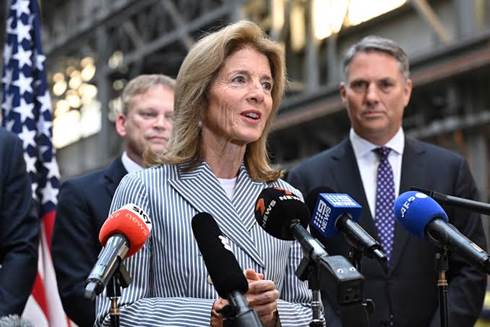
Figure I.1: Caroline Kennedy Schlossberg publicly opposes her cousin’s confirmation as Secretary of Health and Human Services.
RFK Jr.’s nomination as HHS Secretary passed the Senate Finance Committee by a vote of 14 – 13. His nomination was then approved by a majority of the Senate. A crucial vote in the Committee hearings was from Senator Bill Cassidy of Louisiana. Senator Cassidy, a gastroenterologist, had expressed reservations about Kennedy’s anti-vaccination statements. RFK Jr. was reported to have made several promises to Cassidy. These included:
- He assured senators that he supported childhood vaccines. He specifically told Cassidy that he would maintain existing vaccine recommendations.
- He would maintain without changes recommendations from the Centers for Disease Control (CDC) and Prevention Advisory Committee on Immunization Practices.
- As HHS Secretary he would not undermine vaccine funding.
- At the hearings, Cassidy directly asked Kennedy, “Do you commit that you will not work to impound, divert, or otherwise reduce any funding appropriated by Congress for the purpose of vaccination programs?” Kennedy responded, “Yes.”
Following his confirmation as HHS Secretary, RFK Jr. has taken the following actions:
- He fired all 17 members of the Advisory Committee on Immunization Practices (ACIP), claiming conflicts of interest among the members. He replaced them with 8 hand-picked new members; these included several known anti-vaxxers.
- In Jan. 2026, the new ACIP committee removed universal recommendations for children to receive seven immunizations. There was no new scientific evidence that supported these changes, and scientists estimated that the prior immunizations had prevented millions of illnesses and thousands of deaths. In March 2026 a federal district judge granted a motion from the American Academy of Pediatrics for an injunction against the reduction in recommended childhood vaccines. The judge decided that Kennedy’s complete overhaul of the ACIP was illegal because it violated the Federal Advisory Committee Act. The judge furthermore found that the announced changes to the childhood vaccine schedule were “arbitrary and capricious.”
- The CDC pulled back $11 billion that allowed local health departments to fund vaccination programs. The funding was later restored upon the order of a federal judge.
- HHS pulled back $500 million in funding of research for mRNA vaccines. In a previous blog post, we pointed out that mRNA vaccines had the promise to attack not only infectious diseases, but also cancers and many other diseases. Kennedy claimed, falsely, that mRNA vaccines were not “gold standard science.”
- Kennedy had promised to maintain a statement on the CDC website stating that vaccines do not cause autism. However, Kennedy added a false statement on that same website “The claim ‘vaccines do not cause autism’ is not an evidence-based claim because studies have not ruled out the possibility that vaccines cause autism.” Such misinformation can only cause confusion among the public.
As we have documented in several blog posts (see here, here, here, here and here), Robert F. Kennedy, Jr. knows nothing about science. He does not understand that scientific issues are determined by data, as he takes the word of individuals and even fraudsters against mountains of data. He accepts the results of poor research that agrees with his prejudices and rejects data from robust clinical studies. He is using his position as Secretary of HHS to advocate for changes in health policy that will result in cases of illness and death that are completely avoidable. These changes are motivated by Kennedy’s prejudices and fly in the face of scientific evidence.
In this post we will review four areas where RFK Jr.’s policies will result in additional cases of preventable deaths. In Section II we will review the situation with respect to measles. This is the disease where for decades Kennedy has spread misinformation and lies regarding the seriousness and treatment of the disease. In Section III, we will discuss shots of Vitamin K that are given to newborns, and which prevent a condition called Vitamin K Deficiency Bleeding or VKDB. Recently, more mothers have been refusing the shot to their newborns; this is directly related to vaccine misinformation spread by anti-vaxxers, particularly Children’s Health Defense and RFK Jr.
Section IV discusses the administration of a vaccine to prevent Hepatitis B in young children. In December 2025, members of the ACIP voted 8 – 3 to stop routinely administering the Hepatitis B vaccine at birth to infants whose mothers had not tested positive for that disease. This decision was not based on any new scientific evidence, but just the viewpoint of anti-vaxxers on the new ACIP committee. Although this decision, along with all others by Kennedy’s ACIP, are invalidated by the March 2026 court decision, courts have little power to undo the vast confusion sowed by the ACIP’s Hepatitis B decision. This decision will certainly result in more young children contracting Hepatitis B, which leads to the later development of liver disease and liver cancer. Section V discusses pertussis or whooping cough. Although past vaccination with the DTaP (diphtheria, tetanus and acellular pertussis) vaccine had almost completely eliminated these serious illnesses, whooping cough incidence has been rising within the U.S. over the past few years.
In three of the cases we discuss, vaccination had almost completely eliminated illness and death resulting from these serious diseases. The case of Vitamin K is different; this is not a vaccine but an injection of a vitamin that is critical to eliminate bleeding in young infants. But Kennedy, through both his individual actions and those of the Children’s Health Defense group which he chaired for eight years, has spread lies and misinformation about the safety and efficacy of the MMR, Hepatitis B and DTaP vaccines. The increase in the VKBD disorder that leads to infant bleeding and death is due to an increase in mothers refusing the shot; this is a side effect of the anti-vaxxer attacks on childhood vaccinations.
We should be clear – spreading misinformation about childhood vaccinations will lead to new epidemics of infectious diseases, and subsequent chronic illnesses or deaths. These are from diseases that modern medicine had almost completely eradicated. We are now seeing U.S. epidemics of measles that had been eliminated for almost 30 years. Hepatitis B and whooping cough will surely follow, unless we can reverse the misinformation that has been spread by Robert F. Kennedy, Jr. and his followers.
II. Measles
The infectious disease measles is the area where Robert F. Kennedy Jr.’s opinions and prejudices are most prevalent. We will briefly describe measles and its dangers. Then we will discuss RFK Jr.’s views regarding the disease. We will review the steps he has taken as Secretary of Health and Human Services to downplay the seriousness of the disease. He has also claimed in the past, quite falsely, that the measles vaccine is neither safe nor effective. And we will discuss Mr. Kennedy’s role in the dramatic recent increase in measles cases in the U.S. over the last few years.
Measles is an infectious disease that is caused by the measles virus, an RNA virus similar to rinderpest that affects cattle and canine distemper. An electron microscope picture of the measles virus is shown in Figure II.1. The virus is able to linger in the air for hours. It is highly contagious, one of the most contagious of viral diseases. Measles is an airborne disease that is transmitted by the sneezes and coughs of infected individuals. Measles begins with flu-like symptoms. Then a few days later white spots may appear inside the mouth. This is followed by a rash that begins around the hairline and then spreads through the entire body down to the feet. Figure II.2 shows a child that has the measles, showing the red spots that are symptomatic of the disease.
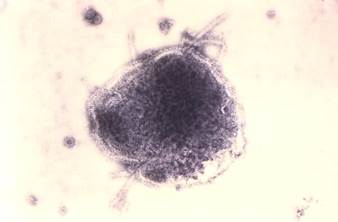
Figure II.1. An electron microscope picture of the measles virus. Highly contagious, it spreads through airborne transmission. It can linger in the air for hours.
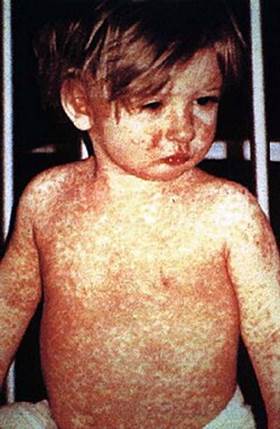
Figure II.2: A child with the measles, showing the characteristic red spots that frequently cover the entire body.
A measure of how a virus initially spreads through a population is given by the spreading rate R0: this is the average number of people likely to contract the virus from each infected person, in a population where no one has immunity to the disease. An estimate of the fraction F of the population that needs to have immunity (either from previously contracting the disease or from vaccination) in order that the virus cannot spread through the population but will die out, is
F = 1 – 1/R0 (1)
The relationship between F and R0 is shown for various infectious diseases in Fig. II.3. That figure shows the quantities R0 and F for eleven diseases. The SARS CoV-2 virus that caused the 2020 COVID-19 pandemic has an R0 of about 2.5. The polio virus has a value for R0 of about 6. This would require about 83% of the population to be vaccinated, in order that polio will not produce an epidemic if one individual contracts the disease. But Fig. II.3 shows that measles is far more infectious than any of these other diseases. For measles, the value for R0 is slightly less than 15. In order to prevent epidemics of measles from spreading through the population, about 95% of the population needs to be vaccinated.
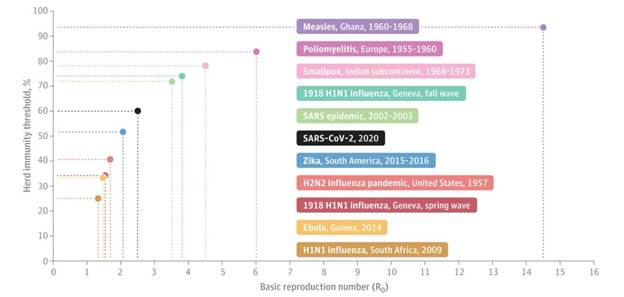
Figure II.3: A graph showing the approximate relationship between the spreading rate R0 and the fraction of the population F that needs to have immunity before the virus will die out and cease spreading. Values of R0 are shown for recent epidemics.
Measles particularly affects young people. About 10% of people who contract measles are hospitalized, and nowadays roughly 1 person in 1,000 who gets measles dies from complications arising from the disease. The World Health Organization estimates that, prior to the availability of a measles vaccine, measles caused as many as 2.6 million deaths per year worldwide. Between 1855 and 2005, measles is estimated to have killed 200 million people, most of them infants and small children. Some of the serious complications resulting from measles are pneumonia and encephalitis; other complications are blindness or deafness. Another complication is subacute sclerosing panencephalitis, a rare form of brain inflammation that is usually fatal.
A serious effect of measles is that in many cases people who contract the disease may suffer from “immune amnesia.” Following a case of measles, researchers have found that in young children both the diversity and quantity of antibodies against other pathogens may decrease, for a period of two or three years. This makes the children susceptible to a wide range of diseases during this period. Conversely, if a child is vaccinated against measles, this can also prevent immune amnesia from developing and hence may prevent deaths occurring from other contagions.
Figure II.4 shows the number of measles cases in the U.S. each year from 1944 to 2007. Prior to 1964, the year that the measles vaccine was first licensed, the number of measles cases fluctuated dramatically. The peak in U.S. measles cases occurred in 1958 with nearly 800,000 cases. Immediately after the measles vaccine was administered, the number of measles cases plummeted, reaching a level of cases as low as 1,000 per year. Following a spike in cases in 1988, in 1989 a second dose of vaccine was recommended. After the second dose of vaccine was administered, the annual number of cases dropped rapidly to nearly zero. It remained at that low level for nearly three decades.
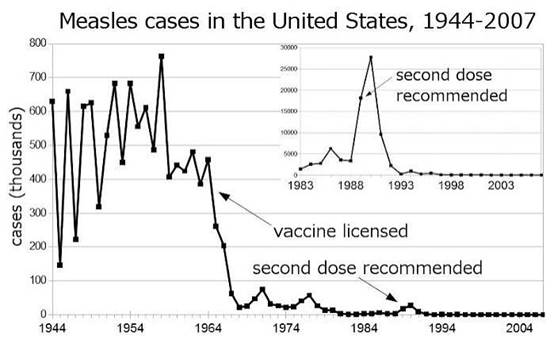
Figure II.4: Number of U.S. cases of measles per year in thousands, from 1944 to 2007. In 1964 the measles vaccine was first approved for sale. The number of measles cases plummeted after that. However, after a spike in new measles cases in 1988, in 1999 it was recommended that children receive a second dose of vaccine. With a second dose of vaccine, the cases of measles quickly dropped to nearly zero. Except for a few small spikes, measles cases remained at nearly zero until the last few years.
The success of vaccination, combined with state laws that required all children entering public schools to have a battery of vaccines against infectious diseases, made U.S. cases of measles extremely rare. And in 2000, the U.S. was able to declare that indigenous measles had been eliminated from this country. This marked a major public health milestone; the head of the committee working to wipe out measles credited the work of “millions of parents and children, hundreds of thousands of health workers, and thousands of policymakers and legislators.” The only U.S. cases of measles came from people who brought the disease from other countries.
Figure II.5 shows U.S. measles cases from 1992 until the middle of 2025. The success of measles vaccination in the U.S. is shown in the number of measles cases approaching zero; also, the number of measles deaths in the U.S. dropped to zero. For a disease this infectious, the triumph over measles marked a wonderful achievement. However, as we will document, pressure from various groups, led by the Children’s Health Defense organization and chaired until recently by Robert F. Kennedy, Jr., played a major role in lowering vaccination rates across the country.
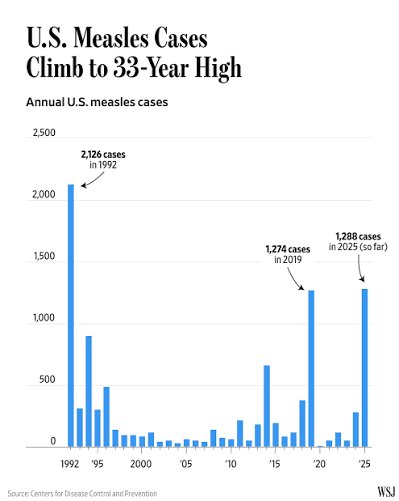
Figure II.5: Measles cases in the U.S. from 1992 until the middle of 2025. As a result of near-universal vaccination rates among U.S. children, measles cases dropped to nearly zero, and almost no deaths from measles occurred over a few decades. The incidence has increased markedly in recent years as vaccination rates have fallen below the herd immunity level of 95%. As of November 19, the CDC reports 5,838 confirmed measles cases (off-scale in the figure) in the U.S. so far in 2026.
But Fig. II.5 shows a dramatic increase in U.S. measles cases in 2025. In that year there were 2,289 confirmed cases of measles and 3 measles-associated deaths. There were 46 outbreaks of measles across the country; the number of actual measles cases is probably much larger than was reported. 96% of people who contracted measles were unvaccinated, or their vaccination status was unknown. And 2026 has been much worse than the preceding year. As of November 19, 2026, there have been 5,838 confirmed cases of measles involving new outbreaks in 43 states. In November of 2026, the Pan American Health Organization officially determined that the U.S. had lost its status as having eliminated measles (because measles outbreaks had been continually occurring for an entire year). This has been a devastating setback for those doctors and public health officials who worked tirelessly to stamp out indigenous measles in the U.S.
Several factors have contributed to the rapid rise in U.S. measles cases in the past couple of years. Republican support for vaccination mandates has decreased dramatically in recent years. This is connected to opposition to some of the mandates imposed during the COVID-19 pandemic (though there were no vaccine mandates). This has caused many Republicans to oppose vaccine requirements for children attending public schools. But a major contributor to vaccine denial has been Robert F. Kennedy, Jr. For many years, RFK Jr. has been a leading figure in the anti-vaccination movement. He headed the Children’s Health Defense organization from 2015 to 2023. That group has spread a great deal of misinformation about vaccines in general, and in particular regarding the safety and efficacy of the measles-mumps-rubella (MMR) vaccine that is given to young children at about 9 months of age.
Kennedy refuses to admit that vaccines are safe and effective. Medical organizations like the American Academy of Pediatrics (AAP) and vaccine experts like Dr. Paul Offit and Dr. Michael Osterholm have shown that the MMR vaccine is extremely effective, with very few serious side effects. But RFK Jr. denies that the measles vaccine is effective. He claims that several other effects have lowered the rate of measles. Figure II.4 shows that the incidence of measles cases had declined somewhat from its peak by 1964 when the measles vaccine was introduced. However, that figure shows that measles cases immediately declined rapidly as soon as the vaccine became available. Furthermore, as soon as a second dose of vaccine was recommended in 1989, measles cases again declined rapidly. The only way to eliminate indigenous cases of measles in the U.S. is through vaccination. With a disease as infectious as measles, no other public health initiatives could achieve this result.
Kennedy and his Children’s Health Defense organization have for decades spread misinformation about the safety of vaccines. Most side effects of vaccines are mild, not serious, and occur within the first couple of weeks after vaccination. These include soreness at the injection site, a mild fever about 6-12 days after a vaccine shot, or a mild rash 7-12 days after vaccination. There are a few rare complications from vaccines. Roughly a week after vaccination there may be a temporary fever spike; this can produce a febrile seizure in 1 of every 3,000 to 4,000 cases. These seizures are self-resolving and do not cause any long-term damage. In 1 of every 30,000 to 40,000 cases, a temporary drop in blood platelets (thrombocytopenia) occurs. This can produce bruising or bleeding but usually resolves itself. Perhaps the most dangerous condition is a severe allergy (anaphylaxis) to the vaccine. This occurs in 1 to 2 of every million cases.
However, RFK Jr. claims that vaccine injuries are common and serious. One of his claims is that vaccines are the cause of many chronic diseases. Kennedy claims that in the 1950s, about 2–3% of Americans suffered from chronic diseases, while 60% of Americans today have chronic diseases (he claims this is the highest rate in the world). He further asserts that vaccine injuries have played a significant role in this increase. But the 1962 – 63 National Health Interview Survey found that 44.5% of Americans had a chronic disease. Furthermore, life expectancy in the U.S. has increased by 10 years since 1950. That would be hard to comprehend if chronic disease rates had increased by almost 60%. We now have many more elderly Americans than we did in 1950, and as we reach old age the number of chronic diseases increases. In addition, obesity levels and the chronic disease prevalences associated with obesity have increased in the U.S. since 1950. And today, medical testing has improved so that many more chronic diseases are detected than in 1950.
In confirmation hearings for HHS Secretary, Robert F. Kennedy, Jr. promised that he would not make any changes to the U.S. vaccine schedule. He has reneged on these promises. After being confirmed as HHS Secretary, Kennedy fired all 17 members of the Advisory Committee on Immunization Practices (ACIP); he then named a number of anti-vaxxers to the reconstituted ACIP committee. In early 2026 the CDC removed its universal recommendations for children to receive seven immunizations, including against respiratory syncytial virus (RSV), meningococcal disease, flu, covid, hepatitis A, hepatitis B, and rotavirus. Experts estimate that these vaccines have prevented thousands of deaths and millions of illnesses. But now the CDC recommends them only for children at high-risk of serious illness or after consultation between doctors and parents.
Even worse, Kennedy has repeatedly asserted that there is a link between the MMR vaccine and autism. The first claim of an MMR vaccine – autism link was by British doctor Andrew Wakefield. After it was proved that paper was fraudulent, the journal The Lancet retracted the paper. But a possible link between vaccines and autism was so important that several studies were undertaken to see if any such correlation existed. Figure II.6 provides a timeline of studies of a potential link between vaccines and autism. A 2012 meta-review of many studies, involving a total of 14.7 million children, found no vaccine – autism link; all robust clinical studies from 1999 on found no such correlation.
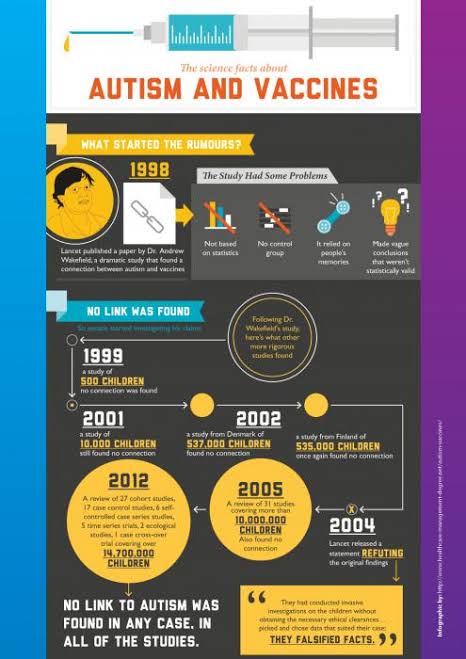
Figure II.6: A timeline of studies of a potential link between vaccines and autism. After a claim of a vaccine-autism link by Andrew Wakefield in 1998, many researchers investigated whether such a link existed. A 2012 meta-review of many studies of this issue, involving a total of 14.7 million children, found no vaccine – autism link; all robust studies from 1999 on found no such correlation.
In November 2025, Kennedy directed the CDC to add a statement to its website. It says that “the claim that vaccines do not cause autism’ is not an evidence-based claim, because studies have not ruled out a potential link involving infant vaccines.” This statement is completely contradicted by the massive, robust studies shown in Fig. II.6, proving that there is no link between vaccines and autism. We wrote a blog post on understanding autism, where we showed that autism appears to be a neurodevelopmental issue. In that case there would necessarily be no relationship between childhood vaccines and autism, in agreement with all robust studies of a potential link.
For many years, RFK Jr. has denied that vaccines, particularly the MMR vaccine, are safe and effective. In Samoa in 2019, rates of vaccination dropped significantly, when two children died after MMR vaccines were accidentally improperly prepared. Children’s Health Defense collaborated with local anti-vaxxers and claimed that vaccines were unsafe. In May 2019, Kennedy visited Samoa and met with Samoan officials and anti-vaxxer groups. Earlier that year, Kennedy sent a letter to Samoa’s prime minister where he proposed that Children’s Health Defense assess the safety of MMR vaccines. In late 2019 Samoa experienced an outbreak of measles. Because of low vaccination rates, there were 5,707 reported cases (2.7% of Samoa’s entire population) of measles and 83 deaths, most of them children under the age of five. Not only did RFK Jr. deny that he had encouraged Samoans to avoid vaccination against measles, he even suggested that a “defective” MMR vaccine may have caused the measles deaths! The epidemic ended after the Samoan prime minister declared a state of emergency and mandated vaccinations.
When a measles outbreak occurred in West Texas in 2025, Kennedy first claimed that measles outbreaks were “not unusual.” But he was wrong – one child died in this initial outbreak, the first measles death in the U.S. in ten years, and the first child death from measles since 2003. In his initial public remarks, Kennedy did not mention vaccination in order to prevent more spreading of the disease. At first, he did mention “treatments” for measles such as vitamin A and cod liver oil. Neither of these is known to be effective against measles, although in some developing countries vitamin A is dispensed as most citizens are deficient in that vitamin. Kennedy also emphasized that he considered vaccination to be a “personal choice,” and that individuals could refuse vaccination for themselves or their children. In the U.S. in 2026, by November 19, there have been 11 measles-related deaths – 8 in Pennsylvania, 2 in Wisconsin and 1 in New York. This is more deaths than have occurred in the past 30 years.
To their great discredit, the Centers for Disease Control only lists 6 deaths. This is because RFK Jr. has publicly disputed whether two Pennsylvania deaths were indeed caused by measles, despite the fact that Lancaster County officials maintained that the cause of death was determined through a normal public health review. Kennedy suggested that the deaths could be coincidental, or even that they might have been “fabricated.” He also implied that Pennsylvania governor Josh Shapiro might have had political motives for stating that the deaths were caused by measles. It is essentially unheard-of for the CDC not to accept the cause of death reported by state public health officials. RFK Jr. insists that HHS has a high priority for closing vaccination gaps, and that he is “rebuilding trust” in U.S. public health systems. In May 2024, a study found that 75% of respondents trusted CDC recommendations. Figure II.7 shows the change in public trust in health agencies from 2025 to 2026. Trust in recommendations by the CDC dropped sharply from 77% in 2025 to 50% in 2026. During that same period, trust in state health departments changed from 80% to 66%, while trust in local health departments went from 82% to 70%. In 2026, 55% of respondents disapproved of federal public health actions. Note that support for state and local health departments remained relatively strong from 2025 to 2026, despite modest decreases. Somehow, those responses don’t sound like “building trust.” Furthermore, RFK Jr. was confirmed as Secretary of HHS in March 2025, so the sharp drop in support of CDC recommendations is directly correlated with Kennedy’s tenure at HHS.
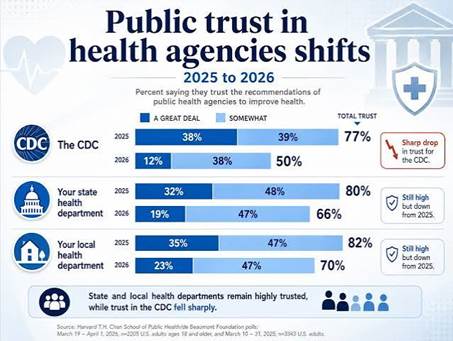
Figure II.7: Public trust in health agencies from 2025 to 2026. Trust in recommendations by the CDC dropped sharply from 77% in 2025 to 50% in 2026. During that same period, trust in state health departments changed from 80% to 66%, while trust in local health departments went from 82% to 70%.
For decades now, Robert F. Kennedy Jr. has worked diligently to undermine public confidence in the safety and efficacy of vaccination. He falsely claims that serious vaccine injuries are rampant. He also maintains, in the absence of any evidence, that microscopic amounts of thimerosal or aluminum that are used in some vaccines are seriously harmful. He has also claimed that vaccine shots are correlated with autism. RFK Jr. was an executive producer of the 2019 film Vaxxed II: The People’s Truth; a publicity shot for the movie is shown in Fig. II.8. That movie made false claims about the safety of vaccines, including the allegation that vaccines cause autism (Fig. II.6 shows studies involving tens of millions of children that conclusively prove there is no connection between vaccines and autism).
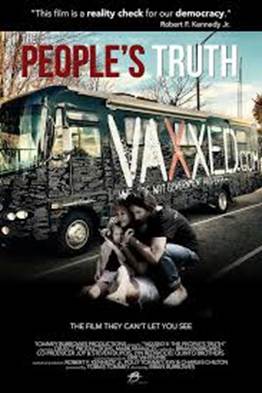
Figure II.8: Ad for the 2019 movie Vaxxed II: The People’s Truth. The film made a number of false claims about the safety of vaccines. It was directed by former British physician and fraudster Andrew Wakefield, and RFK Jr. was an executive producer.
Some public health officials are worried that RFK Jr.’s misinformation regarding vaccines is part of a plan to undermine the use of vaccines in this country. At this time, he has hired David Geier, whom we profiled in an earlier post on our blog. Geier and his father carried out several studies claiming to find a link between MMR vaccines and autism. Those studies have been criticized for having numerous fatal flaws. Scientists suspect that Geier has been given a mandate to “find” a non-existent connection between vaccines and autism. Donald Trump has repeatedly urged Kennedy to report a link between vaccines and autism. Experts fear that the Trump administration would then attempt to allow citizens with autistic children to directly sue vaccine manufacturers for injuries – this would overturn the current system where vaccine manufacturers cannot usually be sued for liability, instead relying on a government organization to review claims of vaccine injuries and compensate families. If parents of autistic children can directly sue vaccine manufacturers, they would stop producing vaccines in order to avoid being bankrupted. Such an outcome would be a disaster for American public health; however, many believe that Kennedy would welcome such a development, as he has repeatedly claimed with zero evidence that vaccines cause more injury than the benefits they provide.
III. Vitamin K Shots
Babies are born with low levels of Vitamin K. That vitamin does not easily cross the placenta from mothers, and breast milk contains only very small amounts. So newborn babies are typically given an intramuscular injection of Vitamin K1 (phylloquinone) within the first few hours after birth. The Vitamin K shot allows the newborn’s blood to clot normally. The shot of Vitamin K prevents a syndrome called Vitamin K Deficiency Bleeding or VKDB. Infants who do not receive the shot are 81 times more likely to develop VKDB than those who have received the shot. Doctors say that the risk of bleeding from Vitamin K deficiency is highest in the first week of life, but a lower level of risk persists for months.
VKDB can produce brain hemorrhages in infants. For those who don’t receive the shot, in 33 cases per 10,000 births they experience intracranial hemorrhages; while for those who receive the shot only 13.2 out of 10,000 infants experience brain hemorrhages. VKDB can lead to seizures, catastrophic brain injury or chronic neurological effects. About 20% of cases of VKBD are fatal. And survivors of VKDB often are left with brain damage, paralysis or intellectual disabilities. The shot of Vitamin K is extremely safe and has been recommended by the American Academy of Pediatrics since 1961. It essentially eliminates the risk of VKDB. But the number of parents who refuse Vitamin K shots is rising rapidly, particularly since the COVID-19 pandemic. Figure III.1 shows the annual rate of refusal of the Vitamin K shot as a function of time from 2019 to 2026. The blue histograms are for male babies while the green are for females. The rate of refusal for females increased from 2.1% to 6.8% during this period, while the rate for males increased from 1.9% to 5.5%. In both cases this represented an increase of about a factor of 3.
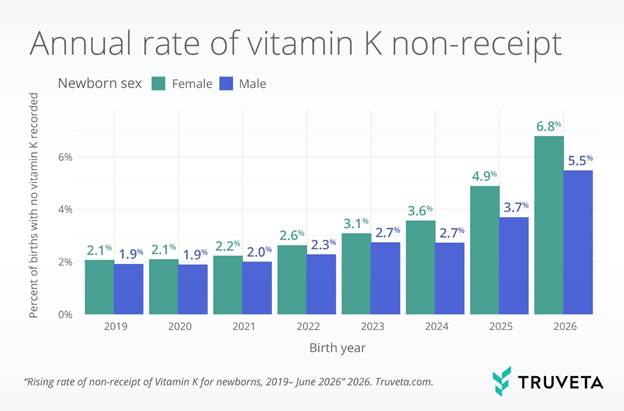
Figure III.1: Rate of refusal of a Vitamin K shot for a newborn in the U.S. from 2019 to 2026. The green entries are for female babies, while the blue entries are for males. From 2019 to 2026 both of these numbers rose by about a factor of 3.
The incidence of infants who experience VKDB is rising rapidly. Figure III.2 notes that a study of 11 million infants, conducted by the Journal of the American Medical Association over the period 2018 – 2026, found that during this period VKDB rose nearly 350%. But VKDB is almost completely eliminated if newborns are given a shot of Vitamin K.
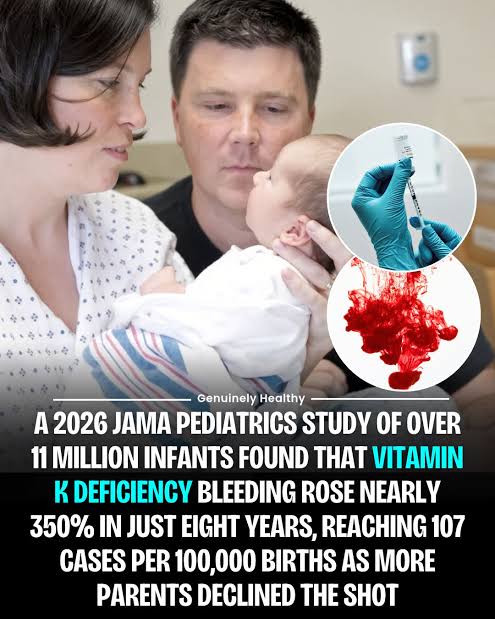
Figure III.2: A pediatrics study of over 11 million infants conducted by the Journal of the American Medical Association over the period 2018 — 2026 found that the incidence of VKDB bleeding rose nearly 350% during this period. VKDB, a result of parents refusing to allow their infants to receive the Vitamin K shot at birth, has now reached a level of 107 cases per 100,000 births.
There is a “black box” warning on the package containing the Vitamin K shot. This has been used by groups such as Children’s Health Defense to imply that the shots are inherently dangerous. However, the warning is directed to quite rare and severe allergic reactions that occur from very large intravenous doses of Vitamin K that are sometimes provided to adults. As described in the YouTube video below, there is essentially no risk associated with the tiny amounts of Vitamin K given to newborns.
Another piece of misinformation that circulates on social media is the assertion that a preservative benzyl alcohol is dangerous to newborns. However, there is no data that show any harm from the extremely small amounts found in the Vitamin K shots; in addition shots are available without benzyl alcohol. A 1992 study in the UK claimed to find a correlation between newborns receiving a Vitamin K shot, and the later incidence of childhood leukemia. However, later studies including a much larger UK study and a large-scale study in Sweden, found no correlation between the Vitamin K shot and incidence of childhood leukemia, or any other cancer. Scientists concluded that the original 1992 report claiming a correlation was instead due to statistical bias, other confounding factors, or coincidence.
Emily Hilliard, a spokesperson for Robert F. Kennedy Jr.’s Department of Health and Human Services claimed that increased Vitamin K rejection among parents was due to the Biden Administration’s policies during the COVID pandemic. She asserted that HHS was attempting to “rebuild trust” through a policy of “honesty, informed consent, sound science and respect for individual choice.” However, this “individual choice” touted by RFK Jr. and his followers has led directly to the increased rejection of Vitamin K shots, and to the frightening increase in intercranial bleeding that leads to horrific outcomes, one of which is completely avoidable infant death.
IV. Hepatitis B
Since 1982, infants have been given a vaccine to prevent them from contracting Hepatitis B. That vaccine has driven the levels of Hepatitis B in young children down to vanishingly small numbers. There are several reasons for administering the vaccine universally. First, it is not sufficient to apply the vaccine only to cases where the mother has not tested negative for Hepatitis B. Tests for Hepatitis B are sometimes unreliable. There are false negatives and it can take up to 12 weeks from exposure to the disease before it shows up on tests. An independent analysis of more than 400 studies and reports determined that some cases of transmittable infection are not identified because of errors or false negatives. Many people with Hepatitis B do not know that they are carrying the disease. Another possibility is that infants can get Hepatitis B from people other than their mother – they could contract it from relatives or care-givers. Before the Hepatitis B vaccine was routinely administered to all newborns, roughly half of children under 10 who were infected with Hepatitis B contracted it from persons other than their mother.
In December 2025, members of the Advisory Committee on Immunization Practices, voted 8 – 3 to stop routinely administering the Hepatitis B vaccine at birth to infants whose mothers had not tested positive for that disease. ACIP members in the majority claimed that the US practice was “misaligned” with practices in other developed countries. However, they were comparing the U.S. practice with those in countries with National Health organizations that typically have precise knowledge of the mother’s health history. In addition, the US had been administering the vaccine for Hepatitis B for 44 years, and the rate of vaccine injury was extremely small. Figure IV.1 shows a timeline of vaccination of newborns for Hepatitis B in the U.S., along with the cases of infant Hepatitis B each year. In 1982, newborns at high risk were vaccinated against Hepatitis B. In 1988, Hepatitis B vaccines were administered within 12 hours of birth to infants whose mothers had tested positive for that disease. In 1991, administration of Hepatitis B vaccine was administered within 12 hours of birth for all newborns whose mothers’ Hep B status was not known. In 2006, universal vaccination against Hep B was given to all newborns prior to their discharge from hospital, and in 2018 universal Hepatitis B vaccination was administered within 24 hours of birth. Figure IV.1 shows that each of these steps reduced the number of childhood cases of Hepatitis B, so that this disease was nearly eliminated. Since 1985, the annual number of cases of infants with Hepatitis B infections has dropped by more than 99%, from 25,000 to less than 20.
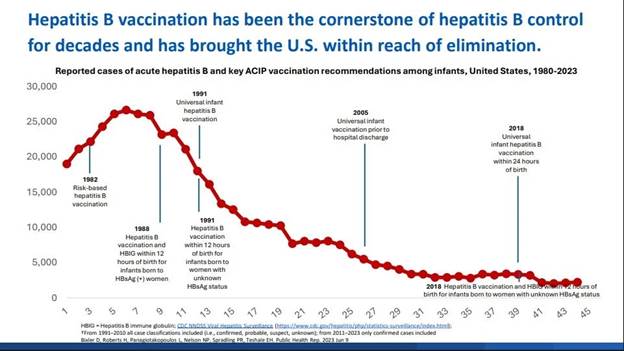
Figure IV.1: Timeline of cases of acute Hepatitis B among infants in the U.S. In 1982, newborns at high risk were vaccinated against Hepatitis B. In 1988, Hepatitis B vaccines were administered within 12 hours of birth to infants whose mothers had tested positive for that disease. In 1991, administration of Hepatitis B vaccine was administered within 12 hours of birth for all newborns whose mothers’ Hep B status was not known. In 2006, universal vaccination against Hep B was given to all newborns prior to their discharge from hospital, and in 2018 universal Hepatitis B vaccination was administered with 24 hours of birth.
The leading dissenter against the ACIP decision to discontinue universal Hepatitis B vaccination for newborns was Dr. Cody Meissner. He had the greatest knowledge of U.S. vaccination practices, having previously served on the ACIP from 2008 to 2012. Meissner stated, correctly, that the committee was acting on “baseless skepticism” rather than on scientific evidence. When children contract Hepatitis B, they have a 90% chance of developing chronic liver issues. This includes not only liver disease but also liver cancer. Figure IV.1 shows that before Hepatitis B vaccines were administered to newborns, over 25,000 children per year contracted this disease, and 25% of those developed liver cancer later in life. In 2022, the rate of Hepatitis B among U.S. citizens under 19 was 0.4 per 100,000 children.
The claim of the ACIP majority that the U.S. Hep B vaccination practice was “misaligned” with rates in other countries is also misleading. Figure IV.2 shows Hepatitis B vaccination rates for newborns in countries around the world. Most countries (colored in green) deliver the Hep B vaccine to all infants; those in orange (much of Western Europe, along with Greenland, South Africa, Japan, and New Zealand) deliver the vaccine selectively; only the countries in red (mostly in Central Africa) do not use the Hep B vaccine for infants. In 2025, a statement on the CDC Website observed that “of the 194 WHO member states, 116 countries recommend universal hepatitis B birth dose vaccination to all newborns.”
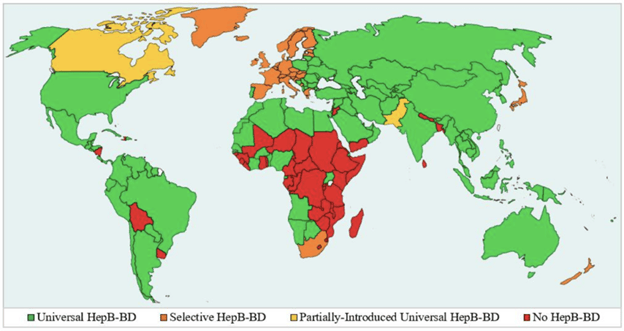
Figure IV.2: A 2025 figure showing Hepatitis B vaccination practices around the world. Countries colored in green: Universal Hep B vaccination at birth; orange: selective Hep B vaccination; yellow: partially introduced vaccination; red: no childhood Hep B vaccination.
Associations representing the medical community reacted strongly to the ACIP recommendation regarding Hepatitis B vaccinations. A group of 67 medical professional organizations issued a statement criticizing the ACIP recommendation. It said “American families deserve information grounded in science and clear, consistent guidance – not speculation intended to scare them. We urge the CDC leaders to reject ACIP’s new recommendation and instead retain the current, evidence-based approach.” Dr. Ronald Nahass, president of the Infectious Diseases Society of America, remarked “The actions taken by the ACIP regarding the hepatitis B vaccine, the vaccine given to billions of people worldwide safely, ignores established science. This will result in more disease, more suffering, more confusion and yes, less trust.” Although a March 2026 court decision temporarily invalidated all recommendations that had been made by RFK Jr.’s reconstituted ACIP, the situation remains in limbo and is very confusing for young families trying to decide what vaccinations to accept for their newborns.
Dr. Aaron Milstone, a member of the American Association of Pediatricians Committee on Infectious Diseases, claimed that “The current committee is comprised of individuals with no experience with public health policy or vaccine policy. What they share is anti-vaccination sentiment that permeated throughout the two-day meeting.” The statements by Drs. Nahass and Milhone reflect the fact that if the ACIP recommendations are put into practice, it will result in confusion among the public. Fewer infants will be vaccinated against Hepatitis B. The net result will be many additional cases of chronic liver disease among American children. An exceptionally effective measure against disease is being restricted, not because of any new scientific evidence, but because of “anti-vaccination sentiment.” Like all of the anti-vaccine arguments originating from RFK Jr.’s former Children’s Health Defense organization, this measure will do nothing to increase safety and public trust, but will instead lead to confusion, decreased rates of Hep B shots, and increased incidence of chronic liver disease among American children.
V. Whooping Cough (Pertussis):
Pertussis, commonly known as whooping cough, is a highly contagious disease. It is spread through droplets that are produced by the coughs of an infected person. Pertussis is caused by the bacterium Bordetella pertussis, which was discovered in 1906. The disease has an incubation period of approximately seven days. It causes coughing fits that can last for as long as 10 weeks, which gives rise to another name for the disease, the 100-day cough. Following a coughing fit, an infected person may emit a gasp or “whoop” sound as they try to catch their breath.
Pertussis is especially dangerous to young children. About 50% of children less than one year old with pertussis require hospitalization, and nearly 0.5% of infected children die. Whooping cough is still widespread in the developing world. Figure V.1 shows death rates per million persons from pertussis in 2019 for countries around the world. Rates range from near zero, to over 100. Death rates from pertussis are particularly high in Africa.
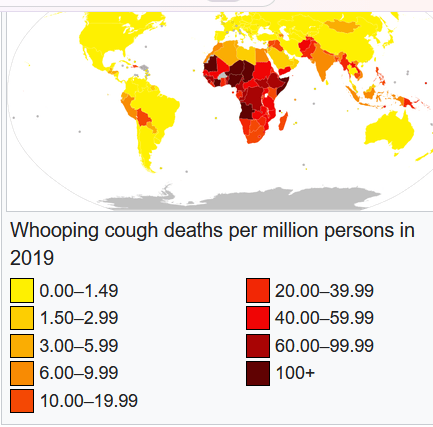
Figure V.1: Whooping cough deaths per million persons in 2019. Death rates range from almost zero to over 100 per million persons. Developing countries particularly in Africa have rather large pertussis death rates.
Vaccination has proven to be the most powerful deterrent to pertussis. In the 1940s, a combined diphtheria-tetanus-pertussis vaccine was developed. It has proved to be effective against all three diseases. It is estimated that in 2002, the pertussis vaccine saved half a million lives around the world. In the 1990s, a new multi-vaccine shot called DTaP was introduced. The new pertussis vaccine was an acellular vaccine that used only selected antigens of the Bordetella pertussis bacterium, as opposed to the DPT vaccine that used whole-cell inactivated pertussis bacteria. The newer vaccine had significantly less side effects than the original one. Finally, there is a Tdap vaccine; this is a lower-dose booster shot that is typically given to older children and adults. An initial dose of the DTaP vaccine is generally given to infants between two and six months old, and four doses are administered in the first two years of life. It is possible to contract pertussis after being vaccinated; however, in those cases the symptoms are much milder than for unvaccinated children.
Figure V.2 shows the number of cases of pertussis in the U.S. as a function of time, from 1940 to 2024. In 1940 there were nearly 184,000 cases; however, the DTP and later DTaP vaccines greatly decreased the incidence of whooping cough. Around 1980, the number of cases dropped to nearly zero and remained there until the early 2000s. A couple of small spikes occurred, however incidence of whooping cough dropped precipitously until 2024, when there were over 35,000 cases of pertussis. Then in 2025, almost 29,000 cases were experienced. Immunity to whooping cough from the vaccine wanes over time; it is believed that the rapid increase in cases in 2024 and 2025 occurred because people were not getting booster shots at the same rate as earlier; in addition, people resumed social mixing when the COVID-19 pandemic subsided. To date, there are about half as many pertussis cases in 2026 than in 2025.
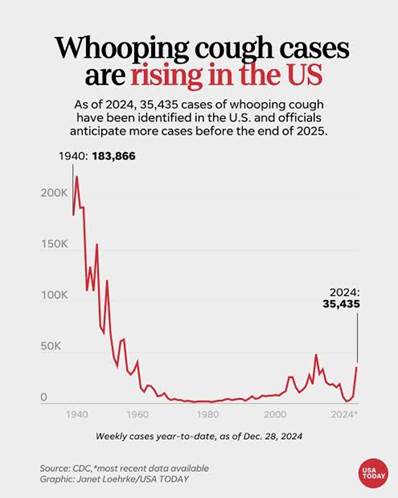
Figure V.2: Cases of whooping cough (pertussis) in the U.S. over time. In 1940, when the DTP (diphtheria, tetanus and pertussis) vaccine was first released, there were over 183,000 cases of pertussis. Continued use of different forms of the pertussis vaccine caused U.S. rates to drop to nearly zero shortly before 1980. Around 2010 there was a spike in pertussis cases but then a sharp dropoff during the COVID pandemic. However, there was a large increase in cases in 2024.
Much of the focus of Robert F. Kennedy Jr.’s anti-vaccine campaign has centered on measles or the combined measles-mumps-rubella (MMR) vaccine. However, they also criticize the DTP vaccines. Kennedy’s former organization Children’s Health Defense maintains a Pertussis Archive, documenting their claims that the DTaP vaccines fail to prevent transmission of the bacteria, and that the vaccines are correlated with the incidence of seizures when administered at ages 3 and 5 months. However, groups like the American Academy of Pediatrics assert that the DTaP vaccine is safe and effective. They also strongly advise that pregnant women get the DTaP vaccine to avoid their newborns getting pertussis. Because the immunity to pertussis decreases over time, it is recommended that older children and adults receive booster shots.
If RFK Jr. and his Children’s Health Defense organization convince people to refuse the DTaP vaccine because of their scare tactics claiming a high incidence of vaccine injuries, they risk producing a large spike in avoidable children’s deaths from pertussis, a highly infectious and dangerous disease whose serious injuries and infant deaths are easily preventable through this vaccine.
VI. Summary:
Since he was confirmed as Secretary of Health and Human Services in March 2025, Robert F. Kennedy, Jr. has continued his campaign to falsely claim that vaccines cause many more serious injuries than are acknowledged. Following his record over many decades leading Children’s Health Defense, RFK Jr. has minimized the amazing role that vaccines have played in eliminating many childhood diseases. In this post, we discussed the situation with three childhood diseases and a condition of cranial bleeding in newborns.
The most notable of these childhood diseases is measles. This is one of the most infectious diseases in the world, and from 2000 until this year the U.S. had officially eliminated indigenous measles. But in November 2026, the Pan American Health Organization revoked the status of the U.S. as measles-free. We documented the many steps that Kennedy has taken to denigrate the wonderful achievement where vaccines eliminated measles. RFK Jr. argues that measles has surged in several other countries as well. However, he bears much responsibility for the spread of measles in the U.S. and elsewhere, as he has been the leading source of misinformation on this disease and on the effectiveness of vaccination for decades.
We also reviewed the recent surge in cases of Vitamin K Bleeding Deficiency, which is caused by an increase of parents refusing a Vitamin K shot for their newborns. We have also seen a rise in whooping cough cases, and since Children’s Health Defense has spread misinformation regarding the DTaP shot for diphtheria, tetanus and pertussis, we can expect to see a rise in pertussis cases. If more parents become hesitant about allowing Hepatitis B vaccines for their newborns, in light of misinformation coming from Kennedy’s HHS, we also expect to see a future rise in childhood liver diseases. All of these conditions are avoidable, and in every case RFK Jr. has played a significant role in stimulating vaccine hesitancy and vaccine denial.
We should also mention the influence of Donald Trump in spreading misinformation about vaccines. As HHS Secretary, Robert F. Kennedy, Jr. is a major threat to public health in the U.S. But Kennedy has a powerful ally in President Trump. Both men are supremely confident in their reasoning, they both are woefully ignorant about science, and both of them maintain their prejudices regardless of the facts. For example, Trump has argued that the number of vaccine shots overwhelms the immunity of infants. In justifying an Executive Order to reduce the number of childhood vaccines, he falsely claimed that infants were subjected to “vats of vaccines” as large as a “can of soda” in vaccine shots. In the Executive Order he called for the MMR vaccine to be split into three separate vaccines, saying that the combined MMR vaccine could be “quite lethal.” He also claimed in a press conference that studies had shown that a cause of autism was the use of Tylenol by pregnant women (recent studies show no correlation between Tylenol and autism).
The combination of the ignorance of Robert F. Kennedy, Jr. and Donald Trump is doubly dangerous for the health of our children. We hold RFK Jr. responsible for any deaths from these four conditions, as all these deaths are completely avoidable through vaccination and Vitamin K shots.
Source Material:
Brandy Zadrozny, More than 15,000 doctors sign letter urging Senate to reject RFK Jr. as health secretary, NBC News, Jan. 9. 2025 https://www.nbcnews.com/news/us-news/rfk-jr-health-secretary-doctors-urge-senate-block-trump-administration-rcna186807
Joe Hernancez, Caroline Kennedy calls her cousin, RFK Jr., a ‘predator’ ahead of his confirmation hearings, NPR, Jan. 28, 2025 https://www.npr.org/2025/01/28/nx-s1-5278407/caroline-kennedy-rfk-jr-confirmation-hearing
Amanda Seitz, RFK Jr. Made Promises in Order To Become Health Secretary. He’s Broken Many of Them, KFF Health News, Feb. 13, 2026
Debunking Denial, mRNA Vaccines: Promise and Demonization, June 19, 2025 https://debunkingdenial.com/mrna-vaccines-promise-and-demonization/
Understanding the Impact of Federal Cuts to mRNA Vaccine Research, American Lung Association, Sept. 17, 2025 https://www.lung.org/blog/mrna-vaccines-cuts
CDC, Autism and Vaccines, July 22, 2026 https://www.cdc.gov/vaccine-safety/about/autism.html
Debunking Denial, The Disinformation Dozen: Source of Lies About COVID and Vaccines, Aug. 30, 2021 https://debunkingdenial.com/the-disinformation-dozen-source-of-lies-about-covid-vaccines/
Debunking Denial, Vaccinations, July 21, 2018 https://debunkingdenial.com/portfolio/vaccinations/
Debunking Denial, Will RFK Jr. Make America Healthy Again? Not on Your Life! https://debunkingdenial.com/will-rfk-j-make-america-healthy-again-not-on-your-life/
Debunking Denial, Scrutinizing Robert F. Kennedy, Jr. What Do His Statements Mean? https://debunkingdenial.com/scrutinizing-robert-f-kennedy-jr-what-do-his-statements-mean/
Debunking Denial, Robert F. Kennedy, Jr., Conspiracy Theorist https://debunkingdenial.com/robert-f-kennedy-jr-conspiracy-theorist/
Hepatitis B: Symptoms and Causes, Mayo Clinic https://www.mayoclinic.org/diseases-conditions/hepatitis-b/symptoms-causes/syc-20366802
Joseph Choi, Federal court blocks Kennedy’s vaccine changes, invalidates vaccine advisory panel, The Hill, Mar. 16, 2026
CDC, Pertussis Data and Trends, Oct. 27, 2026 https://www.cdc.gov/pertussis/php/surveillance/index.html
Wikipedia Measles https://en.wikipedia.org/wiki/Measles
David Quammen, How the Measles Virus Erases Immunity to Other Diseases, New York Times Nov. 17, 2026
Teddy Rosenbluth, What It Took for America to Wipe Out Measles, New York Times, Nov. 15, 2026
CDC, Measles Cases and Outbreaks, Nov. 20, 2026 https://www.cdc.gov/measles/data-research/index.html
Measles in the Americas: Questions and Answers – Technical Reference for Journalists and the Public, Pan American Health Organization, Nov. 17, 2026 https://www.paho.org/en/news/17-11-2026-measles-americas-questions-and-answers-technical-reference-journalists-and-public
Pew Research Center, How Do Americans View Childhood Vaccines, Vaccine Research and Policy?, Nov. 18, 2025
American Academy of Pediatrics, About the AAP, https://www.aap.org/en/about-the-aap/
Wikipedia, Paul Offit https://en.wikipedia.org/wiki/Paul_Offit
Wikipedia, Michael Osterholm https://en.wikipedia.org/wiki/Michael_Osterholm
CDC, Measles, Mumps, Rubella (MMR) Vaccine Safety, July 31, 2024 https://www.cdc.gov/vaccine-safety/vaccines/mmr.html
Glenn Kessler, RFK Jr.’s absurd statistic on the spike in chronic diseases in the U.S., Washington Post, Apr. 25, 2025 https://www.washingtonpost.com/politics/2025/04/25/rfk-jr-chronic-diseases-false
Robert F Kennedy Jr instructed CDC to change stance on vaccines and autism, The Guardian, Nov. 21, 2025 https://www.theguardian.com/us-news/2025/nov/21/rfk-jr-cdc-vaccine-autism
Debunking Denial, Understanding Autism, Oct. 12, 2025 https://debunkingdenial.com/portfolio/understanding-autism/
Michelle Smith, Senator opens investigation into evidence RFK Jr ‘unlawfully lied’ to Congress, The Guardian, Nov. 12, 2026 https://www.theguardian.com/us-news/2026/nov/12/senate-investigation-rfk-jr-measles-samoa
Stephanie Soucheray, Kennedy minimizes measles outbreak in wake of Texas death, CIDRAP, Feb. 27, 2025 https://www.cidrap.umn.edu/measles/kennedy-minimizes-measles-outbreak-wake-texas-death
Global Biodefense, When the Nation’s Top Health Official Becomes the Outbreak’s Biggest Obstacle, Aug. 29, 2026 https://globalbiodefense.com/2026/08/29/when-the-nations-top-health-official-becomes-the-outbreaks-biggest-obstacle/
Gillian K. SteelFisher et al., Trust and 2024 Public Priorities for the CDC and State Health Departments, JAMA Health Forum, May 24, 2024 https://jamanetwork.com/journals/jama-health-forum/fullarticle/2819000
Kevin Griffis, RFK Jr’s mercurial congressional testimony again showcases ideology over vaccine science, CIDRAP, Apr. 22, 2026 https://www.cidrap.umn.edu/childhood-vaccines/commentary-rfk-jr-s-mercurial-congressional-testimony-again-showcases-ideology
Jessica Steier, The Playbook Used to ‘Prove’ Vaccines Cause Autism, New York Times, Aug. 19, 2025
Liz Essley Whyte, Trump Turns Up the Heat on RFK Jr. to Cut Back Childhood Vaccines, July 27, 2026 https://www.wsj.com/politics/policy/trump-rfk-jr-cut-vaccine-children-78582411
Wikipedia Vitamin K https://en.wikipedia.org/wiki/Vitamin_K
Wikipedia Vitamin K Deficiency Bleeding https://en.wikipedia.org/wiki/Vitamin_K_deficiency_bleeding
N.T. Fear et al., Vitamin K and childhood cancer: a report from the United Kingdom Childhood Cancer Study, British Journal of Cancer 89, 1228 (2003) https://pmc.ncbi.nlm.nih.gov/articles/PMC2394315/pdf/89-6601278a.pdf
Akron Children’s Hospital, Is there a link between the vitamin K shot and childhood leukemia?, 2026 https://www.akronchildrens.org/faqs/Is-there-a-link-between-the-vitamin-K-shot-and-childhood-leukemia.html
Melissa Jenco, Report: Hepatitis B vaccine safe; delaying would lead to increased infections, AAP News, Dec. 2, 2025 https://publications.aap.org/aapnews/news/33888?autologincheck=redirected
CDC, Fact Sheet Hepatitis B Immunization, Dec. 16, 2025 https://www.cdc.gov/media/releases/2025/fact-sheet-hepatitis-b-immunization.html
Karen Ernst, Coalition for Global Hepatitis Elimination, Answering Key Questions on Hepatitis B Birth Dose at a Critical Time, Dec. 2, 2025 https://www.globalhep.org/news-blogs/answering-key-questions-hepatitis-b-birth-dose-critical-time
American Academy of Pediatrics, Statement from Leading Medical, Health and Patient Advocacy Groups on CDC Vaccine Meeting, Dec. 5, 2025 https://www.aap.org/en/news-room/news-releases/aap/2025/statement-from-leading-medical-health-and-patient-advocacy-groups-on-cdc-vaccine-meeting
Bloomberg School of Public Health, Johns Hopkins University, The Executive Order on Childhood Vaccine Recommendations: What’s in It, What It Means, and What Comes Next, Aug. 18, 2026 https://publichealth.jhu.edu/2026/what-does-the-executive-order-on-childhood-vaccines-say
Kate Hubbard, Dr. Oz says MMR is “not a lethal vaccine” despite Trump’s comments,CBS News, Aug. 23, 2026 https://www.cbsnews.com/news/dr-oz-mmr-vaccine-not-lethal-trump-executive-order/
Mary Van Beusekom, Tylenol during pregnancy not tied to increased risk of autism in children, CIDRAP, Apr. 14, 2026 https://www.cidrap.umn.edu/anti-science/tylenol-during-pregnancy-not-tied-increased-risk-autism-children

